Representative Edwin Bruce Brooks
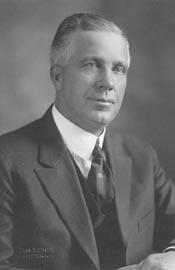
Here you will find contact information for Representative Edwin Bruce Brooks, including email address, phone number, and mailing address.
| Name | Edwin Bruce Brooks |
| Position | Representative |
| State | Illinois |
| District | 23 |
| Party | Republican |
| Status | Former Representative |
| Term Start | May 19, 1919 |
| Term End | March 3, 1923 |
| Terms Served | 2 |
| Born | September 20, 1868 |
| Gender | Male |
| Bioguide ID | B000877 |
About Representative Edwin Bruce Brooks
Edwin Bruce Brooks (September 20, 1868 – September 18, 1933) was a Republican member of the United States House of Representatives from Illinois who served two terms in Congress from 1919 to 1923. A lifelong resident of Illinois, he combined careers in education, banking, and public administration and was related by family ties to national politics as a cousin of Nebraska Representative Edmund H. Hinshaw.
Brooks was born in Newton, Jasper County, Illinois, on September 20, 1868. He attended the public schools of Newton, reflecting the rural educational environment of late nineteenth-century Illinois. Seeking advanced training at a time when formal teacher education was expanding in the Midwest, he enrolled at Valparaiso University in Valparaiso, Indiana, then known for its practical and pedagogical curriculum, and was graduated in 1892. His education there prepared him for a long career in school administration and public service.
Following his graduation, Brooks embarked on a profession in education that spanned nearly two decades and several Illinois communities. He first served as superintendent of schools at Newman, Illinois, from 1894 to 1897. He then returned to his native area as superintendent of schools at Newton from 1897 to 1903, overseeing local public education during a period of growth and consolidation in rural school systems. From 1903 to 1905 he was superintendent of schools at Greenville, Illinois, and from 1905 to 1912 he held the same position at Paris, Illinois. In these successive posts he was responsible for supervising teachers, administering school finances, and implementing state educational standards, building a reputation as an experienced school administrator.
After leaving his long tenure in local school superintendencies, Brooks entered the private sector. From 1912 to 1914 he engaged in banking in Newton, Illinois, gaining experience in finance and local business affairs. He then returned to public education at the county level, serving as county superintendent of schools of Jasper County from 1914 to 1918. In that role he oversaw the rural school system for the county, inspected schools, coordinated curricula, and worked with local boards at a time when Illinois and the nation were modernizing and standardizing public education.
Brooks’s prominence in education and local affairs led to his election to national office. A member of the Republican Party, he was elected to the Sixty-sixth and Sixty-seventh Congresses and served as a Representative from Illinois from March 4, 1919, to March 3, 1923. His service in Congress occurred during a significant period in American history, immediately following World War I and during the early years of the postwar Republican ascendancy. As a member of the House of Representatives, he participated in the legislative process and represented the interests of his Illinois constituents, contributing to debates and votes on issues of reconstruction, veterans’ affairs, and domestic policy characteristic of the era. He was an unsuccessful candidate for reelection in 1922 to the Sixty-eighth Congress, ending his congressional career after two terms.
After leaving Congress, Brooks continued in public service at the state level in Illinois. He was appointed superintendent of charities for the State of Illinois, serving from 1924 to 1930. In that capacity he had administrative responsibility for state charitable institutions and programs, reflecting the growing role of state government in social welfare during the 1920s. He subsequently served as assistant attorney general of Illinois from 1930 to 1932, participating in the legal work of the state government during the onset of the Great Depression and adding legal and administrative experience to his long record of public employment.
Brooks spent his final years in his hometown. He died in Newton, Illinois, on September 18, 1933, two days before his sixty-fifth birthday. He was interred in River Side Cemetery in Newton, closing a life largely devoted to education and public service in the state and communities where he had been born and raised.