Senator Edwin Sidney Broussard
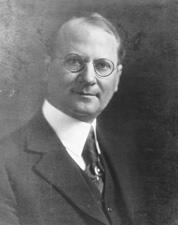
Here you will find contact information for Senator Edwin Sidney Broussard, including email address, phone number, and mailing address.
| Name | Edwin Sidney Broussard |
| Position | Senator |
| State | Louisiana |
| Party | Democratic |
| Status | Former Representative |
| Term Start | April 11, 1921 |
| Term End | March 3, 1933 |
| Terms Served | 2 |
| Born | December 4, 1874 |
| Gender | Male |
| Bioguide ID | B000895 |
About Senator Edwin Sidney Broussard
Edwin Sidney Broussard Sr. (December 4, 1874 – November 19, 1934) was a Democratic United States senator from Louisiana who served two terms in the United States Congress from March 5, 1921, to March 3, 1933. His tenure in the Senate spanned a significant period in American history, including the post–World War I era, the onset of Prohibition, and the early years of the Great Depression, during which he represented the interests of his Louisiana constituents and contributed to the national legislative process.
Broussard was born in the village of Loreauville, Iberia Parish, Louisiana, on December 4, 1874, to Jean Dorville Broussard and Anastasie Elizadie Gonsoulin Broussard. He attended public schools in Louisiana before enrolling at Louisiana State University in Baton Rouge, from which he graduated in 1896. Following his graduation, he taught in the public schools of Iberia and St. Martin parishes for two years, gaining early experience in public service and community life in rural south Louisiana.
With the outbreak of the Spanish–American War, Broussard volunteered for the United States Army. He served as a captain in Cuba in 1898 and 1899 and, in 1899, accompanied the Taft Commission to the Philippine Islands, where he served as an assistant secretary. Returning to the United States in 1900, he pursued legal studies and graduated from Tulane University Law School in New Orleans in 1901. That same year he was admitted to the bar and established a law practice in New Iberia, the seat of Iberia Parish, beginning a legal career that would underpin his later political life.
Broussard entered public office as prosecuting attorney for the Louisiana 19th Judicial District, serving from 1903 to 1908. In the years leading up to World War I, he became associated with Theodore Roosevelt’s Progressive Party, with which he was affiliated between 1914 and 1916. He opposed the “Old Regulars,” the powerful New Orleans Democratic political machine, and in 1916 he ran unsuccessfully for lieutenant governor of Louisiana on an intraparty Progressive ticket headed by gubernatorial candidate John M. Parker, a fellow Roosevelt loyalist. This campaign solidified his reputation as a reform-minded politician willing to challenge entrenched interests within his own party.
In 1920, Broussard won election to the United States Senate, defeating conservative former Governor Jared Y. Sanders Sr. for the seat that had been vacated two years earlier by the death of his brother, U.S. Senator Robert F. Broussard. Taking office on March 5, 1921, he served continuously until March 3, 1933, completing two full terms. In the Senate, he opposed national Prohibition and introduced legislation seeking to exclude beer and wine from the scope of the Eighteenth Amendment to the Constitution. He was a strong supporter of the sugar tariff and federal flood control projects, both of which were of vital importance to Louisiana’s agricultural economy and its vulnerable low-lying regions along the Mississippi River and Gulf Coast.
Broussard’s 1926 reelection campaign became a focal point of state and national political tensions. He again faced Jared Y. Sanders Sr., and this time confronted opposition from both the Ku Klux Klan and the Old Regulars, who opposed him in part because of his Roman Catholic faith. With strong backing from Louisiana Public Service Commissioner Huey Pierce Long Jr., later governor and U.S. senator, Broussard defeated Sanders for a second time. In his autobiography, Every Man a King, Long claimed substantial credit for Broussard’s victory, writing that he supported Broussard and asserting that Broussard could not have been elected in 1926 without his help. Broussard supported Long’s successful bid for governor in 1928, aligning himself initially with Long’s populist reform movement.
Relations between the two men deteriorated, however, after Long’s election to the U.S. Senate in 1930 while he continued to serve as governor. Broussard called upon Long, as senator-elect, to resign the governorship and turn the office over to Lieutenant Governor Paul N. Cyr, a former Long ally turned opponent. Long delayed relinquishing the governorship for more than a year and did not work harmoniously with Broussard in the Senate. During this period, Broussard began to speak favorably of his former rival, Jared Y. Sanders Sr., whom Long had earlier helped him defeat, and Long came to regard Broussard as a conservative in the mold of Sanders. In the 1932 Democratic primary, Long threw his support to John Holmes Overton of Alexandria in Rapides Parish as Broussard’s replacement. Broussard was denied renomination, and the Long faction was subsequently accused of electoral fraud following Overton’s victory in the primary, effectively ending Broussard’s Senate career on March 3, 1933.
After leaving the Senate, Broussard resumed the practice of law and devoted himself to banking and financial affairs in New Iberia. He remained a prominent figure in local civic and social circles and was a member of The Boston Club of New Orleans, one of the city’s oldest social organizations. On June 5, 1904, he had married Marie Clair Patout, with whom he had six children, and he maintained close ties to his family and to the region in which he had been born and raised. Edwin Sidney Broussard Sr. died in New Iberia on November 19, 1934. He was interred at St. Peter’s Cemetery in New Iberia, closing a life marked by military service, legal practice, and a dozen years of influential participation in the legislative affairs of the United States as a senator from Louisiana.