Representative Edwin Denby
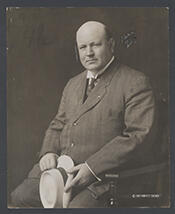
Here you will find contact information for Representative Edwin Denby, including email address, phone number, and mailing address.
| Name | Edwin Denby |
| Position | Representative |
| State | Michigan |
| District | 1 |
| Party | Republican |
| Status | Former Representative |
| Term Start | December 4, 1905 |
| Term End | March 3, 1911 |
| Terms Served | 3 |
| Born | February 18, 1870 |
| Gender | Male |
| Bioguide ID | D000232 |
About Representative Edwin Denby
Edwin Denby was born on February 18, 1870, in Evansville, Indiana. He was the son of Charles Harvey Denby, a prominent lawyer, Civil War veteran, and later U.S. Minister to China, and Martha Fitch Denby. Growing up in a family deeply involved in public service and international affairs, Denby was exposed early to politics, diplomacy, and legal practice. His formative years were marked by frequent moves associated with his father’s diplomatic career, experiences that helped shape his understanding of government and public life in the late nineteenth century.
Denby’s education reflected both his Midwestern roots and his family’s international connections. He attended public schools in Evansville before accompanying his family to China, where his father served as U.S. Minister. After returning to the United States, Denby studied law and was admitted to the bar, establishing himself as an attorney. His legal training provided the foundation for his later work in both state and national government, equipping him with the skills necessary to navigate complex legislative and administrative issues.
Before entering national politics, Denby built a career that combined law, business, and public service. He settled in Detroit, Michigan, where he practiced law and became active in Republican Party politics. His legal and civic work in Detroit raised his profile within the party and among local business and political leaders. This growing reputation, together with his family’s longstanding engagement in public affairs, positioned him as a viable candidate for elective office at the turn of the twentieth century.
Denby was elected as a Republican Representative from Michigan to the United States Congress and served three consecutive terms from March 4, 1905, to March 3, 1911. Representing a Michigan district in the U.S. House of Representatives, he participated in the legislative process during a significant period in American history, marked by the Progressive Era’s early reforms and debates over economic regulation, labor, and national development. As a member of the House, Denby contributed to the work of Congress and took part in the democratic process, representing the interests of his constituents and aligning with the Republican Party’s priorities of the time. His six years in Congress placed him among the national lawmakers shaping federal policy in the years leading up to World War I.
After leaving Congress in 1911, Denby returned to private life and continued his involvement in public affairs. He remained active in Republican politics and legal practice in Michigan, maintaining his status as a respected figure in Detroit and within his party. His experience in Congress and his legal background later contributed to his selection for higher federal office, reflecting the continued confidence placed in his judgment and administrative abilities. Though his subsequent federal service is not detailed here, his post-congressional years were characterized by ongoing engagement with national issues and public service.
Edwin Denby died on February 8, 1929, in Detroit, Michigan. His life spanned a transformative era in American history, from Reconstruction’s aftermath through the Progressive Era and into the years between the world wars. Remembered as an American politician and a Republican Representative from Michigan, Denby’s congressional service from 1905 to 1911 formed a central chapter in a career devoted to law, politics, and the representation of his constituents in the national government.