Representative Edwin Benedict Dooley
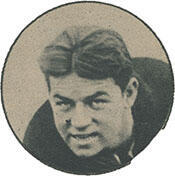
Here you will find contact information for Representative Edwin Benedict Dooley, including email address, phone number, and mailing address.
| Name | Edwin Benedict Dooley |
| Position | Representative |
| State | New York |
| District | 26 |
| Party | Republican |
| Status | Former Representative |
| Term Start | January 3, 1957 |
| Term End | January 3, 1963 |
| Terms Served | 3 |
| Born | April 13, 1905 |
| Gender | Male |
| Bioguide ID | D000425 |
About Representative Edwin Benedict Dooley
Edwin Benedict Dooley (April 13, 1905 – January 25, 1982) was a Republican member of the United States House of Representatives from New York who served three terms in Congress from 1957 to 1963. Born in Brooklyn, New York, on April 13, 1905, he grew up in the city that would shape much of his professional and political life. Known in his early years as “Eddie,” he developed a strong interest in athletics and public life that later informed both his media career and his public service.
Dooley attended Dartmouth College, where he graduated in 1927. At Dartmouth he distinguished himself as an athlete, serving as quarterback of the football team and earning All-American honors, a recognition that brought him regional prominence. He continued his education at Fordham University School of Law, from which he graduated in 1930. His legal training, combined with his public profile as a collegiate athlete, helped prepare him for a career that bridged journalism, corporate public relations, and eventually elective office.
Following his graduation from Dartmouth, Dooley embarked on a career in sports journalism. From 1927 until 1938 he was a feature writer on sports for the New York Sun, covering major events and figures in the athletic world. Beginning in 1936 and continuing through 1948, he expanded into broadcasting as a radio sports commentator in New York City, becoming a familiar voice to listeners in the metropolitan area. In 1938 he joined General Foods, where he worked as a public relations executive until 1955, gaining extensive experience in corporate communications and national marketing. During World War II he served on committees on food production and distribution for the War and Navy Departments, contributing to the wartime mobilization effort in an area critical to both civilian and military needs.
Dooley’s involvement in local government began in the village of Mamaroneck, New York, where he settled and became active in civic affairs. He served as a trustee of the village from 1942 to 1946, a period that spanned the final years of World War II and the immediate postwar transition. He later served as mayor of Mamaroneck from 1951 until 1956, overseeing local administration and community development during a time of suburban growth in Westchester County. His tenure as mayor, combined with his prior public visibility and corporate experience, positioned him as a viable candidate for higher office.
In 1956 Dooley successfully ran for the United States House of Representatives as a Republican from New York. He took his seat in the 85th Congress on January 3, 1957, and was reelected in 1958 and 1960, serving continuously until January 3, 1963. During his three terms in the House of Representatives, he participated in the legislative process during a significant period in American history marked by the early civil rights movement and Cold War tensions. As a member of the House, he represented the interests of his New York constituents and engaged in national policy debates. He voted in favor of the Civil Rights Act of 1957 and the Civil Rights Act of 1960, supporting landmark legislation aimed at protecting voting rights and strengthening federal enforcement mechanisms. However, he voted “present” on the proposed Twenty-fourth Amendment to the Constitution, which sought to ban poll taxes in federal elections. In 1962 he was an unsuccessful candidate for renomination, ending his congressional service at the conclusion of the 87th Congress.
After leaving Congress, Dooley returned to the field of public relations and worked as a lobbyist in Washington, D.C., drawing on his combined experience in business and government. In 1966 he was appointed chairman of the New York State Athletic Commission, a position he held until 1975. His tenure at the commission coincided with a turbulent era in American sports and politics. He attracted national attention and controversy when the commission, under his leadership, suspended the boxing license of heavyweight champion Muhammad Ali after Ali refused induction into the United States Army during the Vietnam War. Dooley also played a role in changing media practices in professional sports; in 1972 he revised commission policy on access for women sports journalists, permitting them to occupy seats reserved for the press and to enter dressing rooms, provided that male athletes were properly attired, thereby expanding professional opportunities for women in sports media.
In his personal life, Dooley married three times. He met his first wife, Harriette M. Feeley of Norwich, Vermont, while they were in college, and the couple married in 1926. They remained married until her death in 1952. He subsequently married Anita M. Gilles, with whom he was married until her death in 1962. His third wife, Margaret Sheffel, survived him. Dooley was the father of one son, Edwin B. Dooley Jr. (1933–2008), who also survived him and carried on the family name.
Edwin Benedict Dooley died in Boca Raton, Florida, on January 25, 1982. He was cremated, and his ashes were scattered at the family grave site in Gate of Heaven Cemetery in Hawthorne, New York. His career spanned athletics, journalism, corporate public relations, local government, national legislative service, and sports regulation, reflecting a life deeply intertwined with both public affairs and American popular culture in the mid-twentieth century.