Representative Edwin Russell Durno
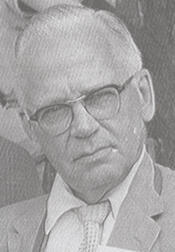
Here you will find contact information for Representative Edwin Russell Durno, including email address, phone number, and mailing address.
| Name | Edwin Russell Durno |
| Position | Representative |
| State | Oregon |
| District | 4 |
| Party | Republican |
| Status | Former Representative |
| Term Start | January 3, 1961 |
| Term End | January 3, 1963 |
| Terms Served | 1 |
| Born | January 26, 1899 |
| Gender | Male |
| Bioguide ID | D000575 |
About Representative Edwin Russell Durno
Edwin Russell Durno Jr. (January 26, 1899 – November 20, 1976) was an American physician, politician, decorated military veteran, and standout collegiate basketball player who later served as a Republican member of the United States House of Representatives from Oregon. He represented Oregon’s 4th congressional district in the Eighty-seventh Congress from 1961 to 1963, contributing to the legislative process during one term in office and representing the interests of his constituents during a significant period in American history.
Durno was born on a farm in Linn County, Oregon, near Albany. He attended public schools in Silverton, Oregon, before enrolling at the University of Oregon in Eugene. At the university he became a star on the Oregon Ducks men’s basketball team and emerged as one of the school’s earliest athletic standouts. A prolific scorer, he led the Ducks to the 1919 Pacific Coast Conference title and was a three-time All–Pacific Coast Conference selection. He was the University of Oregon’s first basketball All-American and served as team captain during his senior year in 1921, establishing a reputation that would later earn him recognition in state and university sports halls of fame.
After completing his undergraduate studies, Durno graduated from the University of Oregon with a Bachelor of Science degree in 1921. He then pursued medical training on the East Coast, earning his M.D. from Harvard Medical School in 1927. Following his graduation from Harvard, he established a medical practice in Boston, Massachusetts, beginning a professional career in medicine that would span several decades and later return him to his home state of Oregon.
Durno’s life was also marked by extensive military service. He served in the United States Army during both World War I and World War II. In World War I he served as an infantry sergeant, and in World War II he served in the Medical Corps. For his service and wounds received in the line of duty, he was awarded the Purple Heart. After World War II, Durno returned to Oregon and settled in Medford, where he resumed the practice of medicine. In addition to his private practice, he played a role in medical regulation and professional standards in the state, serving on the Oregon Board of Medical Examiners from 1947 to 1958.
Durno entered elective politics in the late 1950s. In 1958, he was elected to the Oregon State Senate, where he served as a Republican and gained experience in state-level legislative affairs. Building on this platform, he ran for federal office in 1960 and was elected to the United States House of Representatives from Oregon’s newly created 4th congressional district. In that election he unseated liberal Democrat Charles O. Porter, reflecting a shift in the political mood of the district at the time. As a member of the House of Representatives from 1961 to 1963, Durno participated in the democratic process during a period marked by the early years of the Kennedy administration and the unfolding of major domestic and international issues.
Representing a politically marginal district and doubtful of his prospects for reelection to the House, Durno chose not to seek another term in 1962. Instead, he sought to advance his political career by running for the Republican nomination for the United States Senate seat held by Democrat Wayne Morse in Oregon’s 1962 U.S. Senate election. In the Republican primary he was defeated by former state treasurer Sig Unander. After losing the nomination, Durno did not return to the House; his 4th district seat was won by Democrat Robert B. Duncan, who succeeded him in Congress. Durno then returned full-time to his medical practice in Medford and effectively retired from active political life.
In recognition of his achievements as a pioneering basketball player at the University of Oregon, Durno received posthumous honors in the field of sports. He was inducted into the Oregon Sports Hall of Fame in 1981 and later into the University of Oregon Sports Hall of Fame in 1992, commemorating his status as the university’s first basketball All-American and a key figure in its early athletic history. Edwin Russell Durno Jr. died on November 20, 1976.