Representative Edwin D. Eshleman
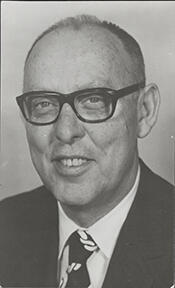
Here you will find contact information for Representative Edwin D. Eshleman, including email address, phone number, and mailing address.
| Name | Edwin D. Eshleman |
| Position | Representative |
| State | Pennsylvania |
| District | 16 |
| Party | Republican |
| Status | Former Representative |
| Term Start | January 10, 1967 |
| Term End | January 3, 1977 |
| Terms Served | 5 |
| Born | December 4, 1920 |
| Gender | Male |
| Bioguide ID | E000214 |
About Representative Edwin D. Eshleman
Edwin Duing Eshleman (December 4, 1920 – January 10, 1985) was an American politician who represented Pennsylvania in the United States House of Representatives as a Republican from 1967 to 1977. Over the course of five consecutive terms in Congress, he contributed to the legislative process during a significant period in American history, participating in the democratic process and representing the interests of his constituents as a member of the Republican Party.
Eshleman was born on December 4, 1920, and grew up in Pennsylvania, where he developed an early familiarity with the social and economic concerns of the region he would later represent. His formative years coincided with the Great Depression and the lead-up to World War II, experiences that helped shape his understanding of public service and national policy. These early influences laid the groundwork for his later engagement in state and national politics.
As a young man, Eshleman pursued his education in Pennsylvania, preparing for a career that would combine civic involvement with public leadership. His educational background, together with his early exposure to the issues facing local communities, provided him with the skills and perspective necessary for legislative work. This foundation enabled him to move naturally into public life, where he would eventually serve at the federal level.
Before entering Congress, Eshleman built his career in public affairs and Republican Party politics in Pennsylvania, gaining experience that would inform his later legislative service. Through his involvement in local and state matters, he became familiar with the needs of his district and the workings of government, establishing himself as a credible advocate for his community. This period of his career positioned him to seek national office and to participate more directly in shaping federal policy.
Eshleman was elected to the United States House of Representatives as a Republican and took office in 1967, beginning the first of his five terms representing Pennsylvania. His decade in Congress spanned a transformative era that included the Vietnam War, the civil rights movement, and significant debates over domestic policy and federal authority. As a member of the House of Representatives, he participated in the legislative process, deliberating on national issues while working to ensure that the interests and concerns of his Pennsylvania constituents were reflected in federal decision-making.
During his tenure from 1967 to 1977, Eshleman served continuously in the House, contributing to committee work, floor debates, and the broader responsibilities of congressional oversight. He was part of a Republican delegation that navigated changing political dynamics at both the national and state levels, and his service coincided with shifts in party coalitions and public expectations of government. Throughout this period, he remained engaged in the day-to-day work of legislation, constituent service, and representation that defined his role in Congress.
After choosing not to seek reelection following his fifth term, Eshleman left Congress in 1977, concluding ten years of federal legislative service. In his later years, he remained identified with the public life of Pennsylvania and with the Republican Party, his congressional career standing as the centerpiece of his contributions to public service. Edwin Duing Eshleman died on January 10, 1985, closing a life marked by a decade of representation in the United States House of Representatives during a pivotal period in American political history.