Bios     Edwin Flye

Representative Edwin Flye
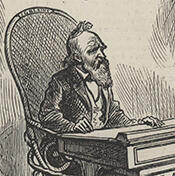
Republican | Maine

Representative Edwin Flye - Maine Republican

Here you will find contact information for Representative Edwin Flye, including email address, phone number, and mailing address.

NameEdwin Flye
PositionRepresentative
StateMaine
District3
PartyRepublican
StatusFormer Representative
Term StartDecember 6, 1875
Term EndMarch 3, 1877
Terms Served1
BornMarch 4, 1817
GenderMale
Bioguide IDF000225
Representative Edwin Flye
Edwin Flye served as a representative for Maine (1875-1877).

About Representative Edwin Flye


Edwin John Feulner Jr. (August 12, 1941 – July 18, 2025) was an American political scientist, think tank executive, congressional aide, foreign relations consultant, and co‑founder of The Heritage Foundation, a major conservative think tank established in 1973. A central figure in the modern American conservative movement, he served as the Heritage Foundation’s president from 1977 to 2013 and again from 2017 to 2018, and later as chairman of its board of trustees. Over the course of his career he also worked as a congressional aide, policy adviser, and international consultant, and contributed to the broader conservative intellectual and policy infrastructure in the United States and abroad.

Feulner was born in Chicago, Illinois, on August 12, 1941, to Helen Joan (née Franzen) and Edwin John Feulner, the owner of a Chicago real estate firm. He was raised in a devout Roman Catholic German American family and had three sisters—Mary Ann, Joan, and Barbara. Three of his maternal uncles were parish priests, reinforcing the strong religious environment of his upbringing. He attended Immaculate Conception High School in Elmhurst, Illinois, where he received a Catholic secondary education that shaped his early intellectual and moral outlook.

Feulner pursued higher education at Regis University in Denver, Colorado, where he graduated with a Bachelor of Arts degree in English in 1963. He then attended the Wharton School of Business at the University of Pennsylvania, earning a Master of Business Administration degree in 1964. Continuing his academic training, he became a Richard M. Weaver Fellow, studying at Georgetown University and the London School of Economics. In 1981 he completed a Doctor of Philosophy degree in political science at the University of Edinburgh in Scotland. His doctoral thesis, titled “The Evolution of the Republican Study Committee,” examined the development and role of the Republican Study Committee, a caucus of conservative Republicans in the U.S. House of Representatives, foreshadowing his later influence on congressional conservatism.

Feulner began his professional career as an analyst for the Center for Strategic and International Studies (then known as the Center for Strategic Studies), focusing on issues of foreign policy and national security. He subsequently moved into congressional service, first as an aide to Representative Melvin Laird, a Republican from Wisconsin who later became Secretary of Defense. Feulner then became a long‑serving executive assistant to Representative Phil Crane, a Republican from Illinois and a prominent conservative in the House of Representatives. During this period, he also served as executive director of the Republican Study Committee, deepening his engagement with conservative legislative strategy and policy development. His work in Congress placed him at the intersection of legislative politics and the emerging network of conservative policy organizations.

In 1973, Feulner was a founding trustee of The Heritage Foundation, created as a conservative research and policy institution in Washington, D.C. Four years after its founding, in 1977, he left Representative Crane’s office to become Heritage’s president, at a time when the organization had only nine employees. Under his leadership, Heritage adopted a more aggressive, market‑driven, and accessible approach to policy research. Feulner championed what became known as the “briefcase test,” insisting that Heritage’s studies be concise, timely, and easily portable for members of Congress and their staff, and that they be published before, rather than after, major legislation was considered. This strategy helped transform Heritage from a small operation into one of the world’s largest and most influential think tanks. Within about a year and a half of his assuming the presidency, Heritage’s budget rose to $2.5 million and its donor base grew to approximately 120,000. Ultimately, under his leadership, the foundation expanded to roughly 250 employees, with an annual income of about $80 million and a donor pool of about 600,000, leading Newt Gingrich to describe it in The New York Times as “the Parthenon of the conservative metropolis.”

Feulner’s role at Heritage extended beyond institutional management to shaping major policy initiatives and the broader conservative agenda. He helped guide the foundation’s work on economic freedom, national defense, and limited government, and in 1997 oversaw the launch of the annual Index of Economic Freedom, a joint project of The Wall Street Journal and Heritage that measured countries’ performance in areas such as rule of law, regulatory efficiency, limited government, and open markets. In January 2013 he authored a column titled “Economic Freedom on the Wane,” summarizing the index’s findings and warning of declining economic liberty worldwide. In addition to his long tenure as president from 1977 to 2013, he briefly returned as president from 2017 to 2018 and remained deeply involved in the organization’s governance, serving as chairman of the board of trustees until his retirement from that role in 2023, a position he had briefly resumed after the 2016 election of Donald Trump.

Alongside his think tank leadership, Feulner engaged in international consulting and foreign policy–related work. In 1997 he and Heritage Asia policy expert Ken Sheffer co‑founded Belle Haven Consultants, a Hong Kong‑based for‑profit consulting firm that represented clients based in Malaysia. Belle Haven Consultants paid more than $1 million in fees to lobbying firms that ultimately registered with the U.S. Department of Justice as foreign agents under the Foreign Agents Registration Act. In April 2005, The Washington Post reported that Heritage’s criticism of the Malaysian government appeared to soften after Feulner initiated a business relationship with Malaysian prime minister Mahathir Mohamad. The report noted that Belle Haven employed Feulner’s wife, Linda Feulner, as a senior adviser and that its chief operating officer, Ken Sheffer, was the former head of Heritage’s Asia office and remained on Heritage’s payroll as a consultant. The Heritage Foundation denied any conflict of interest, stating that its views on Malaysia had changed in response to the country’s cooperation with the United States after the September 11 attacks and what it described as Malaysia’s movement in a positive economic and political direction.

Beyond Heritage, Feulner held numerous leadership and advisory positions in conservative and academic organizations. He served as president of the Philadelphia Society from 1982 to 1983 and again from 2013 to 2014, and was a onetime director of the Council for National Policy, the Acton Institute, and George Mason University. He was president and treasurer of the Mont Pelerin Society in 2014 and served as a trustee and chairman of the board of the Intercollegiate Studies Institute. He also sat on the board of the National Chamber Foundation and the Institut d’Études Politiques, and was a trustee and life trustee of Regis University, his undergraduate alma mater. He became a member of the advisory council of the Victims of Communism Memorial Foundation and served as its chair in 2021. In government advisory roles, he was vice chairman of the National Commission on Economic Growth and Tax Reform (the Kemp Commission) from 1995 to 1996, a member of the Meltzer Commission on international financial institutions from 1999 to 2000, and a member of the Gingrich–Mitchell Congressional U.N. Reform Task Force in 2005. From 1982 to 1991 he chaired the U.S. Advisory Commission on Public Diplomacy, and he served as a consultant on domestic policy to President Ronald Reagan as well as an adviser to several federal departments and agencies.

Feulner received numerous honors in recognition of his influence on public policy and conservative thought. In 1989 he was awarded the Presidential Citizens Medal, the second‑highest civilian award in the United States. Over the course of his career he received eleven honorary degrees and was honored by the governments of Taiwan, South Korea, and the Czech Republic. Popular and political media frequently cited his influence: in 2007 GQ magazine listed him among the “50 most powerful people in D.C.,” while the Daily Telegraph named him one of the “100 most influential conservatives in America” in 2007 and 2010. In 2009, Karl Rove, writing in Forbes, ranked him as the sixth‑most powerful conservative in Washington, D.C. In later years he continued to shape conservative policy debates, endorsing former Vice President Mike Pence in the 2024 Republican presidential primaries in September 2023 and contributing the afterword, titled “Onward!,” to the Project 2025 policy guide published in April 2024.

As an author, Feulner contributed to the literature of conservative politics and public policy. His works included Looking Back (The Heritage Foundation, 1981); Conservatives Stalk the House (Green Hill, 1983); The March of Freedom (Spence Publishing Company, 1998); Intellectual Pilgrims (Mont Pelerin Society, 1999); and Leadership for America: The Principles of Conservatism (Spence Publishing Company, 2000). He also co‑authored Getting America Right (with Doug Wilson; Crown Forum, 2006) and The American Spirit (with Brian Tracy; Thomas Nelson, 2012). Through these books, as well as public appearances, media commentary, and digital outreach—including activity on platforms such as Twitter and appearances on C‑SPAN—he articulated and promoted the principles of limited government, free markets, and a strong national defense that underpinned his work at Heritage and beyond.

Feulner married Linda Claire (née Leventhal), and the couple lived in Alexandria, Virginia, for more than fifty years. They had two children and maintained close ties to the Washington, D.C., policy community throughout his career. Edwin John Feulner Jr. died at his home in Alexandria on July 18, 2025, at the age of 83.