Senator E. J. (Jake) Garn
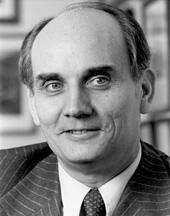
Here you will find contact information for Senator E. J. (Jake) Garn, including email address, phone number, and mailing address.
| Name | E. J. (Jake) Garn |
| Position | Senator |
| State | Utah |
| Party | Republican |
| Status | Former Representative |
| Term Start | January 3, 1975 |
| Term End | January 3, 1993 |
| Terms Served | 9 |
| Born | October 12, 1932 |
| Gender | Male |
| Bioguide ID | G000072 |
About Senator E. J. (Jake) Garn
Edwin Jacob “Jake” Garn (born October 12, 1932) is an American politician from the state of Utah who represented Utah in the United States Senate from 1974 to 1993. A member of the Republican Party, he served four terms in the Senate and became nationally known as the first sitting member of the United States Congress to fly in space when he flew aboard the Space Shuttle Discovery during mission STS-51-D in April 1985. His congressional career spanned a significant period in late twentieth-century American history, during which he participated in the legislative process and represented the interests of his Utah constituents.
Garn grew up in Utah and developed an early interest in aviation, beginning to fly at the age of 16. He later entered military service, becoming a Navy combat pilot. Over the course of his aviation career he accumulated extensive flight experience, ultimately logging more flight hours than anyone in the NASA Astronaut Office at the time of his spaceflight. This background in aviation and military service helped shape his later interest in aerospace policy and national defense, and contributed to his reputation as a knowledgeable advocate on issues related to aviation and space.
Before his election to the United States Senate, Garn entered public life in municipal government. He was elected mayor of Salt Lake City, Utah’s capital and largest city, and served in that office from 1972 to 1974. As mayor, he gained experience in executive leadership and urban administration, which provided a foundation for his subsequent service at the federal level. His performance in city government helped establish his political standing within the Republican Party in Utah and positioned him for statewide office.
Garn was elected to the United States Senate in 1974 and took office that year, beginning a Senate career that would last until 1993. During his four terms in office, he contributed to the legislative process on a wide range of issues and was particularly associated with matters involving banking, housing, and space and science policy. Serving during a period marked by the end of the Vietnam War era, the Cold War, the Reagan administration, and the early post–Cold War years, he participated in debates over national security, fiscal policy, and federal regulatory matters. As a senator, he was recognized as an advocate for the aerospace sector and a supporter of the National Aeronautics and Space Administration (NASA), and he maintained close ties between the space program and Congress.
Garn’s most widely publicized role in the space program came in April 1985, when he flew as a payload specialist aboard the Space Shuttle Discovery on mission STS-51-D, launched from and returning to the Kennedy Space Center in Florida. The primary objectives of STS-51-D included the deployment of two communications satellites and the conduct of electrophoresis and echocardiograph operations in space, along with a number of other scientific and technical experiments. As a payload specialist, Garn served as a congressional observer and as a subject for medical experiments on space adaptation syndrome, commonly known as space sickness. Over the course of the mission he traveled more than 2.5 million miles (4.0 million kilometers) in 108 Earth orbits, logging over 167 hours in space. His participation provided Congress with a direct, firsthand perspective on human spaceflight and NASA operations.
During the STS-51-D mission, Garn experienced severe space sickness, to such an extent that NASA personnel jokingly referred to a scale of space sickness in which “one Garn” represented the highest possible level of illness. Some astronauts who were critical of the payload specialist program, including Mike Mullane, cited Garn’s experience as evidence of the risks of flying individuals with relatively limited astronaut training. Nonetheless, Garn was in excellent physical condition and brought to the mission his long record as a veteran Navy combat pilot. Astronaut Charles Bolden described him as “the ideal candidate” for such a congressional flight, emphasizing his extensive flight hours and professional discipline. Fellow payload specialist Charles Walker, who also suffered from space sickness on the flight despite having flown before, later stated that Garn’s participation worked out “extraordinarily well” and that NASA and the U.S. space program benefited from his experience and his ability to relate the realities of spaceflight directly to colleagues on Capitol Hill. Walker credited Garn with bringing “tremendous credibility” to NASA’s programs in congressional deliberations.
Garn’s association with the space program continued after his flight. NASA named the Jake Garn Mission Simulator and Training Facility, the agency’s prime training facility for astronauts in the Space Shuttle and Space Station programs, in his honor, recognizing his contributions as both a legislator and spaceflight participant. Upon his return from space, he also turned to writing, co-authoring the 1989 novel “Night Launch,” a work of fiction centered on terrorists seizing control of the Space Shuttle Discovery during the first joint NASA–USSR Space Shuttle mission. Garn concluded his Senate service in 1993, leaving a legacy that combined traditional legislative work with a unique role in the history of American human spaceflight.