Representative Edwin Werter Higgins
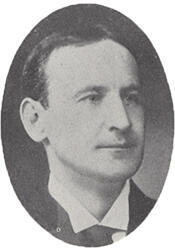
Here you will find contact information for Representative Edwin Werter Higgins, including email address, phone number, and mailing address.
| Name | Edwin Werter Higgins |
| Position | Representative |
| State | Connecticut |
| District | 3 |
| Party | Republican |
| Status | Former Representative |
| Term Start | December 4, 1905 |
| Term End | March 3, 1913 |
| Terms Served | 4 |
| Born | July 2, 1874 |
| Gender | Male |
| Bioguide ID | H000578 |
About Representative Edwin Werter Higgins
Edwin Werter Higgins (July 2, 1874 – September 24, 1954) was an American politician, lawyer, and Republican member of the United States House of Representatives from Connecticut. He represented Connecticut’s 3rd Congressional District in Congress from October 2, 1905, until March 3, 1913, serving four terms during a significant period in American political and social development. Over the course of his career, he also served in the Connecticut House of Representatives and held a series of important legal and party positions at the state and local levels.
Higgins was born on July 2, 1874, in Clinton, Connecticut. He received his early education in Connecticut and attended Norwich Free Academy in Norwich, an institution that prepared many of the region’s future professionals and public officials. Demonstrating an early interest in the law and public affairs, he went on to study at Yale Law School, from which he graduated in 1897. While at Yale, he was active in student organizations, serving as secretary of the Kent Club and becoming a member of the Phi Sigma Kappa fraternity, experiences that helped establish his early professional and political networks.
Admitted to the bar in 1897, Higgins commenced the practice of law in Norwich, Connecticut, which would remain his professional and political base for the rest of his life. He quickly entered public service, winning election to the Connecticut House of Representatives, where he served in 1899 and 1900. At the same time, he became increasingly involved in Republican Party affairs, serving as a member of the Republican State Central Committee from 1900 to 1905. During this period he also served as health officer of New London County, reflecting his engagement with local public health and administrative matters. In addition, he served in the Connecticut State National Guard from 1901 to 1904, combining military service with his growing legal and political responsibilities.
Higgins’s local legal career advanced in tandem with his political activity. He served as corporation counsel of Norwich in 1901 and 1902, providing legal advice and representation to the city government. In 1904 he was chosen as a delegate to the Republican National Convention, underscoring his rising prominence within the party at both the state and national levels. In 1905 he became prosecuting attorney of Norwich, further solidifying his reputation as a capable lawyer and public official. These roles, together with his legislative experience, positioned him as a leading Republican figure in eastern Connecticut on the eve of his entry into national office.
Higgins was elected as a Republican to the Fifty-ninth Congress to fill the vacancy caused by the resignation of Representative Frank B. Brandegee from Connecticut’s 3rd Congressional District. He took his seat on October 2, 1905. He was subsequently reelected to the Sixtieth, Sixty-first, and Sixty-second Congresses, serving continuously until March 3, 1913. During his four terms in the U.S. House of Representatives, he participated in the legislative process at a time marked by the Progressive Era’s reforms and debates over regulation, economic policy, and social issues. As a member of the House of Representatives, Higgins represented the interests of his constituents in Connecticut and contributed to the work of Congress as part of the Republican majority and later minority. He was not a candidate for renomination in 1912, thus concluding his congressional service after eight years.
After leaving Congress in 1913, Higgins resumed the practice of law in Norwich. He returned to municipal legal service as corporation counsel of Norwich from 1919 to 1922, continuing his long association with the city’s public affairs. During the First World War, he again served in the Connecticut State National Guard, reflecting an ongoing commitment to state and national service beyond his legislative career. He remained active in Republican politics, serving once more as a delegate to the Republican National Convention in 1916, and continued to be regarded as an influential figure in Connecticut’s legal and political circles.
In the later phase of his career, Higgins held a significant judicial-related office at the state level. From 1932 to 1946, he served as prosecuting attorney for the Court of Common Pleas in Connecticut, a position that placed him at the center of the state’s trial-level criminal justice system for nearly a decade and a half. His long tenure in this role capped a public career that had spanned local, state, and national responsibilities over more than four decades. Edwin Werter Higgins died in Norwich, Connecticut, on September 24, 1954. He was interred in Maplewood Cemetery, leaving behind a record of sustained service as a lawyer, legislator, and public official in Connecticut and the United States Congress.