Senator Edwin Stockton Johnson
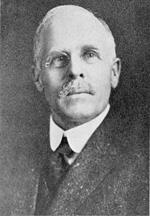
Here you will find contact information for Senator Edwin Stockton Johnson, including email address, phone number, and mailing address.
| Name | Edwin Stockton Johnson |
| Position | Senator |
| State | South Dakota |
| Party | Democratic |
| Status | Former Representative |
| Term Start | December 6, 1915 |
| Term End | March 3, 1921 |
| Terms Served | 1 |
| Born | February 26, 1857 |
| Gender | Male |
| Bioguide ID | J000128 |
About Senator Edwin Stockton Johnson
Edwin Stockton Johnson (February 26, 1857 – July 19, 1933) was a United States senator from South Dakota who served one term in the U.S. Senate from 1915 to 1921. A member of the Democratic Party, he represented South Dakota during a significant period in American history and contributed to the legislative process as the first Senator from that state to be elected by popular vote and the first Democrat to represent South Dakota in the Senate.
Johnson was born in Owen County, Indiana, near Spencer, on February 26, 1857. In the year of his birth, 1857, he moved with his parents to Osceola, Iowa, where he was raised and attended the public schools. As a young man he entered the mercantile business, gaining early experience in commerce and local enterprise that would shape his later career in banking and real estate.
In 1880 Johnson moved west to Wheeler County, Nebraska, where he homesteaded and engaged in agricultural pursuits, reflecting the broader movement of settlement and development on the Great Plains in the late nineteenth century. He returned to Osceola, Iowa, in 1881 and was employed as a bank cashier, beginning a long association with financial institutions. In 1884 he relocated to the Dakota Territory, settling in what would become South Dakota, where he established the Citizens’ Bank of Grand View, South Dakota, and also engaged in agricultural pursuits. Over time he organized and established a number of banks in South Dakota, Minnesota, and Iowa, becoming a prominent regional banker.
While building his banking interests, Johnson studied law and was admitted to the bar in 1888. He commenced the practice of law in South Dakota and soon entered public service. He served as prosecuting attorney of Douglas County, South Dakota, from 1892 to 1893, and was elected to the South Dakota State Senate, serving from 1894 to 1895. These roles marked his emergence as a Democratic leader in a predominantly Republican state and provided him with legislative and legal experience that would inform his later national service.
Johnson retired from the banking business in 1902 and turned his attention to the real estate and loan business in Platte, South Dakota. His influence within the Democratic Party grew, and he served as a member of the Democratic National Committee from 1904 to 1916, participating in national party affairs during the Progressive Era. In 1912 he was the Democratic candidate for Governor of South Dakota, but his bid was unsuccessful. Nonetheless, his gubernatorial campaign increased his visibility and stature within the state’s Democratic ranks.
In 1914 Johnson was elected as a Democrat to the United States Senate from South Dakota, at a time when the Seventeenth Amendment had recently mandated the popular election of senators. He thus became the first Senator popularly elected from South Dakota and the first Democrat to represent the state in the Senate. He served from March 4, 1915, to March 3, 1921, completing one full term in office. During his tenure, which encompassed World War I and its aftermath, Johnson participated in the democratic process and represented the interests of his South Dakota constituents. He served as chairman of the Senate Committee on Revolutionary Claims during the Sixty-fourth and Sixty-fifth Congresses, overseeing matters related to historical claims arising from the Revolutionary era. After completing his term, he chose to retire from the Senate and did not seek reelection.
Following his departure from Congress, Johnson resumed his activities in the real estate and loan business in Platte, South Dakota. He remained a respected figure in state and local affairs until his death in Platte on July 19, 1933. He was interred in Pleasant Ridge Cemetery in Armour, South Dakota, closing a career that spanned agriculture, banking, law, state and national politics, and service in the United States Senate.