Senator Edwin Freemont Ladd
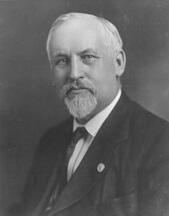
Here you will find contact information for Senator Edwin Freemont Ladd, including email address, phone number, and mailing address.
| Name | Edwin Freemont Ladd |
| Position | Senator |
| State | North Dakota |
| Party | Republican |
| Status | Former Representative |
| Term Start | April 11, 1921 |
| Term End | June 22, 1925 |
| Terms Served | 1 |
| Born | December 13, 1859 |
| Gender | Male |
| Bioguide ID | L000012 |
About Senator Edwin Freemont Ladd
Edwin Fremont Ladd (December 13, 1859 – June 22, 1925) was an American chemist, academic administrator, and Republican politician who represented North Dakota in the United States Senate from 1921 until his death in 1925. During his single term in Congress, he contributed to the legislative process in a period of significant national change following World War I and served as chairman of the Senate Committee on Public Roads and Surveys during the 68th Congress.
Ladd was born in Starks, Somerset County, Maine, on December 13, 1859. He attended local public schools and Somerset Academy in Athens, Maine, before pursuing higher education in agriculture and the sciences. He graduated with a Bachelor of Science degree from Maine Agricultural College (now the University of Maine) at Orono in 1884. His early academic training in chemistry and agriculture laid the foundation for a career that would combine scientific inquiry, public service, and educational leadership.
Immediately after completing his degree, Ladd began work as a professional chemist. From 1884 to 1890 he served as a chemist at the New York State Experiment Station in Geneva, New York, where he engaged in agricultural and chemical research at a time when scientific methods were increasingly applied to farming and food production. In 1890 he moved to North Dakota, a relatively new state whose agricultural sector was rapidly developing, and joined the North Dakota Agricultural College in Fargo (later North Dakota State University). There he became dean of the school of chemistry and pharmacy and professor of chemistry, positions that placed him at the center of scientific education in the region.
Ladd’s work in North Dakota extended beyond the classroom and laboratory. From 1890 to 1916 he served as chief chemist of the North Dakota Agricultural Experiment Station, conducting research that supported the state’s farmers and agricultural industries. He also edited the North Dakota Farmer, an agricultural periodical published in Lisbon, North Dakota, from 1899 to 1904, using that platform to disseminate scientific information and advocate for improved farming practices. Beginning in 1902, he became administrator of North Dakota’s pure-food laws, a role in which he actively crusaded for nearly two decades, from 1902 to 1921, to ensure the quality and safety of food products. His enforcement efforts and public advocacy reflected the broader Progressive Era movement for consumer protection. In 1916 he was appointed president of the North Dakota Agricultural College, a position he held until 1921, guiding the institution through years of growth and increasing emphasis on scientific and technical education.
Ladd entered national politics as a member of the Republican Party. In the 1920 United States Senate election in North Dakota, he was elected as a Republican to the U.S. Senate. He took his seat on March 4, 1921, representing North Dakota during a significant period in American history marked by postwar economic adjustment, debates over agricultural policy, and evolving federal responsibility for infrastructure and regulation. As a senator, Edwin Freemont Ladd participated in the democratic process and represented the interests of his constituents, bringing to his legislative work a background in science, agriculture, and consumer protection. During the 68th Congress he served as chairman of the Committee on Public Roads and Surveys, a position from which he helped oversee federal policy related to highways and infrastructure development at a time when motor transportation and road building were becoming increasingly important to the national economy.
Ladd’s service in Congress continued until his death in office. He served from March 4, 1921, until June 22, 1925, completing one term in the Senate but not living to see its conclusion. He died at Johns Hopkins Hospital in Baltimore, Maryland, on June 22, 1925. Following his death, he was interred in Glenwood Cemetery in Washington, D.C. His name appears among the members of the United States Congress who died in office between 1900 and 1949, marking the close of a career that bridged scientific research, higher education administration, and national legislative service.