Representative Edwin Barber Morgan
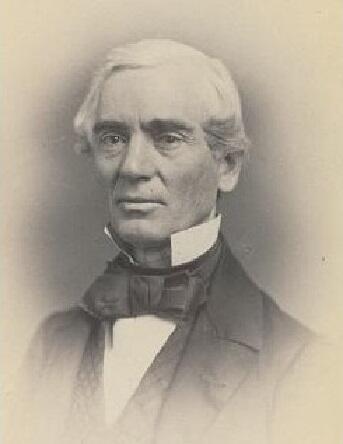
Here you will find contact information for Representative Edwin Barber Morgan, including email address, phone number, and mailing address.
| Name | Edwin Barber Morgan |
| Position | Representative |
| State | New York |
| District | 25 |
| Party | Republican |
| Status | Former Representative |
| Term Start | December 5, 1853 |
| Term End | March 3, 1859 |
| Terms Served | 3 |
| Born | May 2, 1806 |
| Gender | Male |
| Bioguide ID | M000948 |
About Representative Edwin Barber Morgan
Edwin Barber Morgan (May 2, 1806 – October 13, 1881) was an entrepreneur, financier, and politician from the Finger Lakes region of western New York who played a prominent role in the development of the American express industry and in mid-nineteenth-century national politics. He was the first president of Wells Fargo & Company, founder of the United States Express Company, a director of American Express Company, and a three-term member of the United States House of Representatives from New York, serving each term under a different party label. As a member of the Republican Party representing New York during part of his congressional career, he contributed to the legislative process in a significant period of American history, participating in the democratic process and representing the interests of his constituents.
Morgan was born in Aurora, Cayuga County, New York, on May 2, 1806, the eldest son of Christopher and Nancy (Barber) Morgan. He was educated at Cayuga Lake Academy in Aurora, a local institution that he later supported as a benefactor. At the age of thirteen he became a clerk in his father’s mercantile enterprise, gaining early experience in trade and business. By the time he was twenty-one he had taken over the family business. Morgan was part of a family network that would become influential in New York and national affairs: his brother Christopher Morgan later served in Congress and as New York Secretary of State; his cousin was the noted ethnologist Lewis H. Morgan; his uncle was Noyes Barber, a U.S. Representative from Connecticut; and he was a first cousin of Edwin Denison Morgan, who served as governor of New York from 1859 to 1862 and as a U.S. senator.
On September 27, 1829, Morgan married Charlotte Fidelia Wood of Aurora. The couple had three children: a son, Alonzo, and two daughters, Louise F. and Katharine. Throughout his life Morgan remained closely tied to Aurora and the surrounding Cayuga Lake region, maintaining his residence and many of his business interests there even as his activities expanded across the country.
Building on his early mercantile experience, Morgan developed a large enterprise in buying and shipping agricultural products from the fertile lands around Cayuga Lake and the broader Finger Lakes region. He and his brothers also became active in boat-building to support the transportation of goods, taking advantage of New York’s expanding canal and lake trade. Their business interests extended beyond New York: they owned extensive gypsum beds in Grand Rapids, Michigan, and operated a starch-making business at Oswego, New York. In addition to his commercial pursuits, Morgan was active in the New York Militia, serving as inspector of the 2nd Division, which included units from Cayuga, Wayne, Ontario, Yates, Tompkins, and Seneca Counties. Under New York’s 1827 militia law, each division was authorized an inspector with the rank of colonel, and each brigade an inspector with the rank of major. From this service Morgan derived the title “Colonel” Morgan, by which he was widely known long after he ceased active militia duty.
Morgan’s business career reached national prominence in the emerging express and financial services industry. He became a director and the first president of Wells Fargo & Company, organized on March 18, 1852, by his fellow townsman Henry Wells, who had been a founder of the American Express Company in 1850. Wells Fargo was created specifically to provide express mail, shipping, and banking services to California at the height of the Gold Rush, when rapid migration and economic development created a demand for reliable transport and financial operations between the Pacific Coast and the eastern states. In 1854 Morgan founded the United States Express Company to provide similar express mail and freight services for the Southern states, coordinating its operations so that it connected with Wells Fargo at St. Louis, Missouri. Around this time and continuing until his death in 1881, Morgan also served as a director of American Express, which by then had its headquarters in Manhattan, further cementing his role as a leading figure in the national express and transportation business.
Morgan’s political career developed alongside his business activities. He was first nominated for a seat in the United States House of Representatives in 1850 but was narrowly defeated by a margin of 14 votes. He was subsequently elected to Congress in 1852 as a Whig, in 1854 as an Opposition Party candidate, and in 1856 as a Republican, reflecting the fluid and shifting party alignments of the 1850s. He represented New York’s 25th congressional district from March 4, 1853, to March 3, 1859, serving three consecutive terms. During the 34th Congress (1855–1857) he was chairman of the Committee on Patents, where he dealt with legislation affecting intellectual property and technological innovation. His service in Congress coincided with the mounting sectional crisis preceding the Civil War, and he was one of the members of Congress who came to the aid of Senator Charles Sumner after Sumner was brutally assaulted on the Senate floor by Representative Preston Brooks on May 22, 1856. Early in his congressional service Morgan resigned as president of Wells Fargo in order to devote more attention to his legislative duties, though he remained on the company’s board of directors. He chose not to be a candidate for reelection in 1858.
Morgan continued to manage his corporate responsibilities during and after his time in Congress. On July 20, 1858, he resigned his seat on the Wells Fargo board, and N. H. Stockwell was elected to succeed him. In November 1858, however, director Thomas M. Janes resigned, and Morgan was again elected to the board. He remained a director of Wells Fargo until the beginning of 1867. After a brief retirement from that role, he was reelected to the board in 1868 and served until 1870. During the American Civil War, Morgan was active in raising and equipping regiments from New York, using his organizational skills and regional influence to support the Union war effort. His continued directorship at American Express and his leadership in United States Express kept him at the center of the nation’s transportation and financial networks during a period of rapid economic and territorial expansion.
In the postwar years Morgan devoted increasing attention to educational and philanthropic endeavors while maintaining his business interests. He became a trustee of Cornell University from its founding period in 1865 until 1874, supporting the new institution’s mission as a major center of higher education in New York. Working with his longtime friend and business associate Henry Wells to establish a college for women in their home region, Morgan was a charter trustee of Wells College in Aurora from its founding in 1868 until his death in 1881, and he served as president of its board of trustees from 1878 onward. He was also a trustee of Auburn Theological Seminary from 1870 to 1881 and continued his support for Cayuga Lake Academy, the secondary school where he had been educated. An original shareholder of The New York Times, Morgan played a notable role in the newspaper’s history in 1871, when editor George Jones feared that control of the paper might pass into the hands of interests aligned with New York political boss William Magear Tweed. Morgan purchased enough stock—at a cost of $375,000—to prevent such a takeover, thereby helping to preserve the paper’s independence and contributing materially to Tweed’s eventual downfall.
Known for being physically and mentally quick-moving and incessantly active even in old age, Morgan remained engaged in business, education, and public affairs until the final years of his life. He died in Ledyard, New York, on October 13, 1881, at the age of seventy-five. He was interred at Oak Glen Cemetery in Aurora, the community where his career had begun and to which he had remained closely connected throughout his life.