Representative Edwin Ewing Roberts
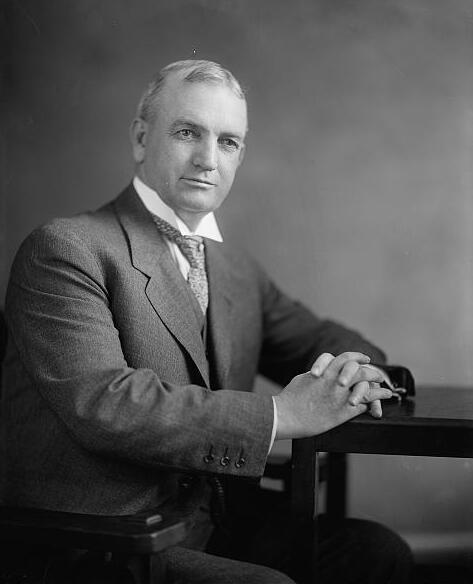
Here you will find contact information for Representative Edwin Ewing Roberts, including email address, phone number, and mailing address.
| Name | Edwin Ewing Roberts |
| Position | Representative |
| State | Nevada |
| District | At-Large |
| Party | Republican |
| Status | Former Representative |
| Term Start | April 4, 1911 |
| Term End | March 3, 1919 |
| Terms Served | 4 |
| Born | December 12, 1870 |
| Gender | Male |
| Bioguide ID | R000309 |
About Representative Edwin Ewing Roberts
Edwin Ewing Roberts (December 12, 1870 – December 11, 1933) was an American attorney and Republican politician from Nevada. He is best known for his service as a United States Representative from Nevada from 1911 to 1919 and as mayor of Reno, Nevada, from 1923 until his death in 1933. Over the course of four terms in Congress and a decade in municipal office, Roberts played a visible role in state and national politics during a transformative period in American history.
Roberts was born and raised in Pleasant Grove, California, on December 12, 1870. He attended local public schools before enrolling at the California State Normal School, from which he graduated in 1891. Following his graduation, he embarked on a teaching career, first in Hollister, California, where he taught from 1891 to 1897. He then moved to Nevada, teaching in Empire, Ormsby County, from 1897 to 1899. During these early years, he combined his work in education with the study of law, laying the foundation for his later legal and political career.
While still engaged in teaching, Roberts studied law and was admitted to the bar in 1899. He commenced the practice of law in Carson City, Nevada, where he quickly became active in public affairs. A member of the Republican Party, he was elected district attorney of Ormsby County in 1900 and served in that capacity for a decade, from 1900 to 1910. His work as district attorney established his reputation as a capable lawyer and public official. Beginning in 1912, Roberts became a regular figure in party politics, serving as a delegate to every Nevada Republican state convention and to almost every national Republican convention until 1932.
In 1910, Roberts was elected as a Republican to the United States House of Representatives from Nevada. He was reelected three times and served four consecutive terms from March 4, 1911, to March 3, 1919. His tenure in Congress coincided with a significant period in American history, including the Progressive Era and the First World War. As a member of the House of Representatives, Edwin Ewing Roberts participated in the legislative process, represented the interests of his Nevada constituents, and contributed to national debates. On April 5, 1917, he was among those who voted against U.S. entry into World War I against Germany, a notable stand during the congressional deliberations over American involvement in the conflict. Roberts did not seek renomination to the House in 1918; instead, he ran unsuccessfully for the United States Senate, losing to Democrat Charles B. Henderson by a vote of 12,197 to 8,053.
After his Senate defeat, Roberts relocated to Reno, Nevada, where he re-established his law practice and remained active in Republican politics. In 1923, he was elected mayor of Reno, marking the beginning of a new phase of public service at the municipal level. He was reelected mayor in 1927 and again in 1931, serving continuously from 1923 until his death in 1933. During this period he also sought higher office, running unsuccessfully for the Republican nomination for U.S. Senator in 1926 and for governor of Nevada in 1930, but he retained his prominence in local government and within the state party.
Roberts’s personal life was closely intertwined with his public career. He was married twice. His first wife, Nora S. Range, with whom he had three children—Frederick, Bobbie, and Hazel—died in 1926. In 1929, he married Sadie Tomamichael of Reno, becoming stepfather to her children, Wilma and J. J. Tomamichael. His daughter Hazel Lee Roberts married the Hall of Fame baseball pitcher Walter Johnson. Their wedding took place in Roberts’s Washington, D.C., home on June 24, 1914, with the chaplain of the United States Senate presiding over the ceremony. Johnson later served as a county commissioner in Maryland after his baseball career and made an unsuccessful run for Congress as a Republican in 1940, extending the family’s connection to public life.
Edwin Ewing Roberts died in Reno on December 11, 1933, one day before his 63rd birthday, while still serving as mayor. He was buried at Odd Fellows Cemetery in Reno. His career encompassed service as a teacher, attorney, county prosecutor, four-term United States Representative from Nevada, long-time party delegate, and three-term mayor of Reno, reflecting more than three decades of continuous engagement in public service at the local, state, and national levels.