Representative Edwin Yates Webb
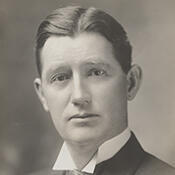
Here you will find contact information for Representative Edwin Yates Webb, including email address, phone number, and mailing address.
| Name | Edwin Yates Webb |
| Position | Representative |
| State | North Carolina |
| District | 9 |
| Party | Democratic |
| Status | Former Representative |
| Term Start | November 9, 1903 |
| Term End | March 3, 1921 |
| Terms Served | 9 |
| Born | May 23, 1872 |
| Gender | Male |
| Bioguide ID | W000231 |
About Representative Edwin Yates Webb
Edwin Yates Webb (May 23, 1872 – February 7, 1955) was a Democratic United States Representative from North Carolina and a United States district judge of the United States District Court for the Western District of North Carolina. He was born on May 23, 1872, in Shelby, Cleveland County, North Carolina. Webb attended the Shelby Military Institute before enrolling at Wake Forest College, where he received an Artium Baccalaureus degree in 1893. He then pursued legal studies at the University of North Carolina School of Law in 1893 and 1894. After his initial legal training, he was admitted to the bar and entered private practice in Shelby in 1894. Seeking further legal education, he attended the University of Virginia School of Law in 1896, where he completed a postgraduate course.
Webb quickly became active in public and political life in North Carolina. In 1898 he was appointed a trustee of Wake Forest College, reflecting his continuing connection to his alma mater. The North Carolina legislature appointed him a trustee of the Agricultural and Mechanical College of Raleigh (now North Carolina State University) in 1899, a position in which he served for two years. Within the Democratic Party, he rose through the ranks of party leadership: he served as Chairman of the Democratic senatorial district in 1896, Chairman of the Democratic county executive committee from 1898 to 1902, and temporary Chairman of the Democratic State convention in 1900. He was elected to the North Carolina Senate in 1901, marking his formal entry into elective office and establishing his reputation as a prominent Democratic leader in the state.
Webb’s national political career began when he was elected as a Democrat to the United States House of Representatives for the 58th United States Congress and to the eight succeeding Congresses. He served as a Representative from North Carolina in the United States Congress from March 4, 1903, to November 10, 1919, contributing to the legislative process during nine terms in office. His service in Congress occurred during a significant period in American history, encompassing the Progressive Era, World War I, and major debates over domestic reform and civil liberties. As a member of the House of Representatives, Edwin Yates Webb participated in the democratic process and represented the interests of his constituents while aligning with the broader priorities of the Democratic Party.
During his congressional tenure, Webb held influential committee and leadership roles. He served as Chairman of the United States House Committee on the Judiciary during the 63rd through 65th United States Congresses, placing him at the center of major legal and constitutional issues of the era. In 1912, he was appointed one of the managers by the House of Representatives to conduct the impeachment proceedings against Robert W. Archbald, a judge of the United States Commerce Court, reflecting the confidence of his colleagues in his legal and procedural expertise. On April 17, 1918, as the sole sponsor, Congressman Webb introduced the Sedition Act of 1918 in the U.S. House (H.R. 8753). This legislation amended the Espionage Act of 1917 and criminalized speech or the expression of opinion criticizing the United States government’s war effort, the military, or the flag during World War I. The bill was signed into law on May 16, 1918, by President Woodrow Wilson; it remained in effect until its repeal on December 13, 1920. Within North Carolina Democratic politics in the late 1910s and early 1920s, Webb opposed women’s suffrage, placing him at odds with his nephew by marriage, O. Max Gardner, who led those in the party supporting the extension of the right to vote to women.
Webb’s congressional service concluded when he resigned from the House on November 10, 1919, to accept a federal judicial appointment. He was nominated by President Woodrow Wilson on October 30, 1919, to a new seat on the United States District Court for the Western District of North Carolina, authorized by 40 Stat. 1156. The United States Senate confirmed his nomination on November 5, 1919, and he received his commission the same day. As a United States district judge, Webb presided over federal trial matters in western North Carolina for nearly three decades, carrying forward his long engagement with legal and constitutional questions from the legislative to the judicial branch.
After many years on the bench, Webb assumed senior status on March 1, 1948, reducing his caseload while continuing to serve the court in a limited capacity. His judicial service continued until his death, which occurred on February 7, 1955, while he was visiting Wilmington, North Carolina. Edwin Yates Webb was interred in Sunset Cemetery in his hometown of Shelby, North Carolina. He was part of a politically prominent family: he was the brother of politician James L. Webb and the uncle of Fay Webb-Gardner, the wife of North Carolina governor and political leader O. Max Gardner.