Representative Edwin Willits
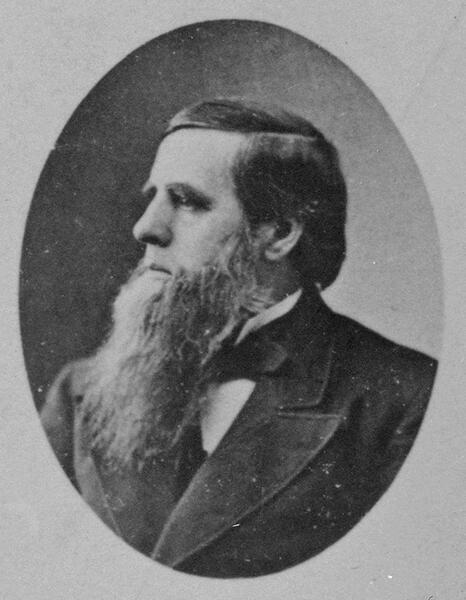
Here you will find contact information for Representative Edwin Willits, including email address, phone number, and mailing address.
| Name | Edwin Willits |
| Position | Representative |
| State | Michigan |
| District | 2 |
| Party | Republican |
| Status | Former Representative |
| Term Start | October 15, 1877 |
| Term End | March 3, 1883 |
| Terms Served | 3 |
| Born | April 24, 1830 |
| Gender | Male |
| Bioguide ID | W000564 |
About Representative Edwin Willits
Edwin Willits (also Willets) (April 24, 1830 – October 22, 1896) was an American lawyer, educator, and public official who represented Michigan in the United States House of Representatives from 1877 to 1883. He was born in Otto, Cattaraugus County, New York, and moved with his parents to Michigan in September 1836, settling in a state that would remain the center of his professional and political life. Raised in a Presbyterian household, he would later be known for combining legal practice, public service, and educational leadership over the course of a long career in state and national affairs.
Willits pursued higher education at the University of Michigan in Ann Arbor, from which he graduated in June 1855. In April 1856 he settled in Monroe, Michigan, where he quickly became involved in both journalism and the law. From 1856 to 1861 he served as editor of the Monroe Commercial, a local newspaper that provided him with a platform in public discourse during a turbulent pre–Civil War period. At the same time, he studied law and was admitted to the bar in December 1857, commencing legal practice in Monroe. In 1856 he married Jane Ingersoll, and the couple made their home in Monroe as his legal and public careers developed.
Early in his career, Willits held a series of local and state offices that established his reputation in Michigan public life. He served as prosecuting attorney of Monroe County from 1860 to 1862, handling criminal prosecutions at the county level. Concurrently, he was a member of the Michigan State Board of Education from 1860 to 1872, reflecting an early and sustained interest in public education. On January 1, 1863, during the Civil War, President Abraham Lincoln appointed him postmaster of Monroe, a position he held until October 15, 1866, when he was removed by President Andrew Johnson. In 1873 he was appointed a member of the commission to revise the Michigan Constitution, further underscoring his role in shaping the state’s legal and governmental framework.
Willits entered national politics as a member of the Republican Party and was elected in 1876 as a Republican from Michigan’s 2nd congressional district to the Forty-fifth Congress. He was subsequently re-elected to the Forty-sixth and Forty-seventh Congresses, serving three consecutive terms in the U.S. House of Representatives from March 4, 1877, to March 3, 1883. As a Representative from Michigan during a significant period in American history marked by the end of Reconstruction and the emergence of the Gilded Age, he participated in the legislative process and represented the interests of his constituents in southeastern Michigan. During the Forty-seventh Congress he served as chairman of the Committee on Expenditures in the Department of Justice, overseeing fiscal matters related to that department. He was not a candidate for renomination in 1882, thereby concluding his congressional service after six years.
Following his departure from Congress, Willits turned to educational administration, assuming leadership roles in two of Michigan’s most important institutions of higher learning. From 1883 to 1885 he served as principal of the Michigan State Normal School at Ypsilanti, an institution now known as Eastern Michigan University, where he helped guide the training of teachers for the state’s expanding public school system. In 1885 he became president of the State Agricultural College at East Lansing, now Michigan State University, serving in that capacity until 1889. During his presidency he inaugurated the college’s mechanical engineering program and secured state funding for its initial building, broadening the institution’s curriculum beyond agriculture and contributing to its evolution into a more comprehensive land-grant college.
Willits returned to federal service during the administration of President Benjamin Harrison. On March 23, 1889, he was appointed the first Assistant U.S. Secretary of Agriculture under Secretary Jeremiah McLain Rusk, a position he held until December 31, 1893. In this role he played a significant part in shaping the mission and organization of the Department of Agriculture at a time when it was expanding its scientific and regulatory functions. In 1890 he established a policy that all research conducted by the Department should be mission-oriented and directed toward practical objectives, encouraging employees to look beyond the long-standing emphasis on seed and plant distribution that had previously been the Department’s main activity. This reorientation led to the creation of additional divisions within the U.S. Department of Agriculture during the 1890s and helped lay the groundwork for the modern, research-focused USDA.
After leaving the Department of Agriculture at the end of 1893, Willits remained in Washington, D.C., where he continued the practice of law. He lived and worked in the capital until his death there on October 22, 1896. His body was returned to Michigan, and he was interred in Woodland Cemetery in Monroe, the community where he had begun his legal career and from which he had risen to state and national prominence.