Representative Egbert Ludoricus Viele
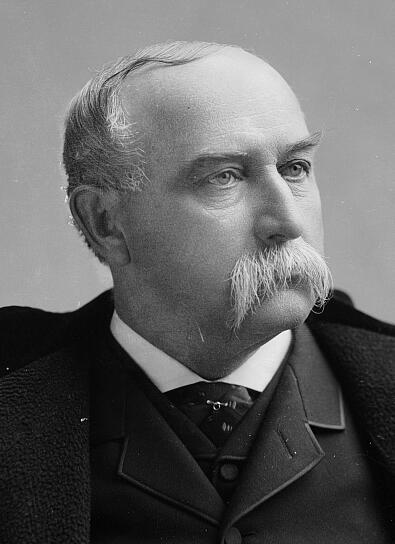
Here you will find contact information for Representative Egbert Ludoricus Viele, including email address, phone number, and mailing address.
| Name | Egbert Ludoricus Viele |
| Position | Representative |
| State | New York |
| District | 13 |
| Party | Democratic |
| Status | Former Representative |
| Term Start | December 7, 1885 |
| Term End | March 3, 1887 |
| Terms Served | 1 |
| Born | June 17, 1825 |
| Gender | Male |
| Bioguide ID | V000097 |
About Representative Egbert Ludoricus Viele
Egbert Ludovicus Viele (also rendered Egbert Ludoricus Viele) (June 17, 1825 – April 22, 1902) was an American civil engineer, military officer, author, and Democratic United States Representative from New York who served one term in Congress from 1885 to 1887. Over the course of a varied public career, he held commissions in the U.S. Army during both the Mexican–American War and the Civil War, played a formative role in the early engineering of New York City’s major parks and urban infrastructure, and produced influential topographical works that continued to inform engineering practice long after his death.
Viele was born on June 17, 1825, in Waterford, Saratoga County, New York, the son of State Senator John L. Viele and Kathlyne Schuyler (Knickerbocker) Viele. He was educated at The Albany Academy, from which he graduated with honors. Initially intending to pursue a legal career, he studied law briefly before deciding on a military and engineering path. He entered the United States Military Academy at West Point, New York, and graduated on July 1, 1847. Upon graduation he was commissioned a brevet second lieutenant in the 2nd U.S. Infantry, marking the beginning of his active service in the U.S. Army.
Soon after leaving West Point, Viele saw duty in the Mexican–American War. He was promoted to second lieutenant in the 1st U.S. Infantry on September 8, 1847. From 1848 to 1849 he was assigned to establish a military post at Laredo, Texas, which he organized as “Camp Crawford.” His advancement continued with promotion to first lieutenant on October 26, 1850. In 1853 he resigned his commission in the regular army to devote himself to civil engineering, a field in which he would gain considerable prominence.
In 1855 Viele was appointed State Engineer of New Jersey, charged with conducting a topographical survey of the state. His expertise soon drew him into the planning of major urban parks in New York City. He surveyed the area that would become Central Park and submitted a design proposal in the competition to shape the new park. Although the commission ultimately chose the Greensward Plan of Frederick Law Olmsted and Calvert Vaux, Viele was appointed engineer-in-chief of Central Park in 1856, where he played a central role in its early engineering and drainage works. In 1860 he became engineer of Prospect Park in Brooklyn, extending his influence over the development of New York City’s park system. At the same time, he maintained a military affiliation as a captain in the Engineer Corps of the 7th New York Militia in 1860.
With the outbreak of the American Civil War, Viele returned to active military service. On August 17, 1861, he was commissioned a brigadier general of U.S. Volunteers. During the war he commanded Union forces on the Savannah River in operations that included the Siege of Fort Pulaski, a key engagement in securing the Georgia coast. In 1862 he was appointed Military Governor of Norfolk, Virginia, administering the occupied city under Union authority. He resigned his volunteer commission on October 20, 1863, and again turned to civil engineering and related professional pursuits.
After the Civil War, Viele’s engineering and cartographic work brought him lasting recognition. He authored the “Sanitary & Topographical Map of the City and Island of New York,” first published in 1865 and widely known as the “Viele Map.” This color map depicted the original streams, marshes, and coastline of Manhattan superimposed on the modern street grid, providing critical information about subsurface conditions. The map, and his later “Topographical Atlas of the City of New York” (1874), became enduring references for geotechnical and structural engineers and urban planners designing foundations and infrastructure in New York City. Earlier, in 1861, he had also published “Hand-book for Active Service; Containing Practical Instructions in Campaign Duties. For the Use of Volunteers,” reflecting his practical military experience. In 1866 he became a Companion of the New York Commandery of the Military Order of the Loyal Legion of the United States and later a Companion of the New York Commandery of the Military Order of Foreign Wars. In 1867 he served as chief engineer of the Buffalo and Pittsburgh Railroad, further extending his influence in transportation development.
Viele’s public service in New York City continued in the 1880s. From 1883 to 1884 he served as commissioner of parks for New York City, a position that drew on his long experience with urban landscapes and public works. He entered national politics as a member of the Democratic Party and was elected to the Forty-ninth Congress as a Representative from New York, serving from March 4, 1885, to March 3, 1887. During this single term in the U.S. House of Representatives, he participated in the legislative process and represented the interests of his New York constituents at a time of significant economic and social change in the post–Civil War era. He was an unsuccessful candidate for reelection in 1886 to the Fiftieth Congress and, after leaving office, resumed his former business pursuits and engaged in literary and professional work.
In his later years, Viele remained active in veterans’ and hereditary organizations. In 1886 he joined the Aztec Club of 1847, a society of officers who had served in the Mexican–American War, and he served as its president from 1899 to 1900. His maps and writings continued to be consulted, and his professional reputation as a pioneering topographical engineer endured. Egbert Ludovicus Viele died in New York City on April 22, 1902, at the age of 77. He and his second wife were entombed in a distinctive pyramid-shaped mausoleum guarded by a pair of sphinxes in the Post Cemetery at West Point, New York. According to an official West Point account, he arranged for a buzzer to be installed in his coffin, wired to the house of the Superintendent of West Point, as a safeguard in the event that he had been accidentally buried alive.