Senator Elbert Duncan Thomas
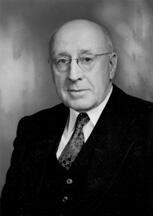
Here you will find contact information for Senator Elbert Duncan Thomas, including email address, phone number, and mailing address.
| Name | Elbert Duncan Thomas |
| Position | Senator |
| State | Utah |
| Party | Democratic |
| Status | Former Representative |
| Term Start | March 9, 1933 |
| Term End | January 3, 1951 |
| Terms Served | 3 |
| Born | June 17, 1883 |
| Gender | Male |
| Bioguide ID | T000164 |
About Senator Elbert Duncan Thomas
Elbert Duncan Thomas (June 17, 1883 – February 11, 1953) was a Democratic Party politician from Utah who represented the state in the United States Senate from 1933 until 1951. Born in Salt Lake City, Utah Territory, on June 17, 1883, he was the fifth of twelve children of Caroline Stockdale and Richard Kendall Thomas. His parents were devoted to the arts, particularly the theater, and built what is regarded as the first children’s playhouse west of the Mississippi River in a barn on their property, which they named the Barnacle. Thomas took part in numerous public performances there, while his father, active in local government, used the Barnacle to host conventions and political rallies. The family later moved to a home across from what is now the Conference Center of the Church of Jesus Christ of Latter-day Saints in Salt Lake City, a residence later listed on the National Register of Historic Places and known as the Gibbs-Thomas House, Thomas’s sole Utah residence.
Thomas was educated in Salt Lake City and attended the University of Utah, where he received a Bachelor of Arts degree in 1906. As an undergraduate he helped found the Amici Fidissimi Society in 1902, a men’s fraternal organization that later affiliated with the international fraternity Phi Delta Theta in 1914 as the Utah Alpha chapter. Thomas became the first initiate of Phi Delta Theta at the University of Utah, reflecting his early interest in campus leadership and intellectual life. His academic training in the liberal arts and the classics would later inform both his teaching career and his approach to public policy.
On June 25, 1907, Thomas married Edna Harker in the Salt Lake Temple of the Church of Jesus Christ of Latter-day Saints. The couple had three daughters, including a daughter, Chiyo, who was born in Japan during their missionary service. From 1907 to 1912, Thomas and his wife served a mission to Japan for the LDS Church, making him one of the first Latter-day Saint missionaries assigned to that country. During this five-year mission he developed a deep and lasting affinity for the Japanese people, learned to speak Japanese fluently, and authored Sukui No Michi, the Japanese translation of the Mormon tract “Way of Salvation.” For part of his mission he presided over the Japanese Mission, gaining administrative and cross-cultural experience that would later shape his views on international relations. Edna Harker Thomas died in 1942, and in 1946 Thomas married Ethel Evans, also in the Salt Lake Temple.
After returning from Japan in 1912, Thomas embarked on an academic career at the University of Utah. He joined the faculty as a Professor of Political Science and History, teaching Latin, Greek, Japanese culture, and courses in political science and history. Over the years he became a prominent figure in the university community and eventually served as an administrator on the Board of Regents of the University of Utah. His combined expertise in classical languages, Asian culture, and political institutions provided him with a broad intellectual foundation and a global perspective that would later distinguish his work in the United States Senate, particularly on foreign policy and education.
Thomas entered national politics as a member of the Democratic Party and was first elected to the United States Senate from Utah in 1932, defeating long-serving Republican Senator Reed Smoot. He took office on March 4, 1933, at the outset of the New Deal era, and went on to serve three consecutive terms, remaining in the Senate until January 3, 1951. During his eighteen years in Congress, he contributed to the legislative process through service on several key committees. He served on the Committee on Education and Labor, of which he was chairman, and later on the Committee on Labor and Public Welfare, as well as the Committee on Military Affairs and the Committee on Mines and Mining. As chair of the Senate Education Committee, he played a significant role in shaping federal education policy during a period of economic depression, war, and postwar adjustment, and he is remembered as the last Democrat to serve as Utah’s Class 3 Senator.
Thomas’s tenure in the Senate coincided with major developments in American domestic and foreign policy, including the Great Depression, World War II, and the early Cold War. A confidential analysis prepared in April 1943 by British scholar Isaiah Berlin for the British Foreign Office described Thomas as a Mormon ex-missionary whose work had largely been in the Far East, noting his fluency in Japanese and emphasizing that his attitudes toward postwar problems were strongly influenced by his Far Eastern experience. Berlin quoted Thomas’s view that “the days of the white man’s domination are over and the British Empire is almost certain to be dissolved in that part of the world.” He characterized Thomas as an out-and-out internationalist and interventionist who consistently supported the Roosevelt administration on foreign policy measures, essentially a free trader who nonetheless occasionally aligned with the powerful Farm Bloc in his agricultural state, and an ardent champion of proposals for a Jewish army during World War II. In 1944, Thomas’s standing within the Democratic Party was underscored when he was among twelve individuals nominated at the Democratic National Convention as potential running mates for President Franklin D. Roosevelt.
Despite his long service, Thomas’s political career in the Senate came to an end when he was defeated for reelection in 1950 by Republican Wallace F. Bennett. His Senate service formally concluded in January 1951. Later that year, drawing on his international experience and longstanding interest in the Pacific and Asia, he was appointed High Commissioner of the Trust Territory of the Pacific Islands, an area administered by the United States under United Nations trusteeship following World War II. In this capacity he oversaw aspects of civil administration and development policy in the islands, continuing his engagement with international and Pacific affairs that had begun with his early missionary work in Japan.
Elbert Duncan Thomas died in Honolulu, Territory of Hawaii, on February 11, 1953, while serving as High Commissioner. He was buried in the Thomas family plot in the Salt Lake City Cemetery in Utah. In 1984, the Gibbs-Thomas House in Salt Lake City, his longtime and only Utah residence, was listed on the National Register of Historic Places in large part to recognize his association with the property and his contributions as an educator, internationalist, and United States Senator from Utah.