Representative Eli Jones Henkle
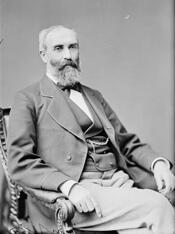
Here you will find contact information for Representative Eli Jones Henkle, including email address, phone number, and mailing address.
| Name | Eli Jones Henkle |
| Position | Representative |
| State | Maryland |
| District | 5 |
| Party | Democratic |
| Status | Former Representative |
| Term Start | December 6, 1875 |
| Term End | March 3, 1881 |
| Terms Served | 3 |
| Born | November 24, 1828 |
| Gender | Male |
| Bioguide ID | H000497 |
About Representative Eli Jones Henkle
Eli Jones Henkle (November 24, 1828 – November 1, 1893) was an American physician, educator, and Democratic politician who represented Maryland’s fifth congressional district in the United States House of Representatives for three consecutive terms from 1875 to 1881. His congressional service took place during a significant period in American history, in the decade following the Civil War and during the later years of Reconstruction, when issues of federal authority, economic development, and civil rights were central to national politics.
Henkle was born in Westminster, Carroll County, Maryland, on November 24, 1828. He completed an academic course in his youth, reflecting the broad classical and practical education typical of mid-nineteenth-century Maryland. After his schooling, he taught in the public schools of Anne Arundel County, Maryland, gaining early experience in education and public service. During this period he decided to pursue a career in medicine, undertaking medical studies that would lead to his professional qualification.
Henkle enrolled at the University of Maryland at Baltimore, one of the leading medical institutions in the region, and was graduated in 1850. Following his graduation, he began the practice of medicine in Brooklyn, Maryland, then a community in Anne Arundel County located near Baltimore. In addition to his medical work, he became closely associated with higher education in the state. He served as a trustee and professor at the Maryland Agricultural College at College Park, an institution that would later become the University of Maryland, College Park. His involvement there reflected his interest in agricultural and scientific advancement at a time when Maryland and the broader nation were seeking to modernize farming and technical education.
Henkle’s political career began during the Civil War era. In 1863 he was elected to the Maryland House of Delegates, entering state politics at a moment when Maryland, a border state, was deeply affected by the conflict and by debates over slavery and unionism. In 1864 he served as a member of the Maryland state constitutional convention, which drafted a new constitution that, among other provisions, abolished slavery in the state. He subsequently advanced to the Maryland State Senate, where he served in 1867, 1868, and 1870, participating in the state’s postwar legislative efforts. He returned to the Maryland House of Delegates from 1872 to 1875, reinforcing his position as a prominent Democratic leader in state government.
In 1872, Henkle’s growing stature within the Democratic Party was recognized when he was selected as a delegate to the Democratic National Convention, which met in Baltimore and nominated Horace Greeley for the presidency. Building on his state-level experience, Henkle was elected as a Democrat to the Forty-fourth, Forty-fifth, and Forty-sixth Congresses, serving in the U.S. House of Representatives from March 4, 1875, until March 3, 1881. As a member of the House of Representatives from Maryland’s fifth district, he participated in the legislative process during a transformative era marked by debates over Reconstruction policies, federal spending, and the nation’s economic adjustment after the Panic of 1873. Throughout his three terms, he represented the interests of his Maryland constituents while contributing to the broader work of the Democratic Party in Congress. He was an unsuccessful candidate for reelection in 1880 to the Forty-seventh Congress, bringing his federal legislative service to a close in March 1881.
After leaving Congress, Henkle remained active in professional and civic life. In 1889 he moved to Chicago, Illinois, a rapidly growing industrial and commercial center, where he resided for a period during the late nineteenth century. Later he returned to Baltimore, Maryland, reconnecting with the state in which he had spent most of his life and career. Eli Jones Henkle died in Baltimore on November 1, 1893. He was interred in Druid Ridge Cemetery in Baltimore County, Maryland, closing a career that had encompassed medicine, higher education, and extensive service in both state and national government.