Senator Eli Saulsbury
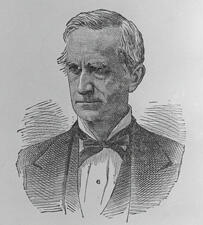
Here you will find contact information for Senator Eli Saulsbury, including email address, phone number, and mailing address.
| Name | Eli Saulsbury |
| Position | Senator |
| State | Delaware |
| Party | Democratic |
| Status | Former Representative |
| Term Start | March 4, 1871 |
| Term End | March 3, 1889 |
| Terms Served | 3 |
| Born | December 29, 1817 |
| Gender | Male |
| Bioguide ID | S000072 |
About Senator Eli Saulsbury
Eli Saulsbury (December 29, 1817 – March 22, 1893) was an American lawyer and Democratic politician from Dover, in Kent County, Delaware, who served in the Delaware General Assembly and represented Delaware in the United States Senate from 1871 to 1889. His long tenure in the Senate spanned three full terms during a significant period in American history, encompassing the later years of Reconstruction and the Gilded Age, during which he participated in the legislative process and represented the interests of his constituents.
Saulsbury was born in Mispillion Hundred, Kent County, Delaware, the son of William and Margaret Ann (Smith) Saulsbury. He was a member of a prominent political family in Delaware and was the middle brother of Gove Saulsbury, who served as governor of Delaware, and Willard Saulsbury Sr., who also served as a United States senator from Delaware. According to a local Caroline County history, Eli Saulsbury and his brothers attended the Chinquapin School in Burrsville, reflecting the family’s regional ties on the Delmarva Peninsula before his later move to Dover.
Saulsbury pursued higher education at Dickinson College in Carlisle, Pennsylvania. After his collegiate studies, he read law and was admitted to the Delaware bar in 1857. He established his legal practice in Dover, Delaware, where he resided for the remainder of his life. His work as an attorney in the state capital provided the professional and political foundation for his subsequent public career, and he became identified with the Democratic Party at a time when party alignments in Delaware and the nation were being reshaped by the issues of slavery, the Civil War, and Reconstruction.
Saulsbury’s formal political career began in the Delaware General Assembly. He served one term in the Delaware House of Representatives during the 1853–1854 session. In Delaware, elections were held in the first week of November, and members of the General Assembly took office in the first week of January, with State House members serving two-year terms. His service in the state legislature introduced him to legislative procedure and state-level governance, and it placed him within the network of Democratic leaders who would later influence the selection of United States senators, who at that time were chosen by the General Assembly.
In 1871 Saulsbury advanced to national office when he successfully challenged his younger brother, incumbent U.S. Senator Willard Saulsbury Sr., for Delaware’s seat in the United States Senate. Chosen by the Delaware General Assembly, he took office on March 4, 1871, beginning the first of three consecutive six-year terms. He remained in the Senate until March 3, 1889, serving a total of eighteen years. During this period he was a member of the Democratic Party’s Senate contingent and participated in debates and votes on issues arising from Reconstruction, economic development, and federal governance. In 1873 he opposed civil rights for African Americans, aligning himself with many contemporary Democratic leaders who resisted federal civil rights legislation in the post–Civil War era.
Throughout his Senate career, Saulsbury held several committee assignments that reflected his role in the legislative process. He served on the Committee on Privileges and Elections in the 46th Congress, a body concerned with the credentials and elections of senators and related constitutional questions. He also served on the Committee on Engrossed Bills from the 47th Congress through the 50th Congress, overseeing the final preparation and formal copying of legislation before it was sent to the president or otherwise enacted. His work on these committees placed him at key procedural points in the Senate’s handling of legislation and contested elections.
Saulsbury’s Senate service ended when he sought but failed to secure a fourth term. In the selection held by the Delaware General Assembly, he was defeated by Republican candidate Anthony Higgins, reflecting the growing strength of the Republican Party in Delaware and changing political currents in the late nineteenth century. His departure from the Senate on March 3, 1889, concluded nearly two decades of continuous service in the upper chamber of Congress, during which he had been a consistent Democratic voice from a border state with complex political allegiances.
After leaving the Senate, Saulsbury returned to private life in Dover, where he had long maintained his home and legal practice. He lived there until his death on March 22, 1893. Eli Saulsbury died in Dover and was buried in Silver Lake Cemetery in that city. His career, intertwined with that of his politically active brothers, marked an era in which the Saulsbury family played a central role in Delaware’s state and national politics.