Representative E. de la Garza
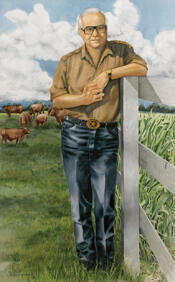
Here you will find contact information for Representative E. de la Garza, including email address, phone number, and mailing address.
| Name | E. de la Garza |
| Position | Representative |
| State | Texas |
| District | 15 |
| Party | Democratic |
| Status | Former Representative |
| Term Start | January 4, 1965 |
| Term End | January 3, 1997 |
| Terms Served | 16 |
| Born | September 22, 1927 |
| Gender | Male |
| Bioguide ID | D000203 |
About Representative E. de la Garza
Eligio “Kika” de la Garza II (September 22, 1927 – March 13, 2017) was an American lawyer, Korean War veteran, and Democratic politician who served as the United States Representative for Texas’s 15th congressional district for 16 consecutive terms, from January 3, 1965, to January 3, 1997. Over more than three decades in the U.S. House of Representatives, he represented South Texas during a significant period in American history, participating in the legislative process and advocating for the interests of his constituents. A prominent figure in agricultural policy and Hispanic representation in Congress, he became one of the longest-serving members from Texas of his era.
De la Garza was born on September 22, 1927, and grew up in the city of Mission in Hidalgo County, Texas, in the Rio Grande Valley. Raised in a predominantly Mexican American community along the U.S.–Mexico border, he was shaped early by the social and economic conditions of South Texas, experiences that would later inform his legislative priorities. At the age of 17, during the final years of World War II, he entered the United States Navy and served for two years. Following his initial period of military service, he returned to Texas and continued his education at Edinburg Junior College, an institution that would later evolve into the University of Texas–Pan American and subsequently become part of the University of Texas Rio Grande Valley.
After his studies at Edinburg Junior College, de la Garza returned to military service, this time in the United States Army. He attended the United States Army Artillery School at Fort Sill in Oklahoma and was commissioned as an officer. Beginning in 1952, he served for two years as a lieutenant in the 37th Field Artillery Regiment during the Korean War. His active-duty service in Korea provided him with firsthand experience of military life and international conflict, further deepening his sense of public duty. Upon completion of his military service, he returned to Texas to pursue a legal career, enrolling at St. Mary’s University School of Law in San Antonio, where he completed his law degree.
Following his graduation from law school, de la Garza practiced law for several years in the Rio Grande Valley, building a reputation as an advocate for local residents and border communities. His legal practice and community involvement led him into elective office. In 1953, he was elected to the Texas House of Representatives, where he served until 1965. During his tenure in the state legislature, he became known for sponsoring a substantial body of legislation in the fields of education and the environment. He authored bills to protect wetlands, to create state-sponsored preschools, and to expand international bridges to Mexico in order to facilitate cross-border commerce and travel. For the first two years of his service in the Texas House, he was the only Hispanic member, reflecting the limited representation of Mexican Americans in state government at the time. In 1957 he was joined by a second Mexican American member, Oscar M. Laurel of Laredo, marking a modest but important step toward broader Hispanic participation in Texas politics.
In 1964, de la Garza, a strong supporter of President Lyndon B. Johnson, ran for the United States House of Representatives from South Texas and won election as a Democrat to represent the 15th congressional district of Texas. He took office on January 3, 1965, beginning a congressional career that would span 16 terms, ending on January 3, 1997. As a member of the House of Representatives, he participated actively in the democratic process and became a key voice for his district and for Hispanic Americans nationwide. Early in his congressional service, he supported landmark civil rights legislation, voting in favor of the Voting Rights Act of 1965 and the Civil Rights Act of 1968. Throughout his tenure, he consistently advocated for smoother relations between the United States and Mexico, working to improve trade, infrastructure, and diplomatic ties along the border.
De la Garza’s most prominent role in Congress came in the field of agricultural policy. From 1981 to 1994, he served as chairman of the House Committee on Agriculture. In that capacity, he led efforts to pass major legislation that reorganized the agricultural lending system and the federal farm insurance system, restructured aspects of the United States Department of Agriculture, and updated federal pesticide laws. His leadership on the Agriculture Committee positioned him as a central figure in shaping national farm policy during a period of economic stress and transition in rural America. He was also a founding member of the Congressional Hispanic Caucus, helping to institutionalize a collective voice for Hispanic and Latino members of Congress and to advance issues affecting Hispanic communities across the country. In the realm of international trade, he played a critical role in the legislative process that led to the enactment of the North American Free Trade Agreement (NAFTA), reflecting his long-standing interest in U.S.–Mexico economic relations and cross-border commerce.
After more than three decades in Congress, de la Garza retired from public service in 1997. Upon returning to Texas, he sought to preserve the historical record of his long career in public life. He donated his entire congressional archive to his alma mater, by then known as the University of Texas–Pan American. The collection, which documents his legislative work, committee leadership, and involvement in national and regional issues, is now housed at the University of Texas Rio Grande Valley (UTRGV) Edinburg Campus library. The archive was formally unveiled to the public in 2012, providing scholars and citizens with extensive primary materials on congressional history, agricultural policy, and Hispanic political representation in the late twentieth century.
In his later years, de la Garza resided in McAllen, Texas, with his wife, Lucille. He remained a respected elder statesman in the Rio Grande Valley, recognized for his decades of service in the Texas House of Representatives and the U.S. Congress, his contributions to civil rights and agricultural policy, and his advocacy for closer U.S.–Mexico relations. Eligio “Kika” de la Garza II died in McAllen on March 13, 2017, of kidney failure. He was interred at Valley Memorial Gardens in McAllen, leaving a legacy as a pioneering Mexican American legislator and influential member of the United States House of Representatives.