Senator Elijah Boardman
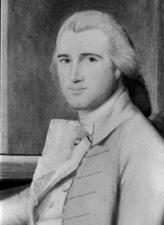
Here you will find contact information for Senator Elijah Boardman, including email address, phone number, and mailing address.
| Name | Elijah Boardman |
| Position | Senator |
| State | Connecticut |
| Party | Republican |
| Status | Former Representative |
| Term Start | December 3, 1821 |
| Term End | December 31, 1823 |
| Terms Served | 1 |
| Born | March 7, 1760 |
| Gender | Male |
| Bioguide ID | B000577 |
About Senator Elijah Boardman
Elijah Boardman (March 7, 1760 – August 18, 1823) was an American politician, merchant, and landowner who served as a United States senator from Connecticut from 1821 until his death in 1823. A member of the Republican Party, he was elected to the Senate by the Connecticut legislature and represented his state during a significant period in the early national era, participating in the legislative and democratic processes and serving one full term in office. Born into a noted and politically connected Connecticut family in New Milford, he inherited a tradition of public service and local prominence that shaped his later career in business, land development, and politics.
Boardman was educated at home by private tutors, reflecting the advantages of his family’s status. He received instruction in Latin from the Reverend Nathaniel Taylor and was also taught by his mother, who, along with his grandmother, was remembered in family tradition for energy and intrepidity. A later biographer of his wife wrote that Boardman “inherited many of the good qualities of his father and his grandfather” and combined them with the vigor of his maternal line, while his brother, David Sherman Boardman, observed that Elijah was “inclined” to hilarity. He was described as dignified in personal appearance and handsome. In March 1776, at the age of sixteen, he enlisted as a “common soldier” in the Connecticut militia and served in the American Revolutionary War, an experience that introduced him to public duty and the broader currents of the new nation’s political life.
After the war, Boardman turned to commerce. In 1781 he began work as a clerk and merchant, training as a shopkeeper in New Haven in the store of Elijah and Archibald Austin. Later that same year he returned to his native New Milford and established a dry-goods business in partnership with his brothers David and Daniel. The enterprise prospered, and Boardman became a noted merchant. His success and social standing were captured in 1789 when the painter Ralph Earl produced a portrait of him “in his store in New Milford,” depicting the richly dressed dry-goods merchant with bolts of textiles visible through the open door to indicate the source of his livelihood. Earl’s most accomplished and successful series of paintings were of the Boardman family, underscoring their prominence in post-Revolutionary Connecticut.
Boardman’s business interests expanded steadily in the 1790s. By the early part of that decade he had opened a second shop, independent of his partnership with his brothers, in Litchfield County. The building for this establishment was designed by architect William Sprats, reflecting both his prosperity and his taste for substantial, well-designed premises. On September 25, 1792, he married Mary Anna Whiting, for whom he later built the Boardman House in New Milford, a residence that still stands as a testament to the family’s status in the community. Their first son, William Whiting Boardman—who would himself become a prominent politician—was born on October 10, 1794. A second son, Henry Mason Boardman, was later born to the couple. Despite his growing wealth and influence, Boardman, like many members of the post-Revolutionary landed and mercantile elite, participated in the institution of slavery and owned at least one enslaved person, a woman named Isabella.
In September 1795, Boardman became a member of the Connecticut Land Company and a purchaser of lands in the Connecticut Western Reserve, a large tract in what is now northern Ohio. Through this investment he and his associates acquired rights to two townships, one of which became Medina. He also founded the town of Boardman, Ohio, extending his influence well beyond New England. In Medina, a 227-acre site was set aside to create a county seat; it was originally named Mecca until it was discovered that a nearby town already bore that name. Boardman’s land agent, Rufus Ferris Sr., became the first resident of Medina, helping to establish the settlement. Together with his brothers, Boardman accumulated a considerable amount of real estate and emerged as part of the post-Revolutionary War landed gentry, counted among the highest taxpayers in his home town and in the new western communities in which he invested.
Boardman’s growing wealth and social standing naturally led him into public life. He became increasingly involved in politics at the local and state levels in Connecticut, gradually rising through the ranks of public office. His family’s political connections, his Revolutionary War service, and his reputation as a successful merchant and landowner all contributed to his stature. Ultimately, the Connecticut legislature elected him to the United States Senate as a Republican, and he took his seat in 1821 as a senator from Connecticut. During his single term in the Senate, he represented the interests of his constituents and participated in the national legislative process at a time when the young republic was grappling with issues of expansion, economic development, and sectional balance. His service in Congress thus occurred during a significant period in American history, and he was part of the generation that helped consolidate the institutions of the federal government after the War of 1812.
Boardman served in the Senate until his death in 1823. He died on August 18, 1823, while on a visit to one of his sons in Ohio, a region whose development he had helped to shape through his land investments and town founding. His cause of death has been the subject of some speculation, but his son-in-law and biographer, John Frederick Schroeder—who married Boardman’s daughter Caroline Maria Boardman—attributed it in an 1849 account to recurring bouts of cholera and fever that had afflicted him throughout his life. Schroeder particularly noted an early severe illness during a tour of Rhode Island in 1780, as well as subsequent attacks in Vermont and New Hampshire. Following his death, Senator James Lanman of Connecticut proposed on December 5, 1823, that members of the Senate wear the usual mourning for thirty days in his honor, a motion that reflected the respect he commanded among his colleagues. Boardman’s body was returned to Connecticut and interred in New Milford, the town where he had been born, built his business, and established his family.
Elijah Boardman was succeeded in the United States Senate by Henry W. Edwards. His legacy extended beyond his own career through his descendants and the communities he helped to found. His eldest son, William Whiting Boardman, became a notable political figure in Connecticut, and his great-granddaughter, Mabel Thorp Boardman, achieved distinction as an American philanthropist. The towns of Boardman and Medina in Ohio, the Boardman House in New Milford, and the surviving portraits by Ralph Earl all stand as enduring reminders of his role as a Revolutionary-era soldier, successful merchant, western land developer, and United States senator from Connecticut.