Senator Elijah Paine
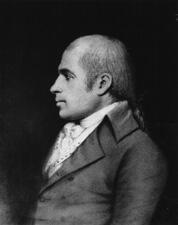
Here you will find contact information for Senator Elijah Paine, including email address, phone number, and mailing address.
| Name | Elijah Paine |
| Position | Senator |
| State | Vermont |
| Party | Federalist |
| Status | Former Representative |
| Term Start | December 7, 1795 |
| Term End | March 3, 1801 |
| Terms Served | 1 |
| Born | January 21, 1757 |
| Gender | Male |
| Bioguide ID | P000026 |
About Senator Elijah Paine
Elijah Paine (January 21, 1757 – April 28, 1842) was a justice of the Supreme Court of Vermont, a United States senator from Vermont, and a United States district judge of the United States District Court for the District of Vermont. A member of the Federalist Party, he served one term in the United States Senate from 1795 to 1801, contributing to the legislative process during a formative period in the early republic, and later held a federal judgeship for more than four decades.
Paine was born on January 21, 1757, in Brooklyn, in the Connecticut Colony, British America, the son of Seth Paine. He attended local public schools and, as a young man, served in the Continental Army from 1776 to 1777 during the American Revolutionary War. After his military service, he pursued higher education at Harvard University, receiving an Artium Baccalaureus degree in 1781. He then prepared for a legal career by reading law, completing his legal studies in 1784.
Admitted to the bar in 1784, Paine entered private practice in Windsor, Vermont, where he practiced law from 1784 to 1787. At the same time, he engaged in agricultural and entrepreneurial pursuits, cultivating a farm and beginning a settlement at Williamstown, Vermont. He later established a cloth factory and a saw and grist mill in Northfield, Vermont, contributing to the economic development of the region. His interest in public affairs emerged early; he served as secretary of the Vermont constitutional convention in 1786, helping to shape the framework of governance in the then-new state.
Paine’s political and judicial career in Vermont advanced rapidly. He was a member of the Vermont House of Representatives from 1787 to 1789 and served as Judge of the Probate Court for the Randolph District of Vermont from 1788 to 1791. He then became a justice of the Supreme Court of Vermont, serving from 1791 to 1793. In 1793, he sought national office as a candidate for Vermont’s 2nd congressional district, but finished a distant second to Anti-Federalist incumbent Nathaniel Niles. Despite this setback, his standing within the Federalist Party and in Vermont politics continued to grow.
Paine was elected to the United States Senate from Vermont in 1794 as a Federalist and took his seat on March 4, 1795. He was reelected in 1800 and served from March 4, 1795, to September 1, 1801, representing the interests of his Vermont constituents during a significant period in American history marked by the administrations of George Washington, John Adams, and the early years of Thomas Jefferson. As a member of the Senate, he participated in the democratic process and contributed to the legislative work of the body during the early development of the federal government. He resigned his Senate seat on September 1, 1801, to accept a federal judicial appointment.
On February 24, 1801, President John Adams nominated Paine to a seat on the United States District Court for the District of Vermont, vacated by Judge Samuel Hitchcock. The United States Senate confirmed his nomination on February 25, 1801, and he received his commission on March 3, 1801. Paine served as a United States district judge from 1801 until his resignation on April 1, 1842, making his judicial tenure one of notable length in the early federal judiciary. Concurrent with his federal judicial service, he also served as Postmaster of Williamstown, Vermont, from 1815 to 1842, reflecting his continued involvement in local civic affairs.
In addition to his public offices, Paine was recognized in the broader intellectual and scholarly community. He was elected a Fellow of the American Academy of Arts and Sciences in 1812 and became a member of the American Antiquarian Society in 1813, affiliations that underscored his standing among the learned societies of his time. His family was likewise prominent in professional and public life. Paine married Sarah Porter of Plymouth, New Hampshire, and they had four sons: Martin Paine, who became an eminent physician; Elijah Paine Jr., who served as a judge of the New York Supreme Court; George Paine, a prominent lawyer; and Charles Paine, who served as Governor of Vermont from 1841 to 1843.
Elijah Paine spent his later years in Williamstown, Vermont, where he continued to hold his federal judicial office and the local postmastership until shortly before his death. His long career spanned service in the Continental Army, state and federal legislative bodies, a state supreme court, and the federal judiciary. He died on April 28, 1842, in Williamstown, Vermont, bringing to a close a life closely intertwined with the political and legal development of both Vermont and the United States in the nation’s first decades.