Representative Elijah Ward
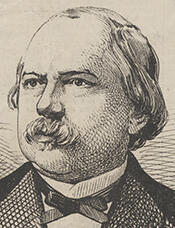
Here you will find contact information for Representative Elijah Ward, including email address, phone number, and mailing address.
| Name | Elijah Ward |
| Position | Representative |
| State | New York |
| District | 8 |
| Party | Democratic |
| Status | Former Representative |
| Term Start | December 7, 1857 |
| Term End | March 3, 1877 |
| Terms Served | 4 |
| Born | September 16, 1816 |
| Gender | Male |
| Bioguide ID | W000131 |
About Representative Elijah Ward
Elijah Ward (September 16, 1816 – February 7, 1882) was a Democratic Representative from New York who served in the United States House of Representatives during the American Civil War and the Reconstruction era. Born in the early nineteenth century, he came of age in a period of rapid political, economic, and territorial change in the United States, circumstances that would shape his later public career and his long association with New York politics and national legislative affairs.
Ward received his early education in New York and pursued legal studies as a young man, preparing for a professional career at a time when the legal profession was closely intertwined with public life. After being admitted to the bar, he established himself in practice in New York, where his work as an attorney and his engagement with civic and commercial interests helped build the connections that eventually led him into elective office. His legal background provided him with familiarity in statutory interpretation and public policy, skills that would later inform his legislative work in Congress.
By the mid-nineteenth century, Ward had become an active member of the Democratic Party in New York, aligning himself with a political organization that was deeply involved in the major national questions of the era, including states’ rights, economic development, and the expansion of slavery into new territories. His reputation as a capable lawyer and party loyalist, combined with his ties to New York’s urban and commercial constituencies, positioned him as a viable candidate for federal office. He was elected to the United States House of Representatives as a Democrat from New York, beginning a congressional career that would span some of the most turbulent decades in American history.
Elijah Ward served as a Representative from New York in the United States Congress from 1857 to 1877. Over the course of this twenty-year span, he completed four terms in office, returning to the House in multiple, nonconsecutive periods of service. His tenure placed him at the center of national debates before, during, and after the Civil War, as Congress grappled with secession, wartime measures, emancipation, and the complex legal and political framework of Reconstruction. As a member of the House of Representatives, Ward participated in the democratic process and represented the interests of his New York constituents, contributing to the legislative process on issues that affected both his state and the nation.
During the Civil War era, Ward’s service coincided with the Union’s mobilization for conflict and the redefinition of federal authority. As a Democratic member from a key Union state, he operated in a political environment marked by partisan divisions over the conduct of the war, civil liberties, and the scope of executive power. In the Reconstruction period that followed, he served in Congress as the nation confronted the reintegration of the former Confederate states, the status of newly freed African Americans, and the reordering of political power in the South. His work in these years reflected the broader Democratic Party perspective of the time, often skeptical of Radical Republican approaches to Reconstruction while still engaging with the legislative framework that would shape the postwar United States.
Ward’s later congressional service extended into the contested political climate of the 1870s, a decade marked by economic upheaval, disputes over federal intervention in the South, and closely fought national elections. He remained an active participant in House debates, and his name is associated with speeches delivered on the floor of the House, including an address recorded on February 21, 1877, near the close of the Reconstruction era, when Congress was deeply engaged in resolving the disputed presidential election of 1876 and redefining the federal role in Southern affairs. Through these years, he continued to advocate for the interests of his New York constituents, particularly in matters affecting commerce, finance, and urban development.
After concluding his final term in Congress in 1877, Ward returned to private life in New York, resuming his legal and civic activities. He remained identified with the Democratic Party and with the generation of lawmakers who had guided the nation through secession, civil war, and the difficult transition to peace. Elijah Ward died on February 7, 1882, closing a public career that had spanned the antebellum, Civil War, and Reconstruction eras. His life and service reflected the central role played by New York representatives in shaping national policy during one of the most consequential periods in American history.