Representative Eliza Jane Pratt
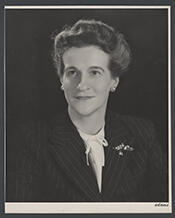
Here you will find contact information for Representative Eliza Jane Pratt, including email address, phone number, and mailing address.
| Name | Eliza Jane Pratt |
| Position | Representative |
| State | North Carolina |
| District | 8 |
| Party | Democratic |
| Status | Former Representative |
| Term Start | January 3, 1945 |
| Term End | January 3, 1947 |
| Terms Served | 1 |
| Born | March 5, 1902 |
| Gender | Female |
| Bioguide ID | P000498 |
About Representative Eliza Jane Pratt
Eliza Jane Pratt (March 5, 1902 – May 13, 1981) was a United States Representative from North Carolina and the first woman to represent that state in the U.S. Congress. A member of the Democratic Party, she served one term in the House of Representatives from 1946 to 1947, contributing to the legislative process during a significant period in American history. She remained the only woman elected to the House of Representatives from North Carolina until the 1992 election of Eva Clayton.
Pratt was born in Anson County, North Carolina, on March 5, 1902. She grew up in the rural Piedmont region of the state, an area shaped by agriculture and small-town life in the early twentieth century. She attended Queens College in Charlotte, North Carolina, from 1918 to 1920, pursuing higher education at a time when relatively few women in the South had that opportunity. Her early academic experience helped prepare her for a career that would combine journalism, political administration, and public service.
In 1923, Pratt began her professional career as an editor for the Montgomerian newspaper in Troy, North Carolina. This work in local journalism brought her into close contact with community affairs and public issues, and it provided her with experience in writing, editing, and public communication. The following year, in 1924, she moved into national politics when she was hired as an administrative assistant to Congressman William C. Hammer of North Carolina. After Hammer’s death in 1930, Pratt continued her work on Capitol Hill, serving in similar roles for a succession of North Carolina representatives: Hinton James, J. Walter Lambeth, and William O. Burgin. Over these years she gained extensive knowledge of legislative procedures, constituent services, and the internal workings of the House of Representatives.
Pratt’s long tenure as a congressional staff member led directly to her own election to Congress. When Representative William O. Burgin died in office in 1946, she became the Democratic candidate in the special election to fill the vacancy in North Carolina’s congressional delegation. She was elected as a Democrat and served in the Seventy-ninth Congress from May 25, 1946, to January 3, 1947. Although her overall service in Congress is sometimes described as spanning from 1945 to 1947 because it fell within that congressional term, her actual tenure began with her swearing-in in May 1946. She was not a candidate in the 1946 general election for the subsequent full term. During her time in the House of Representatives, Pratt was appointed to three committees: Pensions, Territories, and Flood Control. In this capacity she participated in the democratic process, represented the interests of her North Carolina constituents, and contributed to legislative deliberations in the immediate post–World War II era.
After leaving Congress in January 1947, Pratt continued her career in federal service. Between 1947 and 1956 she held a variety of positions in the national government, working with the Office of Alien Property, the Department of Agriculture, and the Library of Congress. These roles extended her experience beyond the legislative branch into the broader federal administrative apparatus, allowing her to apply her congressional background to issues of property administration, agricultural policy, and information services.
In 1957, Pratt returned to the House of Representatives in a staff capacity, serving as secretary to Congressman Alvin Paul Kitchin of North Carolina. She remained in that position through 1962, once again engaging in the daily operations of a congressional office and assisting in legislative and constituent work. That same year, she left Washington and returned to her home state, where she entered the private sector as a public relations executive for the North Carolina Telephone Company. In this role she drew on her decades of experience in communication and public affairs.
Eliza Jane Pratt died on May 13, 1981. Her career marked a significant milestone in North Carolina’s political history as she broke a gender barrier by becoming the first woman from the state to serve in the U.S. Congress. For nearly half a century, until the election of Eva Clayton in 1992, she stood alone as the only woman ever elected to the U.S. House of Representatives from North Carolina, a testament to both her pioneering role and the slow pace of change in women’s political representation in the state.