Representative Elizur Kirke Hart
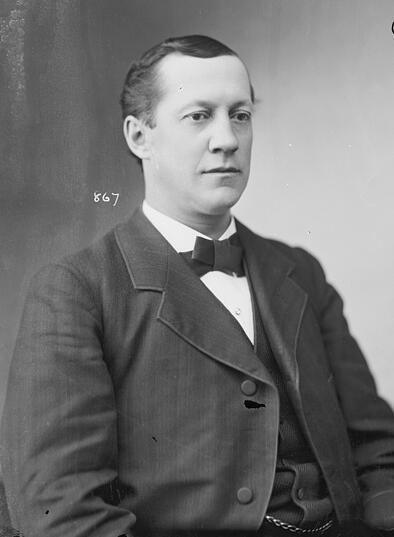
Here you will find contact information for Representative Elizur Kirke Hart, including email address, phone number, and mailing address.
| Name | Elizur Kirke Hart |
| Position | Representative |
| State | New York |
| District | 30 |
| Party | Democratic |
| Status | Former Representative |
| Term Start | October 15, 1877 |
| Term End | March 3, 1879 |
| Terms Served | 1 |
| Born | April 8, 1841 |
| Gender | Male |
| Bioguide ID | H000285 |
About Representative Elizur Kirke Hart
Elizur Kirke Hart (April 8, 1841 – February 18, 1893) was an American banker, newspaper founder, and politician who served one term as a U.S. Representative from New York from 1877 to 1879. A member of the Democratic Party during his congressional service, he contributed to the legislative process during a single term in office and represented the interests of his constituents during a significant period in American history following the Civil War and Reconstruction.
Hart was born in Albion, Orleans County, New York, on April 8, 1841, the son of Elizur Hart and Loraine Field. He was raised in a family that quickly became prominent in the local community, particularly in banking and civic affairs. Hart attended the Albion Academy, receiving the education that prepared him for a career in finance and public life. His early years in Albion established the local connections and familiarity with community needs that would later shape his political and philanthropic activities.
Hart’s professional career began in the banking industry founded by his father. In 1860, his father established the Orleans County Bank in Albion with a capital of $100,000, an important financial institution in the region. Elizur K. Hart was first employed there as a bookkeeper, gaining practical experience in banking operations. When the bank was reorganized as the Orleans County National Bank in 1865, he was promoted to teller, reflecting his growing responsibilities. Upon the death of his father in 1870, Hart advanced to the position of cashier, a key executive role in the bank. After the death of Joseph Cornell in 1890, he assumed the presidency of the Orleans County National Bank and served as its president until his own death in 1893, overseeing its operations during a period of economic growth and modernization.
Hart’s political career began at the state level and initially within the Republican Party. He served as a member of the 95th New York State Legislature in 1872 as a Republican, participating in state lawmaking during a time of post–Civil War adjustment and reform. During the presidential campaign of Horace Greeley in 1872, Hart found himself attracted to more liberal ideas and gradually became associated with the Democratic Party. This shift in political allegiance reflected broader realignments in national politics during the era and set the stage for his later service in Congress as a Democrat.
Hart was elected as a Democrat to the Forty-fifth Congress and served as a U.S. Representative from New York from March 4, 1877, to March 3, 1879. His term in the House of Representatives coincided with the end of Reconstruction and the beginning of the Gilded Age, a period marked by industrial expansion and political realignment. As a member of the House of Representatives, Elizur Kirke Hart participated in the democratic process, contributed to the legislative work of the chamber, and represented the interests of his New York constituents. He did not seek reelection in 1878, concluding his congressional service after one term and returning to his business and local civic pursuits.
After leaving Congress, Hart resumed his residence in Albion and became deeply involved in local governance and community development. He served as a member of the Village of Albion Board of Trustees from 1879 to 1886, helping to oversee municipal affairs. He also served on the Albion Board of Education, contributing to the oversight of local schools, and was one of the first trustees of the Albion Library Association, supporting the growth of educational and cultural resources in the village. In addition to his banking interests, Hart expanded into journalism and publishing. In 1882 he founded the Rochester Post-Express in Rochester, New York, serving as its president and becoming a principal stockholder in the company. He remained a leading figure in the newspaper until 1892, using the enterprise to participate in the public discourse of western New York.
Hart played a significant role in bringing important institutions and modern infrastructure to his community. He was responsible for securing Albion as the location of the Western House of Refuge, a state reform institution, and served as president of its board of directors, overseeing its establishment and operations. He was also selected as treasurer of the Albion Electric Light Company, established in 1890, which was responsible for bringing electric street lighting to the Village of Albion, marking a major step in the town’s modernization. As a philanthropist and civic leader, Hart was a charter member of the Orleans County Monument Association, which raised funds to erect the Soldiers and Sailors Monument at Mount Albion Cemetery, commemorating local veterans of the Civil War.
Beyond his public and business careers, Hart also engaged in notable real estate and leisure pursuits. On July 31, 1871, he purchased Hemlock Island in the Thousand Islands region from Charles and John Walton for $100. Renaming it “Hart Island,” he constructed an 80-room cottage there, measuring 84 feet long and 74 feet wide, at a cost of $12,000. This substantial summer residence reflected both his personal means and the growing popularity of the Thousand Islands as a resort area in the late nineteenth century. Eventually, the island was sold to hotelier George C. Boldt, who relocated Hart’s cottage to nearby Wellesley Island, renamed the property “Heart Island,” and constructed the now-famous Boldt Castle on the site, giving Hart’s former island a lasting place in regional history.
Elizur Kirke Hart died in Albion, New York, on February 18, 1893, while still serving as president of the Orleans County National Bank and remaining active in local affairs. He was interred in Mount Albion Cemetery, the site of the Soldiers and Sailors Monument whose creation he had helped to support. His life encompassed significant contributions to banking, local governance, state and national politics, journalism, public infrastructure, and civic commemoration in western New York.