Representative Ellis Yarnal Berry
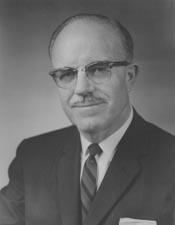
Here you will find contact information for Representative Ellis Yarnal Berry, including email address, phone number, and mailing address.
| Name | Ellis Yarnal Berry |
| Position | Representative |
| State | South Dakota |
| District | 2 |
| Party | Republican |
| Status | Former Representative |
| Term Start | January 3, 1951 |
| Term End | January 3, 1971 |
| Terms Served | 10 |
| Born | October 6, 1902 |
| Gender | Male |
| Bioguide ID | B000416 |
About Representative Ellis Yarnal Berry
Ellis Yarnal Berry (October 6, 1902 – April 1, 1999) was an American attorney, newspaper publisher, and Republican politician who served as a Representative from South Dakota in the United States Congress from 1951 to 1971. Over the course of ten consecutive terms in the House of Representatives, he contributed to the legislative process during a significant period in American history, representing the interests of his South Dakota constituents and participating actively in the democratic process.
Berry was born on October 6, 1902, in Larchwood, Iowa. During his youth his family moved to South Dakota, and he graduated from Philip High School in Philip, South Dakota. He pursued higher education at Morningside College in Sioux City, Iowa, where he was a student from 1920 to 1922. He then transferred to the University of South Dakota, where he completed his undergraduate studies and continued on to study law. Berry graduated with a law degree in 1927 and was admitted to the bar that same year under diploma privilege, allowing him to begin the practice of law without a separate bar examination.
Following his admission to the bar, Berry established his first law practice in Kennebec, South Dakota. After approximately two years, he moved his practice to McLaughlin, South Dakota, where he quickly became involved in local public affairs. In Corson County he was elected state’s attorney and probate court judge, and he also served as mayor of McLaughlin. In addition to his legal and municipal responsibilities, Berry entered the field of journalism and publishing. Beginning in 1938, he served as publisher of the McLaughlin Messenger, a local newspaper that provided a platform for community news and public discourse. That same year he became editor of the State Bar Association Journal, a position he held from 1938 through 1950, reflecting his growing prominence within the South Dakota legal community.
Berry’s political career at the state level advanced when he was elected to the South Dakota State Senate. He served in the Senate from 1938 through 1942, completing two terms. His combined experience as an attorney, local official, publisher, and state legislator helped establish his reputation as a capable public servant and set the stage for his later bid for national office. Throughout this period he continued to balance his legal practice, editorial responsibilities, and legislative duties, deepening his engagement with issues affecting both his region and the state as a whole.
In 1950, Berry was elected as a Republican to the United States House of Representatives from South Dakota and took office in January 1951. He was reelected nine consecutive times, serving ten terms in Congress until his retirement in 1971. His congressional service spanned two decades marked by the Cold War, the civil rights movement, and significant domestic policy debates. During his tenure, Berry also expanded his publishing activities; beginning in 1952, he published the McIntosh News and the Morristown World, further extending his influence in South Dakota’s public life. In 1966, journalist Drew Pearson reported that Berry was one of a group of four congressmen who had received the “Statesman of the Republic” award from Liberty Lobby for what the organization described as their “right-wing activities,” an indication of how some contemporaries viewed his political orientation.
Berry’s voting record on civil rights legislation reflected a complex stance during a transformative era in American law and society. He voted in favor of the Civil Rights Acts of 1957, 1960, and 1968, as well as the Voting Rights Act of 1965, supporting key measures aimed at protecting voting rights and combating discrimination. At the same time, he voted against the Civil Rights Act of 1964 and opposed the 24th Amendment to the U.S. Constitution, which prohibited the use of poll taxes in federal elections. His long service in the House made him a familiar figure in congressional deliberations, and he remained an active participant in the legislative process until his decision not to seek reelection in 1970, formally retiring from Congress in 1971.
After retiring from Congress, Berry settled in Rapid City, South Dakota, where he lived for the remainder of his life. He maintained ties to education and public service through the disposition of his congressional and professional papers. Following his retirement in 1971, he donated his papers to Black Hills State University. The resulting Berry Collection, housed at the E. Y. Berry Library-Learning Center at Black Hills State University, consists of more than 500 boxes of manuscript materials documenting his legal, publishing, and congressional careers. In recognition of his contributions and the significance of his archival collection, the university named its Library-Learning Center in his honor. Although his name has sometimes been incorrectly associated with the Berry Amendment, that statute was enacted in 1941, a decade before Berry entered Congress, and is unrelated to his legislative work.
Ellis Yarnal Berry died in Rapid City on April 1, 1999, at the age of 96. His long life encompassed service as an attorney, local official, state senator, newspaper publisher, and ten-term member of the United States House of Representatives from South Dakota, leaving a substantial documentary legacy preserved for researchers and the public.