Senator Elmer Jacob Burkett
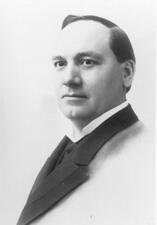
Here you will find contact information for Senator Elmer Jacob Burkett, including email address, phone number, and mailing address.
| Name | Elmer Jacob Burkett |
| Position | Senator |
| State | Nebraska |
| Party | Republican |
| Status | Former Representative |
| Term Start | December 4, 1899 |
| Term End | March 3, 1911 |
| Terms Served | 4 |
| Born | December 1, 1867 |
| Gender | Male |
| Bioguide ID | B001103 |
About Senator Elmer Jacob Burkett
Elmer Jacob Burkett (December 1, 1867 – May 23, 1935) was an American educator, lawyer, and Republican politician who served six terms in the United States Congress as both a representative and a senator from Nebraska between 1899 and 1911. His congressional service, which included four terms in the House of Representatives and one full term in the Senate, took place during a significant period in American history marked by the Progressive Era and major national debates over economic regulation, agricultural policy, and political reform.
Burkett began his professional life as an educator before entering the legal profession, a path that was common among late 19th-century American public figures. Trained as a lawyer, he combined his background in education and law to build a career that prepared him for public service and legislative work. His early experiences in the classroom and the courtroom informed his later approach to policy, particularly on issues affecting ordinary citizens and the legal framework of government.
A member of the Republican Party, Burkett was first elected to the United States House of Representatives from Nebraska in 1898 and took office in March 1899. He went on to serve four consecutive terms in the House, participating actively in the legislative process at a time when the nation was grappling with the aftermath of the Spanish–American War, the rise of industrial trusts, and the needs of a rapidly growing agricultural West. As a representative, he contributed to debates and legislation that reflected both national priorities and the specific concerns of his Nebraska constituents, including farming interests and rural development.
In 1905, Burkett advanced to the United States Senate as a Republican senator from Nebraska, where he served one full term until 1911. His tenure in the Senate extended his influence on national policy during the Progressive Era, as Congress addressed issues such as railroad regulation, conservation, and political reforms aimed at curbing corruption and expanding democratic participation. As a member of the Senate, Elmer Jacob Burkett participated in the democratic process at the highest legislative level and represented the interests of his state in shaping federal law and policy.
Burkett’s combined service in the House and Senate from 1899 to 1911 amounted to six terms in Congress and placed him among the prominent Nebraska Republicans of his generation. Throughout these years, he was recognized as an active legislator who worked within the party’s dominant national coalition while also attending to the needs of his constituents. His career reflected the broader transformation of American politics in the early 20th century, as the federal government assumed a larger role in economic and social affairs.
After leaving the Senate in 1911, Burkett returned to private life, resuming his legal and civic activities in Nebraska. He remained a respected figure in Lincoln and within state Republican circles, his congressional career standing as a significant chapter in Nebraska’s representation in Washington. He continued to be involved in public affairs and the legal profession until the final years of his life.
Elmer Jacob Burkett died in Lincoln, Nebraska, on May 23, 1935. He was interred in Wyuka Cemetery, a historic burial ground in Lincoln, where many of the state’s notable public figures are laid to rest. His life and career, spanning education, law, and more than a decade in the United States Congress, left a lasting imprint on Nebraska’s political history and on the legislative record of the early 20th century.