Representative Elmer Joseph Holland
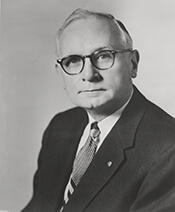
Here you will find contact information for Representative Elmer Joseph Holland, including email address, phone number, and mailing address.
| Name | Elmer Joseph Holland |
| Position | Representative |
| State | Pennsylvania |
| District | 20 |
| Party | Democratic |
| Status | Former Representative |
| Term Start | January 3, 1941 |
| Term End | January 3, 1969 |
| Terms Served | 8 |
| Born | January 8, 1894 |
| Gender | Male |
| Bioguide ID | H000717 |
About Representative Elmer Joseph Holland
Elmer Joseph Holland (January 8, 1894 – August 9, 1968) was an American World War I veteran, state legislator, and long-serving Democratic member of the U.S. House of Representatives from Pennsylvania during the mid-twentieth century. Over the course of his career, he represented his Pittsburgh-area constituents in both chambers of the Pennsylvania General Assembly and in Congress, where he contributed to the legislative process during eight terms in office and served continuously in the U.S. House from the mid-1950s until his death in 1968.
Holland was born on January 8, 1894, in Pittsburgh, Pennsylvania. He was educated in local schools and went on to attend Duquesne University in Pittsburgh. Seeking further study abroad, he attended the University of Montpellier in France. Following his academic work there, he completed military training and graduated from the Saumur Cavalry School in France in 1919, an experience that reflected his early commitment to military service and international engagement.
During World War I, Holland served with the American Expeditionary Forces in Europe. He was commissioned as a second lieutenant in the Field Artillery, participating in the overseas operations of the U.S. Army during the conflict. After the war, he returned to civilian life but maintained the perspective of a veteran who had seen service in a major international conflict, a background that would later inform his public service during another global war and the postwar era.
In civilian life between the wars, Holland pursued a career in business. From 1915 to 1933 he was engaged as a sales and advertising manager for a glass manufacturer, a position that placed him within one of western Pennsylvania’s key industrial sectors. His work in the glass industry provided him with practical experience in commerce and labor issues at a time when Pittsburgh was a major center of American manufacturing.
Holland entered public office in the 1930s. He was elected as a member of the Pennsylvania House of Representatives, serving from 1934 to 1942. While serving in the state legislature, he also held municipal executive responsibilities in his home city, acting as superintendent of highways and sewers in Pittsburgh from 1940 to 1942. These overlapping roles gave him experience in both statewide policymaking and the administration of essential urban infrastructure during a period marked by the Great Depression and the nation’s gradual mobilization for World War II.
Holland’s first service in the U.S. Congress came during World War II. A member of the Democratic Party, he was elected as a Democrat to the Seventy-seventh Congress to fill the vacancy caused by the resignation of Representative Joseph A. McArdle. He took his seat in the U.S. House of Representatives on May 19, 1942, and served until January 3, 1943. Although his initial tenure in Congress was brief and he was not a candidate for renomination in 1942, this period marked the beginning of his federal legislative career and placed him in the House during a critical phase of the war.
Following this first term in Congress, Holland returned to military service during World War II. He served as a major in the European Theater of Operations, resuming active duty in support of the Allied war effort. After the war, he continued his political career at the state level, serving as a member of the Pennsylvania State Senate from 1943 to 1956. His long tenure in the State Senate spanned the wartime and early postwar years, allowing him to participate in shaping state policy during a time of economic transition, veterans’ reintegration, and the early stages of the Cold War.
Holland reentered the U.S. House of Representatives in the mid-1950s. He was again elected as a Democrat to the Eighty-fourth Congress to fill the vacancy caused by the death of Representative Vera Buchanan. From that point forward, he served continuously in Congress, representing a Pennsylvania district that included parts of the Pittsburgh area. His service in the House extended through successive Congresses during a significant period in American history, encompassing the Eisenhower, Kennedy, and Johnson administrations, the civil rights era, and the early years of U.S. involvement in Vietnam. Over these years, he participated in the democratic process, contributed to the legislative work of the House, and represented the interests of his constituents in western Pennsylvania during eight terms in office.
Elmer Joseph Holland remained in Congress until his death. He died of a heart attack in Annapolis, Maryland, on August 9, 1968, while still serving as a member of the U.S. House of Representatives. His death placed him among the members of Congress who died in office in the mid-twentieth century. He was interred at Arlington National Cemetery, reflecting both his status as a veteran of two world wars and his long record of public service at the municipal, state, and federal levels.