Representative Elmer O. Leatherwood
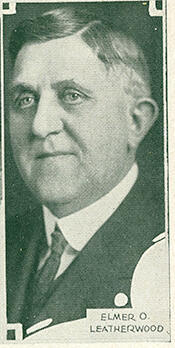
Here you will find contact information for Representative Elmer O. Leatherwood, including email address, phone number, and mailing address.
| Name | Elmer O. Leatherwood |
| Position | Representative |
| State | Utah |
| District | 2 |
| Party | Republican |
| Status | Former Representative |
| Term Start | April 11, 1921 |
| Term End | March 3, 1931 |
| Terms Served | 5 |
| Born | September 4, 1872 |
| Gender | Male |
| Bioguide ID | L000181 |
About Representative Elmer O. Leatherwood
Elmer O. Leatherwood (September 4, 1872 – December 24, 1929) was an American politician and attorney who served as a Republican U.S. Representative from Utah for five consecutive terms, from March 4, 1921, until his death in 1929. Over nearly a decade in the House of Representatives, he contributed to the legislative process during a significant period in American history, representing the interests of his Utah constituents and participating actively in the democratic process.
Leatherwood was born on a farm near Waverly, Pike County, Ohio, on September 4, 1872. He attended the local public schools in rural Ohio before moving westward as a young man. In 1888 he relocated to Emporia, Kansas, where he continued his education. His early life in agricultural and frontier communities helped shape his understanding of the economic and social concerns of western states that would later inform his public service.
Pursuing formal education, Leatherwood enrolled at the Kansas State Normal School in Emporia, Kansas, an institution dedicated primarily to training teachers. He graduated in 1894 and immediately entered the field of public education. From 1894 to 1898 he engaged in public school work, gaining experience as an educator and administrator. During this period he developed an interest in law and public affairs, which led him to undertake legal studies while still working in the school system.
Leatherwood studied law in Kansas and was admitted to the bar at Hiawatha, Kansas, in 1898. Seeking to deepen his legal training, he entered the law department of the University of Wisconsin–Madison, from which he graduated in 1901. That same year he was admitted to practice law and chose to establish his career in the Intermountain West. In 1901 he moved to Salt Lake City, Utah, where he began the practice of law, quickly becoming a prominent member of the local bar and integrating himself into the civic and business life of the city.
In addition to his private legal practice, Leatherwood built a substantial record of public service at the state and local level. He served as district attorney for the third judicial district of Utah from 1908 to 1916, a role in which he was responsible for prosecuting major criminal cases and representing the state in important legal matters. Alongside his legal and prosecutorial work, he was active in business, serving as president of several enterprises, including the Western Powder Co., Leary & Warren Stockyards, the Hellgate Mining & Milling Co., and the Olympus Mining & Milling Co. His leadership in these companies reflected his engagement with key sectors of the regional economy, particularly mining, livestock, and industrial supply.
Leatherwood’s growing prominence in Utah’s legal, business, and political circles led naturally to national office. A member of the Republican Party, he was elected as a Republican to the Sixty-seventh Congress and was subsequently reelected to the four succeeding Congresses, serving from March 4, 1921, until his death on December 24, 1929. During his tenure in the House of Representatives, he represented Utah through a period marked by post–World War I adjustment, economic expansion, and evolving federal policy in the American West. He served as chairman of the Committee on Expenditures on Public Buildings during the Sixty-eighth and Sixty-ninth Congresses, overseeing matters related to federal construction and the use of public funds for government facilities. In 1924 he further demonstrated his standing within the party by serving as a delegate to the Republican National Convention.
Leatherwood remained in office until his death, making him one of the members of the United States Congress who died in office in the first half of the twentieth century. He died in Washington, D.C., on December 24, 1929, while still serving as a U.S. Representative from Utah. His remains were returned to his adopted state, and he was interred in Mount Olivet Cemetery in Salt Lake City, Utah. His career left a record of service that combined legal expertise, business leadership, and nearly a decade of congressional representation during a formative era in both Utah and national history.