Representative Elmer James Ryan
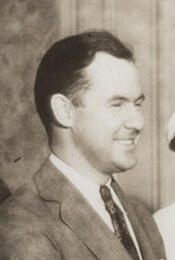
Here you will find contact information for Representative Elmer James Ryan, including email address, phone number, and mailing address.
| Name | Elmer James Ryan |
| Position | Representative |
| State | Minnesota |
| District | 2 |
| Party | Democratic |
| Status | Former Representative |
| Term Start | January 3, 1935 |
| Term End | January 3, 1941 |
| Terms Served | 3 |
| Born | May 26, 1907 |
| Gender | Male |
| Bioguide ID | R000555 |
About Representative Elmer James Ryan
Elmer James Ryan (May 26, 1907 – February 1, 1958) was a United States Representative from Minnesota who served three terms in the U.S. House of Representatives from 1935 to 1941. A member of the Democratic Party, he represented his Minnesota constituents during a period marked by the Great Depression, the New Deal, and the mounting international tensions that preceded American involvement in the Second World War.
Ryan was born on May 26, 1907, in Minnesota, where he spent his early years before embarking on his academic and professional pursuits. Growing up in the early twentieth century, he came of age in a state with a strong tradition of political engagement and agrarian reform, influences that would later shape his outlook as a public servant. His formative years in Minnesota provided him with a close understanding of the concerns of Midwestern communities, including issues affecting farmers, small businesses, and working families.
In preparation for a career in law and public life, Ryan pursued higher education and legal training, reflecting the common path of many future members of Congress in his era. He studied law and was admitted to the bar, establishing himself as an attorney. His legal background equipped him with a detailed understanding of statutory interpretation and public policy, skills that would prove valuable in his later legislative work. Through his practice and early professional activities, he became increasingly involved in civic affairs and the political life of his state.
Building on his legal career and growing public profile, Ryan entered elective politics as a member of the Democratic Party at a time when the party was expanding its influence in Minnesota and nationally under President Franklin D. Roosevelt. He was elected to the U.S. House of Representatives and began his congressional service on January 3, 1935. Serving continuously until 1941, he completed three terms in office. During these years, Congress grappled with major New Deal legislation aimed at economic recovery, financial reform, and social welfare, and Ryan contributed to the legislative process as part of this broader national effort. As a representative, he participated in debates, committee work, and votes that affected both his district and the country as a whole, and he worked to represent the interests and concerns of his Minnesota constituents in Washington.
Ryan’s tenure in Congress coincided with a significant period in American history, as the nation sought to recover from the economic devastation of the Great Depression and later confronted the challenges posed by rising global instability. Within this context, he took part in the democratic process that shaped federal responses to unemployment, agricultural distress, and industrial recovery, as well as early discussions over national defense and foreign policy as war loomed abroad. His service from 1935 to 1941 placed him among the legislators who helped define the federal government’s expanding role in economic and social life during the New Deal era.
After leaving Congress in 1941, Ryan returned to private life and resumed his legal and civic activities. Drawing on his experience as a former member of the House of Representatives, he remained part of the broader public and professional community in Minnesota. His post-congressional years reflected the trajectory of many mid-twentieth-century legislators who, after national service, continued contributing at the state and local levels through law, business, and public affairs.
Elmer James Ryan died on February 1, 1958. His career as a three-term Democratic representative from Minnesota, spanning the critical years from 1935 to 1941, placed him at the center of some of the most consequential legislative developments of the New Deal period. Through his participation in the House of Representatives, he played a role in the evolving relationship between the federal government and the American people during a transformative era in United States history.