Representative Elmer Ebenezer Studley
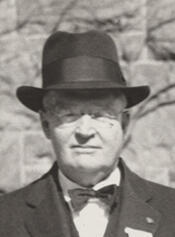
Here you will find contact information for Representative Elmer Ebenezer Studley, including email address, phone number, and mailing address.
| Name | Elmer Ebenezer Studley |
| Position | Representative |
| State | New York |
| District | At-Large |
| Party | Democratic |
| Status | Former Representative |
| Term Start | March 9, 1933 |
| Term End | January 3, 1935 |
| Terms Served | 1 |
| Born | September 24, 1869 |
| Gender | Male |
| Bioguide ID | S001041 |
About Representative Elmer Ebenezer Studley
Elmer Ebenezer Studley (September 24, 1869 – September 6, 1942) was an American lawyer and politician from New York who served one term as a Democratic Representative from New York in the United States Congress from 1933 to 1935. He was born on a farm near East Ashford, Cattaraugus County, New York, and spent his early years in a rural setting that shaped his familiarity with agricultural and small-town concerns.
Studley pursued higher education at Cornell University, from which he graduated in 1894. While at Cornell, he was a member of the Quill and Dagger society, an honor society that recognized leadership and scholarship. Immediately after graduation, he worked as a reporter for Buffalo newspapers in 1894 and 1895, gaining early experience in public affairs and communication. During this period he also studied law, and in 1895 he was admitted to the bar, commencing the practice of law in Buffalo, New York.
In addition to his legal career, Studley served in the military during the Spanish–American War. He was commissioned as a first lieutenant in the 202nd Regiment, New York Volunteer Infantry, and served in 1898 and 1899. Following his military service, in 1899 he moved west to Raton, Colfax County, New Mexico, where he continued the practice of law. He remained in New Mexico until 1917, building a substantial legal and political career in the territory.
Studley’s public service in New Mexico included election as a Republican member of the Territorial New Mexico House of Representatives in 1907. That same year he served on the New Mexico Statutory Revision Commission, contributing to the organization and modernization of the territory’s legal code. From 1909 to 1910 he was district attorney of Colfax and Union Counties, prosecuting cases and representing the territorial government. Reflecting the shifting political currents of the Progressive Era, he later aligned with reform elements and served as a delegate to the Progressive National Convention in Chicago in 1916.
In 1917, Studley returned to New York, settling in New York City, where he resumed the practice of law. His legal and governmental experience led to further appointments in state and federal positions. In 1924 he served as Deputy New York State Attorney General, and in 1925 and 1926 he was United States commissioner for the Eastern District of New York, a federal judicial officer role that involved handling preliminary matters in federal cases. Over these years he transitioned politically and became associated with the Democratic Party.
In the context of the Great Depression and the political realignment of the early 1930s, Studley was elected at-large as a Democrat from New York to the 73rd United States Congress. He held office from March 4, 1933, to January 3, 1935, serving one term in the U.S. House of Representatives. His service in Congress occurred during a significant period in American history, coinciding with the early New Deal of President Franklin D. Roosevelt. As a member of the House of Representatives, Elmer Ebenezer Studley participated in the legislative process, contributed to national policymaking during a time of economic crisis, and represented the interests of his New York constituents.
After leaving Congress in 1935, Studley resumed the practice of law but soon returned to federal service. In February 1935, President Franklin D. Roosevelt appointed him as a member of the Board of Veterans’ Appeals in Washington, D.C., where he reviewed and adjudicated claims and appeals brought by military veterans. He held this position from his appointment until his death, reflecting a continued commitment to public service and to the welfare of those who had served in the armed forces, consistent with his own background as a Spanish–American War veteran.
Elmer Ebenezer Studley died at his home in Flushing, Queens, New York, on September 6, 1942. He was interred in Flushing Cemetery in Queens. His career spanned journalism, law, military service, territorial and state office, and a term in the United States Congress, marking him as a figure whose public life bridged the late nineteenth century, the Progressive Era, and the New Deal period.