Representative Elton Watkins
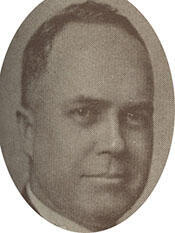
Here you will find contact information for Representative Elton Watkins, including email address, phone number, and mailing address.
| Name | Elton Watkins |
| Position | Representative |
| State | Oregon |
| District | 3 |
| Party | Democratic |
| Status | Former Representative |
| Term Start | December 3, 1923 |
| Term End | March 3, 1925 |
| Terms Served | 1 |
| Born | July 6, 1881 |
| Gender | Male |
| Bioguide ID | W000191 |
About Representative Elton Watkins
Elton Watkins (July 6, 1881 – June 24, 1956) was a Democratic Representative from Oregon in the United States Congress, serving one term from 1923 to 1925 as the Congressman for Oregon’s 3rd congressional district. Over the course of a varied legal and political career, he also served as an assistant United States Attorney and was repeatedly a candidate for higher office in Oregon.
Watkins was born in Newton, Mississippi, on July 6, 1881. He was the son of a veteran of the Confederate Army, a background that linked him to the post–Civil War South and its shifting political and social landscape. He attended the Webb School in Bell Buckle, Tennessee, a well-regarded preparatory institution, before pursuing higher education in Virginia. Watkins enrolled at Washington and Lee University, where he completed his undergraduate studies and graduated in 1910 with a Bachelor of Arts degree.
Following his undergraduate education, Watkins moved to Washington, D.C., to study law. He attended Georgetown University, earning an LL.B., and then continued his legal education at George Washington University Law School, from which he received a master’s degree in 1912. During part of his time in the nation’s capital, he worked for the Federal Bureau of Investigation, gaining experience in federal investigative and legal matters that would inform his later work as a lawyer and public official.
In 1912, Watkins relocated to Oregon, where he was admitted to the state bar and began the practice of law. With the onset of World War I, he returned to service with the Federal Bureau of Investigation, contributing to the federal government’s wartime efforts. In 1918, he married Daniela Ruth Sturgis; the couple had two children. The following year, in 1919, Watkins was appointed an assistant attorney for the United States District of Oregon, a position in which he represented the federal government in legal proceedings and further established his reputation in Oregon’s legal community.
Watkins entered national politics in 1922, when he was elected as a Democrat to the United States House of Representatives from Oregon’s 3rd congressional district. He served in the House from 1923 to 1925, during a significant period in American history marked by postwar adjustment and the early years of the 1920s economic expansion. As a member of the House of Representatives, Watkins participated in the legislative process and represented the interests of his Portland-area constituents, contributing to debates and votes on national policy. A member of the Democratic Party, he served one term in office and sought reelection in 1924, but was unsuccessful in his bid to return to Congress.
After leaving the House, Watkins remained active in Oregon politics. In 1930, he was the Democratic nominee for the United States Senate from Oregon, running against incumbent Republican Senator Charles L. McNary; Watkins lost that general election. He again sought a Senate seat in 1932 but was defeated in the Democratic primary. Also in 1932, he ran for mayor of Portland, Oregon, but was unsuccessful. He made a second attempt to win the Portland mayoralty in 1940 and again was defeated, reflecting both his persistence in public life and the competitive nature of Oregon politics during that era.
Following his electoral defeats, Watkins returned to the full-time practice of law in Portland, where he continued his professional career. He lived and worked in the city until his death on June 24, 1956. Elton Watkins was buried in Greenwood Hills Cemetery, closing a life that spanned the Reconstruction-era South, the Progressive and World War I periods, and the political and economic transformations of the early and mid-twentieth century.