Representative Emanuel Celler
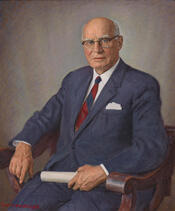
Here you will find contact information for Representative Emanuel Celler, including email address, phone number, and mailing address.
| Name | Emanuel Celler |
| Position | Representative |
| State | New York |
| District | 10 |
| Party | Democratic |
| Status | Former Representative |
| Term Start | December 3, 1923 |
| Term End | January 3, 1973 |
| Terms Served | 25 |
| Born | May 6, 1888 |
| Gender | Male |
| Bioguide ID | C000264 |
About Representative Emanuel Celler
Emanuel Celler (May 6, 1888 – January 15, 1981) was an American Democratic politician from New York who represented parts of the New York City boroughs of Brooklyn and Queens in the United States House of Representatives for nearly fifty years, from March 1923 to January 1973. Born in Brooklyn, New York, to Jewish immigrant parents of German ancestry, he grew up in a milieu shaped by the experiences of recent arrivals to the United States, an environment that would profoundly influence his later legislative priorities on immigration and civil rights. He attended public schools in Brooklyn and went on to Columbia College, graduating in 1910, before earning his law degree from Columbia Law School in 1912. After admission to the bar, he practiced law in New York City and became active in local Democratic politics, building a reputation as an able attorney and advocate for his largely immigrant constituency.
Celler’s early legal and political career in Brooklyn coincided with a period of intense national debate over immigration and economic regulation. Before entering Congress, he served as an assistant district attorney in Kings County and was involved in civic and party affairs, which helped him cultivate strong ties to the local Democratic organization. His background as the son of immigrants and his professional work in a diverse urban community informed his skepticism toward restrictive immigration policies and his interest in using federal power to regulate business practices and protect consumers and workers. By the early 1920s, he had emerged as a prominent figure in Brooklyn politics, positioning him for a successful run for national office.
Elected as a Democrat to the Sixty-eighth Congress, Celler began his service in the U.S. House of Representatives on March 4, 1923, and would go on to serve 25 consecutive terms, remaining in office until January 3, 1973. His tenure spanned the administrations of presidents from Warren G. Harding to Richard M. Nixon and encompassed the Great Depression, World War II, the Cold War, and the civil rights era. Early in his congressional career, he made his first major impact during debate over the Johnson–Reed Immigration Act of 1924. He vehemently opposed the national origins quota system, which limited immigration to 3 percent of each nationality present in the United States in 1910 and was designed to reduce immigration from Eastern and Southern Europe, thereby excluding many Jews, Catholics, and other groups. Although the act passed, Celler’s forceful opposition marked the beginning of a four-decade campaign to dismantle national origin quotas and liberalize U.S. immigration law.
During the 1930s and 1940s, Celler emerged as a leading congressional voice on behalf of refugees and against isolationism. In July 1939, he wrote a strongly worded letter to Secretary of State Cordell Hull that helped initiate a prolonged process which, 45 years later in 1984, culminated in full, formal diplomatic relations between the United States and the Holy See. Throughout World War II, he strongly supported aid for Jewish refugees fleeing Europe and repeatedly urged the U.S. government to relax immigration laws on an emergency basis to rescue those escaping the Holocaust. In 1943, he condemned President Franklin D. Roosevelt’s immigration policy as “cold and cruel” and criticized what he called the “glacier-like attitude” of the State Department. A committed Zionist, Celler supported the recognition of the State of Israel and called for lifting the American arms embargo imposed on both sides during the 1948 Palestine war.
Celler’s influence reached its height through his long service on, and eventual leadership of, the House Committee on the Judiciary. He first became chairman in 1949 and, except for a break from 1953 to 1955 when Republicans controlled the House, he chaired the committee for eleven terms, serving as chairman for all but two years between 1949 and 1973. As chairman, he played a central role in drafting, managing, and securing passage of landmark civil rights legislation, including the Civil Rights Act of 1964, the Voting Rights Act of 1965, and the Civil Rights Act of 1968. Working closely with Representative William Moore McCulloch, the Republican ranking member from Ohio, Celler helped forge the bipartisan coalitions necessary to overcome entrenched Southern Democratic opposition in the Senate. In January 1965, he introduced in the House the proposal that became the Twenty-fifth Amendment to the Constitution, clarifying presidential succession and procedures for addressing presidential disability. That same year, he sponsored and steered to passage the Immigration and Nationality Act of 1965, also known as the Hart–Celler Act, which eliminated the national origins quota system and represented the culmination of his 41-year effort to reform U.S. immigration law.
Beyond civil rights and immigration, Celler was active in antitrust and other areas of federal regulation. In 1950, he was the lead House sponsor of legislation to strengthen the Clayton Antitrust Act of 1914. Working with Senator Estes Kefauver of Tennessee, he helped craft what became known as the Celler–Kefauver Act, closing key regulatory loopholes and empowering the federal government to prevent vertical and conglomerate mergers that could limit competition. In 1951, as chairman of the Judiciary Committee, he conducted hearings examining the antitrust exemption granted to Major League Baseball and the legality of the reserve clause. Although he initially believed legislation might be needed to support the reserve system, testimony from star players such as Lou Boudreau and Pee Wee Reese, as well as lesser-known players like Ross Horning and Cy Block, led him to conclude that Congress should take no immediate action and allow the federal courts to address the issue. In 1953, the Supreme Court upheld baseball’s antitrust exemption and the reserve clause in Toolson v. New York Yankees, Inc. Celler also sponsored legislation that evolved into the U.S. Gun Control Act of 1968, reflecting his broader interest in public safety and federal regulatory authority.
Celler’s long congressional career also intersected with the domestic political conflicts of the early Cold War. In the early 1950s, Senator Joseph McCarthy attacked his patriotism, prompting Celler to respond forcefully at the 1952 Democratic National Convention. In a widely noted speech, he denounced McCarthyism as a deliberate effort to undermine public faith in government, “sow suspicion everywhere,” and “set friend against friend and brother against brother,” relying on coercion, intimidation, and the “fear of the smear attack.” Despite his generally liberal record, Celler broke with many feminists in the early 1970s by opposing the proposed Equal Rights Amendment, arguing that existing legal protections for women might be jeopardized by its adoption. From 1965 to 1973, by virtue of his seniority, he served as the dean of the United States House of Representatives, the honorary title given to its longest-serving member. Over the course of his 25 terms, he became the fifth longest-serving congressman in American history and the longest-serving member of either house of Congress in New York’s history.
Celler’s service in Congress occurred during a transformative period in American history, and he consistently participated in the legislative process as a representative of his Brooklyn- and Queens-based districts, advocating for his constituents while shaping national policy. A steadfast member of the Democratic Party, he contributed to the passage of major legislation in civil rights, immigration, antitrust, and constitutional law. Nonetheless, his long tenure ended abruptly when he was defeated in the 1972 Democratic primary by Elizabeth Holtzman, making him the most senior Representative ever to lose a primary election. Had he remained in office, he would have presided over the House Judiciary Committee’s impeachment inquiry during the Watergate scandal; instead, that role fell to Representative Peter Rodino of New Jersey. During the Watergate period of 1973–1974, Celler was frequently invited to appear on television and radio programs to discuss the hearings and the responsibilities of the Judiciary Committee chair, and he indicated that, given his cordial relationship with President Richard Nixon, he might have taken a less adversarial approach than Rodino.
In his later years, Celler remained active in public life, continuing to speak and write about immigration, civil rights, and the many issues that had occupied his half-century in Congress. In 1978, shortly before his 90th birthday, he granted an extended interview reflecting on New York and national politics, his legislative battles, and the evolution of Congress over his long career. He lived in Brooklyn until his death on January 15, 1981. Emanuel Celler’s nearly fifty years in the House of Representatives left a lasting imprint on American law and policy, particularly in the areas of immigration reform, civil rights, and the structure of federal authority.