Representative Emmet Francis Byrne
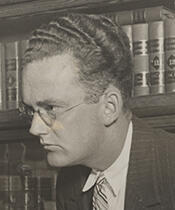
Here you will find contact information for Representative Emmet Francis Byrne, including email address, phone number, and mailing address.
| Name | Emmet Francis Byrne |
| Position | Representative |
| State | Illinois |
| District | 3 |
| Party | Republican |
| Status | Former Representative |
| Term Start | January 3, 1957 |
| Term End | January 3, 1959 |
| Terms Served | 1 |
| Born | December 6, 1896 |
| Gender | Male |
| Bioguide ID | B001211 |
About Representative Emmet Francis Byrne
Emmet Francis Byrne (December 6, 1896 – September 25, 1974) was an American politician who served as a Republican U.S. Representative from the Third Congressional District of Illinois. His single term in the United States Congress, from January 3, 1957, to January 3, 1959, took place during a significant period in American history marked by the early stages of the modern civil rights movement and the Cold War. As a member of the House of Representatives, Byrne participated in the federal legislative process and represented the interests of his Illinois constituents in national affairs.
Byrne was born on December 6, 1896. Details of his early life and family background are not extensively documented in the available sources, but his later public career indicates that he emerged from this period with a commitment to public service and civic engagement. Coming of age in the early twentieth century, he would have been shaped by the social and political changes of the Progressive Era and the First World War, experiences that informed the generation of leaders who later entered mid-century American politics.
Before his election to Congress, Byrne established himself in public life in Illinois, aligning with the Republican Party. Although specific offices and positions he may have held prior to his congressional service are not detailed in the available material, his successful campaign for the U.S. House of Representatives from Illinois’s Third District reflects his standing within local and state political circles. His affiliation with the Republican Party placed him within a tradition of Midwestern Republicanism that, in the postwar years, grappled with issues of economic growth, labor relations, and emerging civil rights questions.
Byrne was elected to the Eighty-fifth Congress as a Republican and served from 1957 to 1959. During this term, he contributed to the legislative process at a time when Congress was addressing matters of national security, domestic economic policy, and civil rights. Representing an urban and industrial district in Illinois, he took part in debates and votes that affected both his local constituency and the broader national agenda. His tenure coincided with the administration of President Dwight D. Eisenhower, under whom Congress considered significant civil rights and infrastructure legislation.
One of the most notable actions of Byrne’s congressional career was his vote in favor of the Civil Rights Act of 1957. This legislation, the first federal civil rights law enacted since Reconstruction, aimed to protect voting rights for African Americans and established the Civil Rights Division in the Department of Justice as well as the U.S. Commission on Civil Rights. Byrne’s support for the act placed him among those legislators who endorsed an expanded federal role in safeguarding civil rights at a time when such measures were politically contentious, particularly within segments of both major parties.
Byrne’s service in Congress lasted for a single term. In the 1958 election, he was defeated in his bid for reelection by Democrat William T. Murphy, bringing his tenure in the House of Representatives to a close on January 3, 1959. His defeat reflected the broader national political climate of the 1958 midterm elections, in which the Democratic Party made substantial gains, as well as the shifting political dynamics within his Illinois district. Despite the brevity of his service, his record, including his vote on civil rights, marked his participation in a formative period of mid-twentieth-century American legislative history.
After leaving Congress, Byrne returned to private life. While detailed accounts of his later professional activities are not provided in the available sources, his post-congressional years were spent outside elective office as the nation moved through the turbulent 1960s and early 1970s. Emmet Francis Byrne died on September 25, 1974. His career is remembered for his single term in the U.S. House of Representatives, his representation of Illinois’s Third District, and his role in supporting landmark civil rights legislation during a pivotal era in American political and social development.