Representative Emmett Tompkins
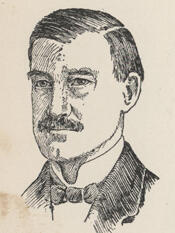
Here you will find contact information for Representative Emmett Tompkins, including email address, phone number, and mailing address.
| Name | Emmett Tompkins |
| Position | Representative |
| State | Ohio |
| District | 12 |
| Party | Republican |
| Status | Former Representative |
| Term Start | December 2, 1901 |
| Term End | March 3, 1903 |
| Terms Served | 1 |
| Born | September 1, 1853 |
| Gender | Male |
| Bioguide ID | T000307 |
About Representative Emmett Tompkins
Emmett Tompkins (September 1, 1853 – December 18, 1917) was an American lawyer and Republican politician who served one term as a U.S. Representative from Ohio from 1901 to 1903. A member of the Republican Party, he contributed to the legislative process during his single term in office, participating in the democratic process and representing the interests of his constituents during a significant period in American history. He was the son of Congressman Cydnor Bailey Tompkins, linking him to an established tradition of public service in Ohio.
Tompkins was born in McConnelsville, Morgan County, Ohio, on September 1, 1853. In 1865 he moved with his family to Athens County, Ohio, where he spent his formative years. He attended the public schools and then enrolled at Ohio University in Athens, an institution with which he would remain closely associated throughout his life. After his studies at Ohio University, he pursued the study of law, preparing for a professional and political career that would be centered in southeastern and later central Ohio.
In 1875 Tompkins was admitted to the bar and commenced the practice of law in Athens, Ohio. His legal training quickly led him into local public office. He served as city solicitor of Athens in 1876 and 1877, providing legal counsel to the municipal government. In 1877 he was elected mayor of Athens, serving until 1879, and in that same year he also held the office of prosecuting attorney of Athens County. These overlapping roles reflected his growing prominence in local affairs. During this period he became active in Republican politics at the state level, serving as a delegate to the Republican State conventions in 1879, 1881, and 1883, thereby helping to shape party policy and candidate selection in Ohio.
Tompkins’s political career advanced to the state legislature when he was elected a member of the Ohio House of Representatives, serving from 1886 to 1890. While still engaged in state legislative work, he moved to Columbus, Ohio, in 1889, shifting his professional base to the state capital. In Columbus he continued the practice of law and remained active in public and educational affairs. He served as a member of the board of trustees of Ohio University, reflecting his continued connection to his alma mater and his interest in higher education. In the spring of 1897 he sought municipal office in his new city, running for mayor of Columbus, but he was defeated by the Democratic candidate, Samuel Luccock Black.
Tompkins was elected as a Republican to the Fifty-seventh Congress and served as a U.S. Representative from Ohio from March 4, 1901, to March 3, 1903. His tenure in the House of Representatives coincided with the early years of the twentieth century, a period marked by industrial expansion, emerging regulatory debates, and the aftermath of the Spanish-American War. During this single term in Congress, he participated in the legislative process on behalf of his Ohio constituents, contributing to national deliberations as part of the Republican majority. After the completion of his term, he was not returned to Congress and his service in the national legislature concluded in 1903.
Following his congressional service, Tompkins resumed the practice of law in Columbus, Ohio, where he continued to be a respected figure in legal and civic circles. His association with Ohio University deepened when he was appointed a trustee of the institution in 1908, formalizing his long-standing support for the university and its educational mission. He remained active in professional and community affairs in Columbus until his final years.
Emmett Tompkins died in Columbus, Ohio, on December 18, 1917. His remains were cremated in Cincinnati, Ohio, and his ashes were returned to his home in Columbus. His career, spanning local, state, and national office, reflected both his family’s political heritage and his own sustained engagement in public life in Ohio.