Representative Emmett Wilson
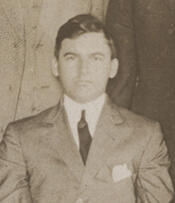
Here you will find contact information for Representative Emmett Wilson, including email address, phone number, and mailing address.
| Name | Emmett Wilson |
| Position | Representative |
| State | Florida |
| District | 3 |
| Party | Democratic |
| Status | Former Representative |
| Term Start | April 7, 1913 |
| Term End | March 3, 1917 |
| Terms Served | 2 |
| Born | September 17, 1882 |
| Gender | Male |
| Bioguide ID | W000575 |
About Representative Emmett Wilson
Emmett Wilson (September 17, 1882 – May 29, 1918) was an American lawyer and Democratic politician who served two terms as a United States Representative from Florida from 1913 to 1917. His congressional service took place during a significant period in American history, as the nation confronted major domestic reforms and the onset of World War I, and he participated in the legislative process as a member of the House of Representatives, representing the interests of his Florida constituents.
Wilson was born on September 17, 1882, in Belize City, British Honduras (now Belize City, Belize), during the temporary residence of his parents there. He was the grandson of Augustus Emmett Maxwell, a prominent Florida jurist and politician who had served as a U.S. Senator and chief justice of the Florida Supreme Court, a family connection that situated Wilson within an established Southern political tradition. In his early childhood, Wilson moved with his parents to Chipley, Florida, where he was raised.
In Chipley, Wilson attended the local public schools before pursuing higher education in the state capital. He studied at Florida State College in Tallahassee, Florida, an institution that would later become part of the modern Florida State University system. During his youth and early adulthood, he supported himself in part through practical work, gaining experience as a railroad telegrapher and later as a stenographer, occupations that reflected the expanding communications and transportation networks of the early twentieth century.
Wilson went on to study law at Stetson University in DeLand, Florida, enrolling in its law department and graduating in 1904. That same year he was admitted to the bar and commenced the practice of law in Marianna, Florida. Seeking broader professional opportunities, he relocated in 1906 to Pensacola, Florida, where he continued his legal practice. His growing reputation as an attorney soon led to federal prosecutorial responsibilities.
On February 1, 1907, Wilson was appointed assistant United States attorney for the Northern District of Florida. Later that same year, on October 7, 1907, he was elevated to the position of United States attorney for the same district. He served in that capacity until March 1909, handling federal legal matters during a period of progressive-era regulatory expansion. Returning to state-level responsibilities, he became the state’s attorney for the First Judicial Circuit of Florida, serving from 1911 to 1913 and further consolidating his standing in Florida’s legal and political circles.
Wilson entered national politics when he was elected as a Democrat to the Sixty-third and Sixty-fourth Congresses, serving from March 4, 1913, to March 3, 1917. As a member of the House of Representatives, he participated in the democratic process and contributed to the legislative work of Congress at a time when issues such as tariff reform, banking and currency legislation, and preparedness for possible involvement in World War I were at the forefront of national debate. He represented his district’s interests within the broader framework of the Democratic Party’s agenda under President Woodrow Wilson. In 1916 he sought renomination but was unsuccessful, bringing his congressional career to a close after two terms in office.
After leaving Congress in March 1917, Wilson returned to Pensacola and resumed the private practice of law. His post-congressional career was brief, as his health declined in the years following his service in Washington. Emmett Wilson died in Pensacola, Florida, on May 29, 1918. He was interred in St. John’s Cemetery in Pensacola, closing the career of a lawyer and public servant whose life bridged local, state, and national public service in early twentieth-century Florida.