Delegate Eni F. H. Faleomavaega
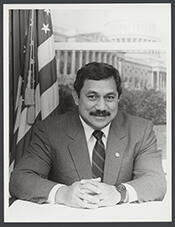
Here you will find contact information for Delegate Eni F. H. Faleomavaega, including email address, phone number, and mailing address.
| Name | Eni F. H. Faleomavaega |
| Position | Delegate |
| State | American Samoa |
| District | At-Large |
| Party | Democratic |
| Status | Former Representative |
| Term Start | January 3, 1989 |
| Term End | January 3, 2015 |
| Terms Served | 13 |
| Born | August 15, 1943 |
| Gender | Male |
| Bioguide ID | F000010 |
About Delegate Eni F. H. Faleomavaega
Eni Fa’aua’a Hunkin Faleomavaega Jr. (August 15, 1943 – February 22, 2017) was an American Samoan politician and attorney who served as the territory’s third lieutenant governor from 1985 to 1989 and as the non-voting delegate from American Samoa to the United States House of Representatives from January 3, 1989, until January 2015. A member of the Democratic Party, Eni F. H. Faleomavaega served 13 terms in Congress, during which he participated actively in the legislative process, served on committees, and spoke on the House floor, although, as a delegate, he was not permitted to vote on the final passage of legislation. He was the father-in-law of former professional American football fullback Fui Vakapuna.
Faleomavaega was born on August 15, 1943, in Vailoatai, American Samoa. He spent part of his youth in the territory before moving to the continental United States, where he completed his secondary education. His early life in American Samoa, combined with his later experiences on the mainland, shaped his enduring commitment to the political and economic advancement of his home territory and to the welfare of Samoan communities at home and abroad.
Faleomavaega pursued higher education in the United States, ultimately training as an attorney. His legal education and professional background in law provided the foundation for his later work in territorial and federal government. This training informed his approach to questions of constitutional status, territorial rights, and the relationship between American Samoa and the federal government, themes that would recur throughout his public career.
Before his election to Congress, Faleomavaega rose to prominence in territorial politics. He served as the third lieutenant governor of American Samoa from 1985 to 1989, a period during which he gained executive experience and deepened his involvement in issues of governance, development, and self-determination for the territory. His tenure as lieutenant governor positioned him as a leading voice on questions of American Samoa’s political status and its economic future, and it provided a platform from which he successfully sought federal office.
In 1988, Faleomavaega was elected as a Democrat to serve as American Samoa’s non-voting delegate in the United States House of Representatives, taking office on January 3, 1989. He remained in that position until January 2015, serving 13 consecutive terms. During this significant period in American history, he represented the interests of his constituents in Washington, D.C., working to secure more federal funding for American Samoa, particularly for health care and other essential services. Although he could not cast a vote on final passage of legislation, he played an active role in committee work, debate, and the formulation of policy affecting both his territory and the broader Pacific region.
Throughout his congressional service, Faleomavaega was a prominent advocate for greater autonomy and self-determination for American Samoa. He worked toward the possibility of a status of free association with the United States, drawing comparisons to the relationship between the Cook Islands and New Zealand, and he criticized what he described as “colonial abuse” in the territory. He sought to diversify American Samoa’s economy to reduce its dependency on federal support and on a narrow industrial base. One of his notable legislative achievements was securing $4 million annually for scholarships enabling American Samoan students to attend colleges and universities in the United States, thereby expanding educational opportunities for young people from the territory.
Economically, Faleomavaega was particularly attentive to the tuna industry, in which nearly one-third of American Samoa’s population is involved. He opposed free trade agreements involving meats and seafood that he believed would undermine the competitiveness of American Samoan canneries and threaten local employment. He also introduced legislation to allow residents of United States territories who are active-duty members of the armed forces to vote in presidential elections, reflecting his concern for the political rights of territorial residents who serve in the military. On the international stage, he joined a boycott of French President Jacques Chirac’s 1996 address to a joint session of Congress in protest of French nuclear testing in the Pacific, underscoring his broader commitment to environmental and regional issues affecting Pacific Islanders.
Eni F. H. Faleomavaega’s long tenure in Congress coincided with major developments in U.S. domestic and foreign policy, and he consistently used his position to highlight the perspectives and needs of American Samoa and the wider Pacific region. He remained an influential figure in territorial politics and among Pacific Islander communities until his later years. Faleomavaega died on February 22, 2017, leaving a legacy as one of American Samoa’s most prominent and enduring political leaders.