Senator Ephraim Bateman
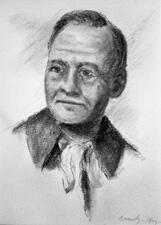
Here you will find contact information for Senator Ephraim Bateman, including email address, phone number, and mailing address.
| Name | Ephraim Bateman |
| Position | Senator |
| State | New Jersey |
| Party | Adams |
| Status | Former Representative |
| Term Start | December 4, 1815 |
| Term End | January 12, 1829 |
| Terms Served | 6 |
| Born | July 9, 1780 |
| Gender | Male |
| Bioguide ID | B000228 |
About Senator Ephraim Bateman
Ephraim Bateman (July 9, 1780 – January 28, 1829) was an American politician who represented New Jersey in the United States Senate from 1826 to 1829 and in the United States House of Representatives from 1815 to 1823. A member of the Adams Party, he contributed to the legislative process during six terms in the United States Congress, serving in both chambers during a significant period in early American political development.
Bateman was born in Cedarville, New Jersey, an area within Lawrence Township, Cumberland County. He attended local schools and later studied at Nathaniel Ogden’s Latin school, receiving a classical foundation that prepared him for professional and public life. In 1796 he was apprenticed as a tailor, a trade he pursued before turning to education and medicine. From 1799 to 1801 he taught in the local school, and in 1801 he began the study of medicine under a practicing physician. Seeking more advanced training, he attended the University of Pennsylvania in 1802 and 1803. After completing his medical studies, he returned to Cedarville, where he established himself as a physician and practiced medicine in his home community.
Bateman’s political career began at the state level in New Jersey. He was elected to the New Jersey General Assembly, serving in 1808–1809, 1811, and 1813. During his final term in the Assembly he was chosen as speaker in 1813, an indication of the confidence his colleagues placed in his leadership and parliamentary skills. His early legislative service coincided with the years surrounding the War of 1812, a time when New Jersey, like other states, was grappling with questions of national defense, commerce, and internal development.
Bateman advanced to national office when he was elected as a representative from New Jersey to the Fourteenth United States Congress and to the three succeeding Congresses, serving in the House of Representatives from March 4, 1815, to March 3, 1823. As a member of the Adams Party during his tenure in the House, he participated in the democratic process and represented the interests of his New Jersey constituents at a time marked by the aftermath of the War of 1812, the “Era of Good Feelings,” and the emergence of new political alignments. Over the course of these four consecutive terms, he contributed to federal legislative deliberations on issues of national policy, internal improvements, and economic development.
After leaving the House, Bateman returned to state politics and was chosen as a member of the New Jersey Legislative Council (the upper house of the state legislature) in 1826. He served as president of the Council that year, further solidifying his status as a leading figure in New Jersey public life. That same year, following the death of United States Senator Joseph McIlvaine, Bateman was elected by the state legislature to fill the resulting vacancy in the United States Senate. He took his seat on November 9, 1826, and served until January 12, 1829, when he resigned because of failing health. His service in the Senate thus overlapped with the contentious politics of the late 1820s, including the rise of Andrew Jackson and the fracturing of earlier party coalitions.
Bateman’s election to the Senate was the subject of controversy within New Jersey. While presiding over the joint meeting of the New Jersey Legislature convened to choose a United States senator, he cast the deciding vote for himself against rival candidate Theodore Frelinghuysen. Several members of the legislature and citizens of the state contested the legitimacy of this action, arguing that his role as presiding officer should have precluded him from casting the decisive ballot in his own favor. A select committee of the legislature investigated the matter and ultimately declared the election legal, allowing Bateman to retain his seat and continue his senatorial service.
Ephraim Bateman’s public career was cut short by illness. Having resigned from the Senate in January 1829 due to deteriorating health, he returned to his native Cumberland County. He died in Cedarville, Cumberland County, New Jersey, on January 28, 1829, at the age of 48. He was interred in the Old Stone Church Cemetery in Fairfield Township, Cumberland County, New Jersey, near the community where he had been born, practiced medicine, and begun his long career in public service.