Senator Ephraim Hubbard Foster
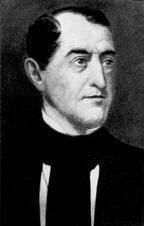
Here you will find contact information for Senator Ephraim Hubbard Foster, including email address, phone number, and mailing address.
| Name | Ephraim Hubbard Foster |
| Position | Senator |
| State | Tennessee |
| Party | Whig |
| Status | Former Representative |
| Term Start | January 1, 1838 |
| Term End | March 3, 1845 |
| Terms Served | 2 |
| Born | September 17, 1794 |
| Gender | Male |
| Bioguide ID | F000302 |
About Senator Ephraim Hubbard Foster
Ephraim Hubbard Foster (September 17, 1794 – September 6, 1854) was an American politician and lawyer who twice served as a United States Senator from Tennessee and was a prominent member of the Whig Party. His service in Congress, spanning parts of the late 1830s and early 1840s, occurred during a significant period in American political history, and he played an active role in the legislative process while representing the interests of his Tennessee constituents.
Foster was born near Bardstown, in Nelson County, Kentucky, the son of Robert Coleman Foster and Ann Hubbard. In 1797, when he was still a small child, he moved with his parents to Tennessee, where the family settled in the Nashville area. Growing up on the early Tennessee frontier, he came of age as the region was developing politically and economically, influences that would later shape his public career. He owned slaves, reflecting the social and economic order of the time in Middle Tennessee.
Foster pursued higher education at Cumberland College, an early institution of learning in the region, from which he graduated in 1813. After completing his collegiate studies, he read law and prepared for a legal career, a common path for aspiring public men of his generation. He was admitted to the bar in 1820 and established a law practice in Nashville. In addition to his legal work, he served in the Creek War and, during this period, acted for a time as private secretary to General Andrew Jackson, gaining experience in both military affairs and public administration.
Foster’s formal political career began in the Tennessee House of Representatives, where he served from 1829 to 1831 and again from 1835 to 1837. On both occasions he was chosen Speaker of the House, a position that attested to his influence and leadership within the state legislature. As a member of the Whig Party, he aligned himself with the party’s advocacy of legislative supremacy, economic development, and skepticism of executive overreach, positions that would later inform his conduct in the United States Senate.
Foster first entered the United States Senate following the resignation of Senator Felix Grundy, who left the chamber to become Attorney General of the United States. The Tennessee General Assembly elected Foster to succeed Grundy, and he served his initial term in the Senate from September 17, 1838, to March 3, 1839. Although the legislature elected him to continue into the next term, he declined to serve further at that time because he refused to accept legislative instructions dictating how he should vote as a senator. In response, the General Assembly turned again to Grundy, who, while still serving as Attorney General, controversially agreed to return to the Senate.
After Grundy’s death in office about a year later, Alfred O. P. Nicholson agreed to fill the vacancy on an interim basis. For a period, the Senate seat was then left vacant while Tennessee’s legislators debated a permanent successor. Ultimately, the General Assembly again elected Foster, who this time agreed to serve. His second period of service in the Senate extended from October 17, 1843, to March 3, 1845. During this term, he chaired the Senate Committee on Claims, giving him a central role in the consideration of petitions and financial demands upon the federal government. Throughout his two nonconsecutive terms, from 1837 to 1845, Foster participated in the democratic process as a Whig senator from Tennessee and contributed to the legislative work of the era.
In 1845, following the conclusion of his second Senate term, Foster received the Whig Party’s nomination for Governor of Tennessee. He ran as the Whig standard-bearer in a closely watched contest but was defeated by Aaron V. Brown, the Democratic nominee. After this electoral setback, Foster withdrew from the pursuit of high office and returned to his Nashville law practice, where he continued to work as a respected attorney until shortly before his death.
Foster died on September 6, 1854, in Nashville, Tennessee, and was interred in the old City Cemetery there, a burial ground for many of the city’s early leaders. In his personal life, he was the father of at least one daughter, Sallie Foster, who married Benjamin F. Cockrill, the son of prominent planter Mark R. Cockrill; Sallie and her husband were the parents of Benjamin F. Cockrill Jr. Through his legal career, legislative leadership in Tennessee, and two terms in the United States Senate, Ephraim Hubbard Foster left a distinct imprint on the political history of Tennessee and the Whig era in American public life.