Representative Ernest J. Istook Jr.
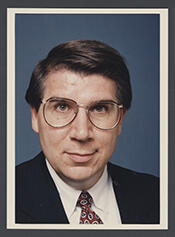
Here you will find contact information for Representative Ernest J. Istook Jr., including email address, phone number, and mailing address.
| Name | Ernest J. Istook Jr. |
| Position | Representative |
| State | Oklahoma |
| District | 5 |
| Party | Republican |
| Status | Former Representative |
| Term Start | January 5, 1993 |
| Term End | January 3, 2007 |
| Terms Served | 7 |
| Born | February 11, 1950 |
| Gender | Male |
| Bioguide ID | I000047 |
About Representative Ernest J. Istook Jr.
Ernest James “Ernie” Istook Jr. (born February 11, 1950) is an American retired lawyer, politician, and broadcaster who represented Oklahoma in the United States House of Representatives from 1993 to 2007. A member of the Republican Party, he served seven consecutive terms as the representative for Oklahoma’s 5th congressional district, which includes much of the Oklahoma City area, and became a prominent figure in state and national Republican politics during a period of significant change in American public life. Over the course of his 14 years in Congress, Istook participated actively in the legislative process and represented the interests of his constituents while building a reputation as a fiscal and social conservative.
Istook was born in Fort Worth, Texas, on February 11, 1950, and later moved to Oklahoma, where he would establish his legal and political career. He attended public schools and developed an early interest in government and public affairs. After relocating to Oklahoma, he pursued higher education and professional training that prepared him for a career in law and public service. His early experiences in the state helped shape his political outlook and laid the groundwork for his later involvement in Oklahoma politics.
Istook studied at Baylor University and later at the University of Central Oklahoma before earning his law degree from Oklahoma City University School of Law. Admitted to the bar, he began practicing law in Oklahoma, combining legal work with growing engagement in civic and political activities. Before entering Congress, he held positions in state and local government that helped him build name recognition and policy experience, and he became known within Oklahoma Republican circles as a committed advocate of conservative principles, including limited government and traditional values.
In 1992, Istook was elected to the U.S. House of Representatives as a Republican from Oklahoma’s 5th congressional district, taking office on January 3, 1993. He would hold this seat for 14 years, completing seven terms in the House before leaving Congress in January 2007. His service in Congress occurred during a significant period in American history, spanning the Clinton, George W. Bush, and post–Cold War eras, and encompassing debates over federal spending, national security, and social policy. As a member of the House of Representatives, Istook participated in the democratic process, sponsored and supported legislation, and worked to represent the interests of his Oklahoma constituents in Washington.
During his congressional tenure, Istook served on key committees that shaped federal policy and spending priorities. He was a member of the powerful House Appropriations Committee, where he played a role in overseeing federal expenditures and influencing budgetary decisions across a wide range of government programs. He also served on the Homeland Security Committee, reflecting his involvement in national security and domestic preparedness issues, particularly in the years following the September 11, 2001 terrorist attacks. Through these assignments, Istook contributed to debates on appropriations, transportation, security, and other major policy areas, and he became identified with efforts to restrain federal spending and advance conservative policy goals.
On October 3, 2005, Istook announced that he would not seek re-election to the House and would instead run for governor of Oklahoma against Democratic incumbent Brad Henry. As a seven-term incumbent U.S. representative whose district covered most of the Oklahoma City area, the state’s largest media market, he was immediately regarded as the consensus frontrunner for the Republican nomination. In the July 2006 Republican primary, he secured 55 percent of the vote, defeating oil businessman Bob Sullivan, who received 31 percent, and other challengers, thereby becoming the Republican gubernatorial nominee. His general election campaign was managed by Chip Englander, a political operative from California, and drew national media attention when it emerged that Jordan Edmund, one of the campaign’s workers from California, had previously been a congressional page involved in the Mark Foley scandal.
In the November 2006 general election, Istook faced Governor Brad Henry in a hard-fought and often heated campaign. Despite his congressional experience and initial status as a strong challenger, Istook was decisively defeated. Henry won re-election with 66.5 percent of the vote to Istook’s 33.5 percent, the largest landslide in an Oklahoma governor’s race in almost half a century. Istook lost not only statewide but also in his own congressional district and in a number of areas that normally voted Republican, carrying only the three Panhandle counties of Beaver, Cimarron, and Texas. Following this defeat, Istook concluded his bid for statewide office and left Congress at the end of his term in January 2007.
After leaving elective office, Istook remained active in public policy and commentary. He became a Distinguished Fellow at The Heritage Foundation in Washington, D.C., where he has been involved in research, advocacy, and public education on conservative policy issues. In 2010, he served as a Fellow at the Harvard Kennedy School, where he led a study on propaganda in American politics, reflecting his continuing interest in the intersection of media, public opinion, and government. In addition to his think tank work, Istook has hosted talk radio programs, using broadcasting as a platform to discuss current events, public policy, and political developments, and to continue influencing public debate after his congressional career.