Representative Ernest William Roberts
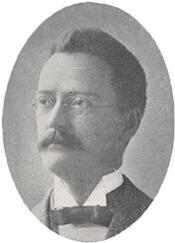
Here you will find contact information for Representative Ernest William Roberts, including email address, phone number, and mailing address.
| Name | Ernest William Roberts |
| Position | Representative |
| State | Massachusetts |
| District | 9 |
| Party | Republican |
| Status | Former Representative |
| Term Start | December 4, 1899 |
| Term End | March 3, 1917 |
| Terms Served | 9 |
| Born | November 22, 1858 |
| Gender | Male |
| Bioguide ID | R000311 |
About Representative Ernest William Roberts
Ernest William Roberts, also known as Ernest W. Roberts, was a United States Representative from Massachusetts who served in Congress from 1899 to 1917. Born in 1858, he emerged as a prominent Republican lawmaker at the turn of the twentieth century and contributed to the legislative process during nine consecutive terms in the House of Representatives. His career in national politics unfolded during a significant period in American history, encompassing the closing years of the Gilded Age, the Progressive Era, and the First World War’s early years, and he was closely identified with the interests and concerns of his Massachusetts constituents.
Roberts’s early life and education laid the foundation for his later public service, though detailed records of his childhood and schooling are less extensively documented than his congressional career. Growing up in the mid-nineteenth century, he came of age during Reconstruction and the rapid industrialization of the United States, developments that would later shape the economic and political questions he confronted in office. He pursued legal studies and entered the practice of law, a common pathway for many future members of Congress in his era, and this legal background informed his approach to legislation and public policy.
Before his election to Congress, Roberts established himself in Massachusetts public life, where he became active in Republican Party politics. The Republican Party of his time was the dominant political force in much of New England, and it emphasized economic development, protective tariffs, and, increasingly, a range of progressive reforms. Within this environment, Roberts built a reputation as a capable advocate for his community, gaining the experience and visibility that would support his eventual election to the U.S. House of Representatives.
Roberts entered the United States House of Representatives in 1899 as a Republican Representative from Massachusetts and remained in office until 1917, serving nine terms. His tenure spanned the Fifty-sixth through the Sixty-fourth Congresses, years marked by major national and international developments. As a member of the House of Representatives, he participated fully in the democratic process, debating and voting on legislation that addressed industrial regulation, labor issues, tariff policy, and America’s expanding role on the world stage. He represented the interests of his Massachusetts constituents, who were deeply affected by the growth of manufacturing, maritime commerce, and urbanization, and he worked within the committee system and party structure that defined congressional life in this period.
During these years, Congress grappled with issues such as trust-busting, railroad regulation, banking and currency reform, and the early stirrings of federal social legislation. Roberts’s service coincided with the administrations of Presidents William McKinley, Theodore Roosevelt, William Howard Taft, and Woodrow Wilson, and he served through events including the Spanish-American War’s aftermath, the construction of the Panama Canal, and the initial stages of World War I. Within this context, he contributed to the legislative deliberations that shaped federal policy, aligning with the Republican Party’s evolving positions while responding to the specific needs of Massachusetts, including its industrial workforce and commercial interests.
Roberts’s long tenure in Congress reflected sustained support from his district and a capacity to navigate the shifting political currents of the early twentieth century. Over nine terms, he witnessed and took part in the gradual transformation of the federal government’s role in economic and social affairs, as well as in the growing importance of the United States on the international stage. His work helped to ensure that the perspectives of his constituents were represented in national debates at a time when questions of regulation, reform, and American power were at the forefront of public life.
After leaving Congress in 1917, Roberts concluded his active role in national legislative affairs. He remained a figure identified with Massachusetts Republicanism and with the generation of lawmakers who had guided the country through a period of rapid change. Ernest W. Roberts died in 1924, closing a life that had spanned from the immediate aftermath of the Civil War to the modernizing America of the early twentieth century. His years in the House of Representatives left a record of sustained service during a formative era in the nation’s political and economic development.