Senator Ethan Allen Brown
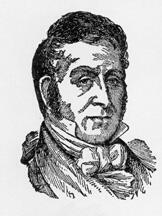
Here you will find contact information for Senator Ethan Allen Brown, including email address, phone number, and mailing address.
| Name | Ethan Allen Brown |
| Position | Senator |
| State | Ohio |
| Party | Republican |
| Status | Former Representative |
| Term Start | January 1, 1822 |
| Term End | March 3, 1825 |
| Terms Served | 1 |
| Born | July 4, 1776 |
| Gender | Male |
| Bioguide ID | B000914 |
About Senator Ethan Allen Brown
Ethan Allen Brown (July 4, 1776 – February 24, 1852) was an American jurist, governor, legislator, diplomat, and United States Senator from Ohio. Born in Darien, Fairfield County, Connecticut, he was the son of Roger Brown, a prosperous farmer and veteran of the American Revolutionary War. Raised in New England, Brown benefited from the relative affluence and public-spirited environment of his family, circumstances that helped prepare him for a career in law and public service.
Brown received his early education under a private tutor, through which he acquired proficiency in French, Latin, and Greek. Demonstrating intellectual promise, he pursued legal studies in New York under the direction of Alexander Hamilton, one of the leading lawyers and statesmen of the early republic. Brown studied in Hamilton’s office for approximately five years and was admitted to the bar in 1802. This rigorous legal training under a nationally prominent figure provided him with a strong foundation in both legal practice and the emerging constitutional framework of the United States.
In 1803, shortly after his admission to the bar, Brown moved west to the vicinity of Cincinnati, Ohio, as part of the broader migration into the Old Northwest Territory. Establishing himself in Ohio, he entered public life and quickly rose in the state’s legal and political circles. In 1810, he was appointed to the Ohio Supreme Court, where he served as a justice and was re-elected to the court in 1817, reflecting the confidence placed in his judicial abilities. In 1818, Brown was elected the seventh governor of Ohio as a Democratic-Republican, and he was re-elected to a second term in 1820. His tenure as governor coincided with a period of growth and institutional development in the young state, and during this time he was also elected a member of the American Antiquarian Society in 1818, indicating recognition of his standing among the nation’s learned and public-minded figures.
Brown’s gubernatorial career led directly to his service in the United States Senate. He resigned the governorship of Ohio on January 3, 1822, to take office in the U.S. Senate, having been chosen to fill the vacancy caused by the death of Senator William A. Trimble. Ethan Allen Brown served as a Senator from Ohio in the United States Congress from 1821 to 1825. A member of the Republican Party—more precisely, of the Democratic-Republican faction in national politics—he contributed to the legislative process during one term in office. His service in Congress occurred during a significant period in American history, marked by the aftermath of the War of 1812, debates over internal improvements, and the evolving balance between federal and state authority. As a member of the Senate, Ethan Allen Brown participated in the democratic process and represented the interests of his Ohio constituents. He was defeated for re-election in 1824 by William Henry Harrison, the future President of the United States, and his Senate term concluded in 1825.
After leaving the Senate, Brown remained active in national politics as a supporter of Andrew Jackson. He served as an Ohio presidential elector in 1828 for Jackson, aligning himself with the emerging Democratic movement. In recognition of his loyalty and experience, Brown was appointed Chargé d’Affaires to the Empire of Brazil in 1830, a diplomatic post he held for four years. Following his service abroad, he returned to Washington, D.C., where he served as commissioner of the General Land Office from 1835 to 1836, overseeing federal land policy during a period of rapid western expansion.
In 1836, Brown retired from federal office and moved to a family farm in what became Ohio County, Indiana, most likely residing at the David Brown House near Rising Sun. Even in retirement, he did not entirely withdraw from public life. He later served a single term in the Indiana House of Representatives from 1841 to 1843, extending his legislative experience to a second state and underscoring his long-standing engagement with public affairs in the Old Northwest. Brown remained a figure in Democratic Party circles into the 1850s.
Ethan Allen Brown died on February 24, 1852, while attending a Democratic Convention in Indianapolis, Indiana. He was buried in Cedar Hedge Cemetery in Rising Sun, the county seat of Ohio County, Indiana. His career spanned the formative decades of the early republic, from the post-Revolutionary era through the age of Jacksonian democracy, and included service as a state supreme court justice, governor, United States Senator, diplomat, federal land commissioner, and state legislator in both Ohio and Indiana. His life is documented in a variety of historical and biographical sources, including the Biographical Directory of the United States Congress, Appletons’ Cyclopædia of American Biography, and works on Ohio and Midwestern political history.