Representative Eugene Black
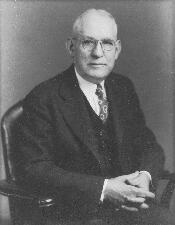
Here you will find contact information for Representative Eugene Black, including email address, phone number, and mailing address.
| Name | Eugene Black |
| Position | Representative |
| State | Texas |
| District | 1 |
| Party | Democratic |
| Status | Former Representative |
| Term Start | December 6, 1915 |
| Term End | March 3, 1929 |
| Terms Served | 7 |
| Born | July 2, 1879 |
| Gender | Male |
| Bioguide ID | B000495 |
About Representative Eugene Black
Eugene Black was an American politician who served as a Representative from Texas in the United States Congress from 1915 to 1929. Born in 1879 and living until 1975, he was a member of the Democratic Party and represented his Texas constituents in the House of Representatives for seven consecutive terms. His congressional career unfolded during a significant period in American history, encompassing the First World War and the early years of the interwar era, when the federal government’s role in economic and social affairs was expanding and the United States was emerging as a more prominent actor on the world stage.
Details of Black’s early life and education are not extensively documented in the available sources, but his birth in 1879 placed his formative years in the post-Reconstruction South, a time when Texas was undergoing political realignment, economic development, and demographic growth. Coming of age in this environment, he would have been exposed to the dominant Democratic politics of the region and to the issues of agricultural policy, regional development, and states’ rights that shaped Texas public life at the turn of the twentieth century. His eventual entry into public service suggests that he received sufficient education and professional grounding to participate effectively in legislative work and to gain the confidence of voters in his district.
Black’s political career is most notable for his service in the United States House of Representatives. Elected as a Democrat, he entered Congress in 1915 and served until 1929, completing seven terms in office. During these years he contributed to the legislative process as the nation confronted the challenges of wartime mobilization, postwar adjustment, and the beginnings of modern federal economic policy. As a member of the House of Representatives, he participated in debates and votes on measures affecting both national affairs and the specific interests of his Texas constituents, including issues related to agriculture, transportation, and regional infrastructure that were central to the state’s development.
His tenure in Congress coincided with the administration of President Woodrow Wilson, the United States’ entry into World War I in 1917, the enactment of wartime revenue and military legislation, and the subsequent return to peacetime conditions in the 1920s. Serving through these transitions, Black took part in the democratic process at a time when the balance between rural and urban interests, as well as between state and federal authority, was being renegotiated. Though the detailed record of his committee assignments and specific bills is not preserved in the present summary, his repeated reelection indicates sustained support from his district and an ongoing role in shaping federal policy during a transformative era.
After leaving Congress in 1929, Black’s public profile diminished at the national level, and the surviving accounts of his later life are limited. Nonetheless, his long lifespan, extending until 1975, meant that he witnessed the Great Depression, the New Deal, World War II, and the profound social and political changes of the mid-twentieth century. Living through these decades after his congressional service, he remained part of a generation of former lawmakers whose earlier work in the 1910s and 1920s helped lay the groundwork for later federal initiatives and institutional developments.
Eugene Black’s name is shared with several other prominent American public figures, and it is important to distinguish his career as a Texas politician and former Congressman from theirs. Eugene Robert Black (1873–1934) was an American attorney and businessman who served as chairman of the Federal Reserve, playing a central role in national monetary policy. His son, Eugene R. Black Sr. (1898–1992), became an American banker and served as president of the World Bank, contributing to international financial and development policy. Another contemporary, Eugene F. Black (1903–1990), was an American lawyer and judge who served as Michigan Attorney General and later as a member of the Michigan Supreme Court. In a later generation, Eugene H. Black III (born 1964) became a U.S. Navy officer. While these men shared the same name and each held significant positions in law, finance, or military service, Eugene Black of Texas is specifically remembered for his role as a Democratic Representative in the United States Congress from 1915 to 1929, representing the interests of his Texas constituents during a pivotal period in American history.