Senator Eugene Hale
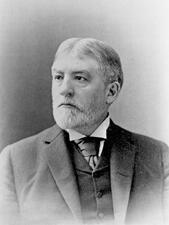
Here you will find contact information for Senator Eugene Hale, including email address, phone number, and mailing address.
| Name | Eugene Hale |
| Position | Senator |
| State | Maine |
| Party | Republican |
| Status | Former Representative |
| Term Start | March 4, 1869 |
| Term End | March 3, 1911 |
| Terms Served | 10 |
| Born | June 9, 1836 |
| Gender | Male |
| Bioguide ID | H000029 |
About Senator Eugene Hale
Eugene Hale (June 9, 1836 – October 27, 1918) was an American politician who was a Republican United States Senator from Maine and a prominent figure in national politics during the late nineteenth and early twentieth centuries. Born in Turner, Maine, he was educated in local schools and at Hebron Academy, a preparatory school in Maine. He later became a member of the Delta Kappa Epsilon fraternity (Theta chapter), reflecting his early engagement with civic and social networks that would shape his public career.
Hale studied law and was admitted to the bar in 1857. He established his legal practice in Ellsworth, Maine, and soon entered public service. He served for nine years as prosecuting attorney for Hancock County, Maine, gaining a reputation as a capable lawyer and public official. His early political career advanced rapidly: he was elected to the Maine Legislature, serving from 1867 to 1868, where he began to build the legislative experience and party connections that would carry him to national office.
In 1868, Hale was elected as a Republican to the United States House of Representatives and served from 1869 to 1879 in the 41st and four succeeding Congresses. His decade in the House coincided with the Reconstruction era and the turbulent politics that followed the Civil War. He was an unsuccessful candidate for reelection in 1878 to the 46th Congress, losing to a candidate of the Greenback Party, and thus left the House at the end of his term. During this period, he also became closely associated with James G. Blaine, serving along with future senatorial colleague William P. Frye as a campaign manager for Blaine at the Republican National Convention during the 1876 United States presidential election. Following the election of Republican Rutherford B. Hayes as president after the Compromise of 1877, Blaine sought to secure a cabinet position for a New England Republican. At the house of John Sherman, Blaine urged Hayes to nominate Frye as United States Attorney General, but Hayes instead offered to appoint Hale to a cabinet post, countering Blaine’s preference that Hale succeed Senator Hannibal Hamlin. Hale declined the cabinet position, as he had previously declined a cabinet appointment under President Ulysses S. Grant, and remained aligned with Blaine’s political circle.
Hale’s close identification with Blaine placed him in the Blaine section of the Republican Party, a conservative faction that expressed antipathy toward some of President Hayes’s reform policies. This group particularly opposed Hayes’s nomination of Carl Schurz, a staunch reformer, as United States Secretary of the Interior. In the 1880 United States presidential election, Blaine again sought the Republican nomination, and Hale and Frye once more served as his lieutenants. They clashed with the “Stalwart” faction led by Roscoe Conkling, John A. Logan, and Simon Cameron, who supported former President Ulysses S. Grant for a third, non-consecutive term. The bitterness between Blaine and Conkling fueled hostility between their followers, and Hale and Frye were criticized by some observers as “too amateurish and provincial” to counter Conkling’s attacks effectively. Ultimately, the Blaine faction allied with the “Half-Breed” faction to block the Stalwarts and secure the nomination of James A. Garfield, a dark horse candidate from Ohio, who went on to win the general election against Democrat Winfield Scott Hancock.
In 1881, after Hannibal Hamlin resigned from the United States Senate, Hale, who had been out of office since his 1878 defeat, competed with Frye for the vacant Senate seat from Maine. Because Frye still held his House seat while Hale was not in office, Hale was chosen to fill the Senate position. He thus entered the United States Senate in 1881 as a Republican from Maine and went on to serve there until his retirement in 1911. Although the existing record mistakenly places his Senate service as beginning in 1869, that period in fact corresponds to his decade in the House of Representatives; his Senate tenure extended for three decades, during which he contributed to the legislative process and represented the interests of his Maine constituents through a significant period in American history. Frye later succeeded Blaine in the Senate and became Hale’s colleague in the upper chamber. During his Senate career, Hale received an LL.D. from Bates College in 1882, reflecting recognition of his standing in public life, and in 1883 he joined Hannibal E. Hamlin, son of the former vice president, in founding the law firm of Hale & Hamlin in Ellsworth, Maine, which is now recognized as Maine’s oldest law firm.
Hale’s most notable legislative work in the Senate involved naval affairs and national finance. Although he declined the post of United States Secretary of the Navy in the Rutherford B. Hayes administration, he performed constructive work of great importance in the area of naval appropriations, particularly during the early efforts to build the “new Navy.” He became one of the leading congressional advocates for modernizing the United States fleet. In 1884 he declared his hope that he would live to see the American Navy become “the pet of the American people.” Later in his career, however, he opposed the construction of large numbers of capital ships, arguing that they were disproportionately costly, subject to rapid obsolescence, and less effective in proportion to their expense. He also served as a member of the National Monetary Commission, reflecting his involvement in broader questions of economic and financial policy during an era of monetary debate and reform.
In foreign policy and questions of expansion, Hale was known for his skepticism toward interventionism. During the late 1890s, he and Senator George F. Hoar of Massachusetts were among the most vocal opponents of American intervention in the Cuban insurrection against Spain. Hale disdained expansionism and jingoism and frequently challenged claims made by senators regarding Cuban military victories and Spanish atrocities. His persistent questioning of pro-intervention narratives led some of his colleagues, unfairly, to accuse him of echoing Spanish propaganda, and he was derisively nicknamed “The Senator from Spain.” Despite such criticism, he maintained his opposition to what he saw as unnecessary foreign entanglements and the rush toward war.
Eugene Hale retired from politics in 1911, concluding a long career that had included service in the Maine Legislature, the U.S. House of Representatives from 1869 to 1879, and the United States Senate from 1881 to 1911. He spent the remainder of his life dividing his time between Ellsworth, Maine, and Washington, D.C. He died in Washington on October 27, 1918, and was buried in Woodbine Cemetery in Ellsworth, Maine. Two United States Navy ships were later named USS Hale in his honor, underscoring his influence on naval policy. He was the father of Frederick Hale, who also served as a U.S. senator from Maine, and of Chandler Hale, a diplomat. His public career and personality were sufficiently prominent that Gertrude Atherton based her 1900 novel “Senator North” on him, further securing his place in the political and cultural history of his era.