Representative Eugene James Keogh
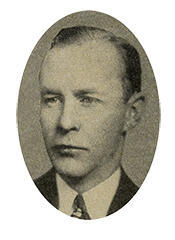
Here you will find contact information for Representative Eugene James Keogh, including email address, phone number, and mailing address.
| Name | Eugene James Keogh |
| Position | Representative |
| State | New York |
| District | 11 |
| Party | Democratic |
| Status | Former Representative |
| Term Start | January 5, 1937 |
| Term End | January 3, 1967 |
| Terms Served | 15 |
| Born | August 30, 1907 |
| Gender | Male |
| Bioguide ID | K000130 |
About Representative Eugene James Keogh
Eugene James Keogh (August 30, 1907 – May 26, 1989) was an American lawyer and Democratic politician who served as a member of the United States House of Representatives from New York for fifteen consecutive terms from 1937 to 1967. Over three decades in Congress, he contributed to the legislative process during a significant period in American history, representing his Brooklyn constituents through the New Deal, World War II, the postwar era, and the early stages of the Great Society.
Keogh was born on August 30, 1907, in Brooklyn, New York City. Raised in the borough he would later represent in Congress, he was educated in local schools before pursuing higher education in New York. He graduated from New York University in 1927, establishing the academic foundation for his subsequent legal and political career. He then attended Fordham University School of Law, from which he received his law degree in 1930, preparing him for admission to the bar and the practice of law in New York.
Following his graduation from law school, Keogh entered the legal profession in New York City. His work as an attorney in Brooklyn brought him into close contact with the concerns of working- and middle-class New Yorkers during the Great Depression, and this experience helped shape his interest in public service and Democratic Party politics. By the mid-1930s, he had become active in local political affairs, positioning himself for elected office.
Keogh’s formal political career began in the New York State Legislature. In 1936, he was elected to the New York State Assembly, representing Kings County’s 20th District. His service in the Assembly provided him with legislative experience and a platform within the Democratic Party at a time when New Deal policies were reshaping the relationship between government and the economy. This single term in Albany served as a springboard to national office.
In 1936, Keogh was elected as a Democrat to the United States House of Representatives and took his seat in the 75th Congress on January 3, 1937. He was subsequently re-elected to the 76th through the 89th Congresses, serving continuously from January 3, 1937, to January 3, 1967. During his fifteen terms in office, he participated actively in the democratic process and represented the interests of his Brooklyn constituents through periods of economic recovery, global conflict, and domestic change. As a member of the House of Representatives, he served on the influential Committee on Ways and Means, which has jurisdiction over taxation, tariffs, and many social welfare programs. In that capacity, he sponsored the original legislation that created what became known as the Keogh plan, a type of tax-deferred pension plan designed to help self-employed individuals and unincorporated businesses provide for retirement, reflecting his long-standing interest in economic security and social policy.
Keogh’s congressional service also extended into the realm of foreign policy and postwar planning. In 1947 and 1948, he served on the Herter Committee, a special House committee chaired by Representative Christian Herter that studied conditions in post–World War II Europe and helped lay the groundwork for the Marshall Plan and broader U.S. engagement in European reconstruction. His participation in this committee placed him at the center of early Cold War policy deliberations and underscored the breadth of his legislative interests beyond domestic economic matters.
After choosing not to seek re-election in 1966, Keogh concluded his congressional service on January 3, 1967. He remained active in public affairs in New York in the years that followed. From 1973 until 1976, he served as a member of the New York State Racing and Wagering Board, which oversees horse racing and related wagering activities in the state. In this role, he continued his long record of public service by helping regulate an important state industry and safeguard the public interest.
Eugene James Keogh died on May 26, 1989, in New York City. He was buried at Gate of Heaven Cemetery in Hawthorne, New York. His long tenure in the House of Representatives, his work on the Ways and Means Committee, his role in the Herter Committee, and his sponsorship of the legislation that led to the Keogh retirement plan left a lasting imprint on federal policy and on the lives of his constituents and many American workers.