Representative Eugene Francis Kinkead
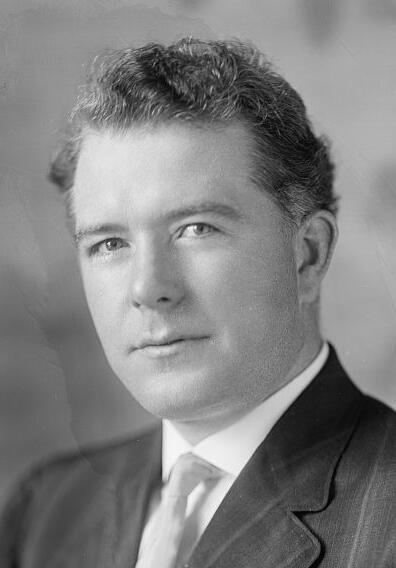
Here you will find contact information for Representative Eugene Francis Kinkead, including email address, phone number, and mailing address.
| Name | Eugene Francis Kinkead |
| Position | Representative |
| State | New Jersey |
| District | 8 |
| Party | Democratic |
| Status | Former Representative |
| Term Start | March 15, 1909 |
| Term End | March 3, 1915 |
| Terms Served | 3 |
| Born | March 27, 1876 |
| Gender | Male |
| Bioguide ID | K000222 |
About Representative Eugene Francis Kinkead
Eugene Francis Kinkead (March 27, 1876 – September 6, 1960) was an American businessman and Democratic Party politician from New Jersey who served as a Representative in the United States Congress from 1909 to 1915. Over the course of three terms in office, he represented New Jersey’s 9th congressional district from 1909 to 1913 and the 8th congressional district from 1913 to 1915, participating actively in the legislative process during a significant period in American political and social history.
Born on March 27, 1876, Kinkead came of age in the late nineteenth century, a time of rapid industrialization and urban growth that shaped the economic and political landscape of New Jersey and the nation. Details of his early family life and upbringing are not extensively documented in the public record, but his later career as a businessman and public official suggests an early exposure to the commercial and civic affairs of his community. Growing up in this environment likely informed his understanding of the needs of an increasingly urban and industrial constituency, which he would later represent in Congress.
Kinkead’s education and early professional development prepared him for a career that bridged business and politics. While specific institutions and degrees are not recorded in the available sources, he established himself as a businessman before entering public life. His experience in business provided him with practical knowledge of commerce and industry, which was particularly relevant in New Jersey, a state with expanding manufacturing, transportation, and trade sectors in the early twentieth century. This background helped position him as a credible advocate for economic and infrastructural concerns when he later sought elective office.
Before his election to Congress, Kinkead became involved in Democratic Party politics in New Jersey, aligning himself with a party that was then contending with issues such as labor relations, tariff policy, and governmental reform. His political rise reflected both his personal standing in the community and the broader strength of the Democratic organization in his region. By the time he sought a seat in the U.S. House of Representatives, he had established himself as a figure capable of representing the interests of his district in Washington, D.C., at a moment when national debates increasingly affected local economies and urban populations.
Kinkead was first elected to the United States House of Representatives as a Democrat in 1908, taking office on March 4, 1909, as the Representative from New Jersey’s 9th congressional district. He was reelected to the 9th district and served there until March 3, 1913. Following redistricting and political realignment within the state, he then represented New Jersey’s 8th congressional district from March 4, 1913, to March 3, 1915. During these three consecutive terms, he contributed to the legislative process at a time marked by the presidencies of William Howard Taft and Woodrow Wilson, the rise of the Progressive movement, and the early stages of major federal reforms in banking, trade regulation, and labor.
As a member of the House of Representatives, Kinkead participated in the democratic process and represented the interests of his constituents in northern New Jersey, an area characterized by growing cities, industrial enterprises, and diverse immigrant communities. His service coincided with significant national legislation addressing economic regulation, tariff revision, and the modernization of federal institutions. Within this context, he worked as part of the Democratic majority that emerged with Woodrow Wilson’s election in 1912, helping to advance the party’s legislative priorities and responding to the concerns of his district regarding economic opportunity, infrastructure, and social conditions.
After leaving Congress in 1915, Kinkead returned to private life and resumed his activities as a businessman. Although the detailed record of his later professional endeavors is limited, his post-congressional years unfolded against the backdrop of World War I, the interwar period, the Great Depression, and World War II, eras in which former legislators often remained engaged in civic and party affairs even outside of elected office. He lived to see profound changes in American political and economic life, from the Progressive reforms of his congressional tenure to the emergence of the United States as a global power.
Eugene Francis Kinkead died on September 6, 1960, closing a life that spanned from the post–Civil War era into the modern age. Remembered as an American businessman and Democratic Party politician from New Jersey, he served three terms in the U.S. House of Representatives, representing first the 9th and then the 8th congressional districts of his state. His congressional career placed him at the center of national policymaking during a transformative period in American history, and his service reflected the concerns and aspirations of a rapidly changing New Jersey in the early twentieth century.