Representative Eugene Walter Leake
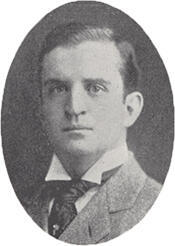
Here you will find contact information for Representative Eugene Walter Leake, including email address, phone number, and mailing address.
| Name | Eugene Walter Leake |
| Position | Representative |
| State | New Jersey |
| District | 9 |
| Party | Democratic |
| Status | Former Representative |
| Term Start | December 2, 1907 |
| Term End | March 3, 1909 |
| Terms Served | 1 |
| Born | July 13, 1877 |
| Gender | Male |
| Bioguide ID | L000175 |
About Representative Eugene Walter Leake
Eugene Walter Leake (July 13, 1877 – August 23, 1959) was an American Democratic Party politician and attorney from New Jersey who represented the state’s 9th congressional district in the United States House of Representatives for one term from 1907 to 1909. His service in Congress occurred during a significant period in American history, and as a member of the House of Representatives he participated in the legislative process and represented the interests of his constituents in northern New Jersey.
Leake was born in Jersey City, New Jersey, on July 13, 1877. He was educated in the Jersey City public schools and later attended Phillips Academy in Andover, Massachusetts, one of the nation’s leading preparatory schools. Pursuing a legal career, he enrolled at New York Law School in New York City and graduated in 1898, entering professional life at the close of the nineteenth century as the United States was emerging as an industrial and commercial power.
In 1898, the same year he completed his legal studies, Leake was admitted to the New Jersey bar and commenced the practice of law in Jersey City. His early legal career unfolded in the context of rapid urban and economic growth in the New York–New Jersey metropolitan region. Expanding his professional reach, he gained admission to the New York bar in 1908 and began practicing in New York City, thereby maintaining a legal presence on both sides of the Hudson River. This dual practice reflected the increasingly interconnected legal and commercial environment of the era.
Leake entered national politics as a member of the Democratic Party. He was elected as a Democrat to the Sixtieth Congress from New Jersey’s 9th congressional district and served from March 4, 1907, to March 3, 1909. During his single term in the House of Representatives, he took part in the deliberations of a Congress that addressed issues associated with the Progressive Era, including regulation of commerce and the changing role of the federal government in economic affairs. Although eligible to seek another term, he was not a candidate for renomination in 1908, and his service in Congress concluded at the end of his first term.
After leaving Congress, Leake returned to private life and built a substantial career in corporate and transportation law. He became general counsel for the Adams Express Company, one of the major express and freight concerns of the time, serving in that capacity from 1927 to 1932. His expertise in transportation and corporate affairs led to further leadership roles: in 1931 he was elected chairman of the board of directors of the American Railway Express Company, a key enterprise in the nation’s rail-based express shipping network. He also served as a director of Loew’s, Inc., a prominent entertainment and theater chain, reflecting his involvement in the broader corporate and commercial life of the early twentieth century.
In his personal life, Leake married Marion (Paige) Leake. The couple were the parents of two sons, one of whom, Eugene Leake, became a notable artist and museum curator, extending the family’s public profile into the fields of art and cultural institutions. The elder Leake’s professional and political activities were thus complemented by a family life that intersected with the arts and public culture.
Eugene Walter Leake died in New York City on August 23, 1959. He was interred in Cedar Lawn Cemetery in Paterson, New Jersey, returning in death to the state where he had begun his legal and political career. His life spanned from the post-Reconstruction era through the mid-twentieth century, encompassing service in Congress, a prominent legal and corporate career, and a family legacy that continued in American cultural life.