Senator Eugene Donald Millikin
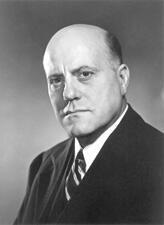
Here you will find contact information for Senator Eugene Donald Millikin, including email address, phone number, and mailing address.
| Name | Eugene Donald Millikin |
| Position | Senator |
| State | Colorado |
| Party | Republican |
| Status | Former Representative |
| Term Start | December 20, 1941 |
| Term End | January 3, 1957 |
| Terms Served | 3 |
| Born | February 12, 1891 |
| Gender | Male |
| Bioguide ID | M000771 |
About Senator Eugene Donald Millikin
Eugene Donald Millikin (February 12, 1891 – July 26, 1958) was a United States senator from Colorado who served three terms in the Senate from 1941 to 1957 and was Senate Republican Conference Chairperson from 1947 to 1956. A member of the Republican Party, he played a prominent role in national fiscal and party leadership during a significant period in American history, including World War II, the early Cold War, and the beginning of the civil rights era.
Millikin was born in Hamilton, Butler County, Ohio, on February 12, 1891. He later moved west and pursued higher education in Colorado. He attended the University of Colorado at Boulder, where he studied law and graduated from the law school in 1913. That same year he was admitted to the bar and began his legal career, marking the start of a professional life that would combine law, business, military service, and politics.
After his admission to the bar in 1913, Millikin commenced the practice of law in Salt Lake City, Utah. His early legal work soon led him into public service. From 1915 to 1917 he served as executive secretary to the governor, an appointment that introduced him to the workings of state government and political administration. Following this period in the governor’s office, he returned to Colorado and continued to build his professional and political profile.
With the entry of the United States into World War I, Millikin enlisted in the Colorado National Guard in 1917 as a private. He saw action in France during the war, and his service was marked by steady advancement; he was mustered out with the rank of lieutenant colonel. After the war, Millikin resumed the practice of law in Denver, Colorado. In addition to his legal work, he became active in business and rose to the position of president of Kinney-Coastal Oil, reflecting his growing influence in both legal and commercial circles in the state.
Millikin’s congressional career began with an appointment rather than an initial election. On December 20, 1941, Colorado Governor Ralph Lawrence Carr appointed him to the United States Senate to fill the vacancy caused by the death of Senator Alva B. Adams, for the term ending January 3, 1945. He was subsequently elected in a special election on November 3, 1942, to complete that term. Millikin was reelected to full terms in 1944 and 1950, serving continuously from December 20, 1941, until January 3, 1957. He chose not to be a candidate for renomination in 1956, thus concluding his Senate service after three terms.
During his years in Congress, Millikin emerged as a leading Republican voice on fiscal and economic matters and held several key leadership positions. He served as chairman of the U.S. Senate Committee on Finance, where he helped shape federal tax and revenue policy in the postwar era. He also chaired the U.S. Senate Joint Committee on Internal Revenue Taxation, further underscoring his central role in tax legislation. Within his party, he was elected Senate Republican Conference Chairperson in 1947, a post he held until 1956, making him one of the principal strategists and spokesmen for Senate Republicans during a period that spanned the Truman and Eisenhower administrations. Millikin identified with the conservative wing of the Senate GOP, often advocating limited government and fiscal restraint, yet he also supported certain civil rights measures; he voted for a Fair Employment Practices Committee (FEPC) bill in 1950 and supported efforts to bolster President Harry S. Truman’s desegregation of the armed forces.
Millikin’s influence extended into national security and foreign policy debates as well. On July 20, 1949, during a meeting of the Joint Congressional Committee on Atomic Energy, he opposed a proposal for cooperation between the United States and the United Kingdom in the production of atomic weapons. Supported in this stance by Senator Arthur Vandenberg, Millikin argued that American public opinion assumed that the U.S. monopoly on atomic weapons provided a real strategic advantage in an uncertain world, and he was reluctant to see that monopoly diluted. Throughout his Senate career, he participated actively in the legislative process and represented the interests of his Colorado constituents while also helping to shape national policy during a transformative era in American history.
After leaving the Senate in January 1957, Millikin retired from public office. He remained in Denver, where he had long resided and built his legal and business career. Eugene Donald Millikin died in Denver, Colorado, on July 26, 1958. He was interred in the Fairmount Mausoleum at Fairmount Cemetery in Denver, closing the life of a lawyer, soldier, businessman, and legislator who had played a significant role in mid-twentieth-century American politics.