Representative Everett Sanders
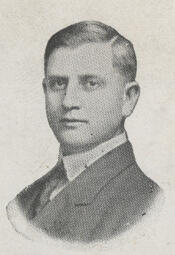
Here you will find contact information for Representative Everett Sanders, including email address, phone number, and mailing address.
| Name | Everett Sanders |
| Position | Representative |
| State | Indiana |
| District | 5 |
| Party | Republican |
| Status | Former Representative |
| Term Start | April 2, 1917 |
| Term End | March 3, 1925 |
| Terms Served | 4 |
| Born | March 8, 1882 |
| Gender | Male |
| Bioguide ID | S000034 |
About Representative Everett Sanders
James Everett Sanders (March 8, 1882 – May 12, 1950) was an American lawyer and political figure who served four terms as a Republican Representative from Indiana in the United States Congress, later becoming presidential secretary to President Calvin Coolidge and chairman of the Republican National Committee. He played a notable role in national politics during the 1910s, 1920s, and early 1930s, participating in both legislative and executive branches of the federal government.
Sanders was born on March 8, 1882, in Coalmont, Clay County, Indiana. He was raised in the state he would later represent in Congress and was educated in Indiana’s public institutions. He attended the Indiana State Normal School in Terre Haute, an institution dedicated to training teachers and now known as Indiana State University. He subsequently enrolled at Indiana University, from which he graduated, receiving the higher education that would underpin his legal and political career.
After completing his studies, Sanders was admitted to the bar and began practicing law in Terre Haute, Indiana. His legal practice in this important industrial and commercial center of western Indiana helped establish his reputation and connections within the Republican Party. Through his work as an attorney and his growing involvement in party affairs, he became a recognized figure in state politics, setting the stage for his entry into national public service.
From 1917 until 1925, Sanders represented Indiana in the United States House of Representatives. Elected as a Republican, he served four consecutive terms in Congress, participating in the legislative process during a significant period in American history that encompassed World War I and the early postwar years. As a member of the House of Representatives, he took part in debates, committee work, and the broader democratic process, representing the interests of his Indiana constituents. A member of the Republican Party throughout his tenure, he contributed to the party’s legislative agenda and national policymaking. In 1924 he declined to be re-nominated for another term, choosing instead to pursue opportunities within the national party organization.
Upon leaving Congress in 1925, Sanders became director of the Speakers’ Bureau of the Republican National Committee, a position that placed him at the center of national campaign strategy and political messaging. That same year, he was selected to succeed C. Bascom Slemp as the personal secretary to President Calvin Coolidge early in Coolidge’s second term. In this role—functionally equivalent to the modern position of White House Chief of Staff—Sanders managed presidential correspondence, coordinated with cabinet members and party leaders, and helped shape the administration’s public communications. During his tenure as presidential secretary, he oversaw and preserved a comprehensive collection of Coolidge’s public addresses, later known as the “Everett Sanders Papers,” which contain presidential speeches delivered between June 22, 1925, and February 22, 1929. While serving in Washington, he also became a member of the Alfalfa Club after 1926, joining an exclusive social circle of prominent political and business leaders.
Sanders left the White House at the close of Coolidge’s second term in March 1929, but his national political career continued. He remained highly regarded within Republican circles, and his experience in both Congress and the executive branch made him a trusted party strategist. In recognition of his service and stature, President Herbert Hoover appointed him chairman of the Republican National Committee in 1932. Sanders led the RNC during Hoover’s re-election campaign, a period marked by the deepening Great Depression and intense political challenges for the Republican Party. He served as chairman from 1932 until 1934, stepping down after Hoover’s defeat in the 1932 presidential election. His tenure as party chairman closed the most visible chapter of his public life, though he remained identified with Republican politics and public affairs.
James Everett Sanders died in Washington, D.C., on May 12, 1950. His remains were returned to Indiana, where he was buried in Highland Lawn Cemetery in Terre Haute, reflecting his enduring ties to the state in which he was born, educated, and first rose to public prominence. His career, spanning law practice, congressional service, a senior White House position, and leadership of the Republican National Committee, placed him at the center of American political life during a transformative era in the early twentieth century.