Representative Everette Burgess Howard
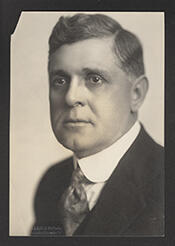
Here you will find contact information for Representative Everette Burgess Howard, including email address, phone number, and mailing address.
| Name | Everette Burgess Howard |
| Position | Representative |
| State | Oklahoma |
| District | 1 |
| Party | Democratic |
| Status | Former Representative |
| Term Start | May 19, 1919 |
| Term End | March 3, 1929 |
| Terms Served | 3 |
| Born | September 19, 1873 |
| Gender | Male |
| Bioguide ID | H000837 |
About Representative Everette Burgess Howard
Everette Burgess Howard (September 19, 1873 – April 3, 1950) was an American politician and a U.S. Representative from Oklahoma. Born in Morgantown, Butler County, Kentucky, he was the son of Addison A. and Addie P. Harreld Howard. He attended the public schools in Kentucky, where he learned the art of printing at an early age. Howard subsequently engaged in newspaper work in Kentucky, Oklahoma, and Missouri, gaining practical experience in publishing and communications that would later inform his public career.
In his personal life, Howard married Hollis Hope in Missouri on December 4, 1895. The couple had one son, Paxton. During these years, while building a family, Howard continued to work in the printing and newspaper business, which kept him closely connected to public affairs and the economic development of the communities in which he lived and worked.
Howard moved to Tulsa, Oklahoma, in 1905, at a time when the region was undergoing rapid growth associated with the expanding oil and gas industry. In Tulsa he engaged in the manufacture of brick and in the production of oil and gas, becoming involved in two key sectors that were central to the city’s and the state’s early twentieth-century development. His business activities established him as a figure in local economic life and provided a foundation for his entry into public service.
Howard’s state-level public career began with his appointment and service as a member of the Oklahoma State Board of Public Affairs from 1911 to 1915, where he helped oversee various aspects of state government operations and expenditures. He then served as State Auditor of Oklahoma from 1915 to 1919, a position that placed him at the center of the state’s fiscal management during a period of growth and institutional consolidation following Oklahoma’s admission to the Union. His work in these roles enhanced his reputation as a Democratic Party official and prepared him for national office.
A member of the Democratic Party, Everette Burgess Howard was elected as a Democrat to the Sixty-sixth Congress as a Representative from Oklahoma, serving from March 4, 1919, to March 3, 1921. His service in Congress occurred during a significant period in American history, immediately following World War I, when issues of postwar adjustment, veterans’ affairs, and economic transition were prominent. Although he was an unsuccessful candidate for reelection in 1920 to the Sixty-seventh Congress, he remained an active figure in state and national Democratic politics.
Howard returned to the U.S. House of Representatives when he was elected to the Sixty-eighth Congress, serving from March 4, 1923, to March 3, 1925. Choosing not to be a candidate for renomination in 1924, he instead sought higher office and became an unsuccessful candidate for the Democratic nomination for United States Senator from Oklahoma. He was subsequently elected to the Seventieth Congress and served another term in the House from March 4, 1927, to March 3, 1929. Over the course of these three nonconsecutive terms, from 1919 to 1929, Everette Burgess Howard contributed to the legislative process, participated in the democratic governance of the nation, and represented the interests of his Oklahoma constituents in the House of Representatives. He was an unsuccessful candidate for reelection in 1928 to the Seventy-first Congress.
After leaving Congress, Howard returned to his private business pursuits. He again engaged in the production of oil and gas, extending his activities in both Oklahoma and Texas. Remaining in the energy sector during a period of continued regional development, he sustained the business career that had preceded and paralleled his public service.
Everette Burgess Howard died in Midland, Texas, on April 3, 1950. He was interred at Memorial Park in Oklahoma City, Oklahoma, reflecting his long association with the state he had served in both state office and in the United States Congress.